An Alternative Natural History of Sussex.
This blog shows the highlights of my day to day findings as a naturalist and ecologist living and working in Sussex. Delivered with a pinch of nihilism, a dash of sarcasm and absolutely no tweeness, here is my attempt to show natural history as it really is: Brutal, beautiful, uncompromising and fascinating...and occasionally ridiculous.
I have been studying natural history for some thirty years, nineteen in a professional capacity. I currently work in Sussex as a freelance entomologist, ecologist and botanist and specialise in nature reserve and rewilding management advice based on the interpretation of the surveys I carry out. I also run a number of identification courses. An advocate of the pan-species listing approach. My main areas of interest are birds, plants and invertebrates and a lot of my spare time is spent in the field. I am the county recorder for spiders and bugs.
As my field season hurtles towards me, I better get part 2 of the trip to Isle of Wight wrapped up before I lose the window. This is mainly inverts and plants and is mostly based on two fantastic days out in the field with Mark Telfer. On the second day, Mark and I met up with Iain Outlaw, and as we got to the undercliff target area, before they had even said "here we are", I shouted "OIL-BEETLE!" And that's basically how the two days went.
Thanks to Mark, it turns out this one was a lifer for me! Black Oil-beetle, Meloe proscarabaeus my fourth oil beetle! So pleased to finally connect with this species. This male was much bigger than I thought it would be and very mobile.
Soon after this I was looking at the target species, the bryophyte Philonotis marchica.
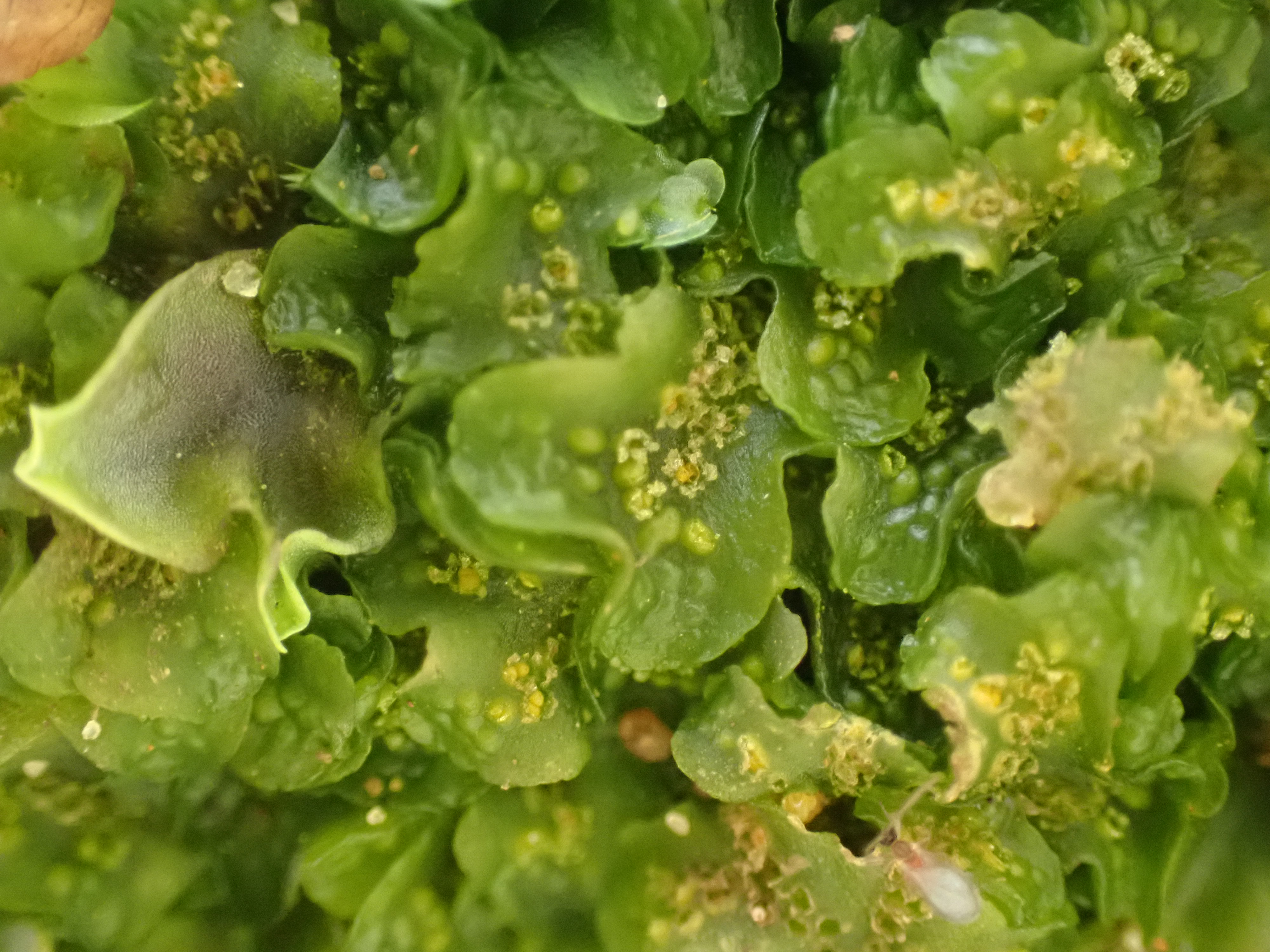
Yet despite how rare and restricted this is, it wasn't the bryophyte lifer on the cliff face I got most excited about. The cliff was covered in hornwort, and I have never seen a hornwort before! This is Phaeoceros laevis! Here is the female with the horns.
And the male plants.
Earlier that morning, Iain took us into Shanklin to see the incredible fungus Coccomyces delta that grows on the old leaves of Bay. Such weird triangular structures, spot the four-sided one doing its own thing. I salute it.
And a quick stop to a churchyard for a naturalised clubmoss tick, Krauss's Clubmoss.
I covered three quarries over the trip. A couple with Mark and Iain but also I had a look at a quarry down by the Needles with Karen and that was a great little spot. A new hectad record for Phaeocedus braccatus was a real find!
And the ridiculously common Agyneta mollis. Two new hectads for this on the island brings the post 1992 hectads for this spider to at least 98, it's hurtling towards not even being Nationally Scarce at this rate (I had it in a playing field by my house this week).
And a Scotina, but unfortunately I lost the specimen. All are rare on the island and given I was in a chalk pit, this is quite likely to have been Scotina palliardii. I will have to go back! I got a couple of money spiders new to the island at various locations over the week, Micrargus laudatus and Parapelecopsis nemoralioides.
Rewind to a few days earlier when I went to visit Mark and his magnificent new garden. He got me four new bryophytes, really by hammering some of the really small acrocarps. But it was a new pseudoscorpion that was most exciting for me, Pselaphochernes scorpioides.
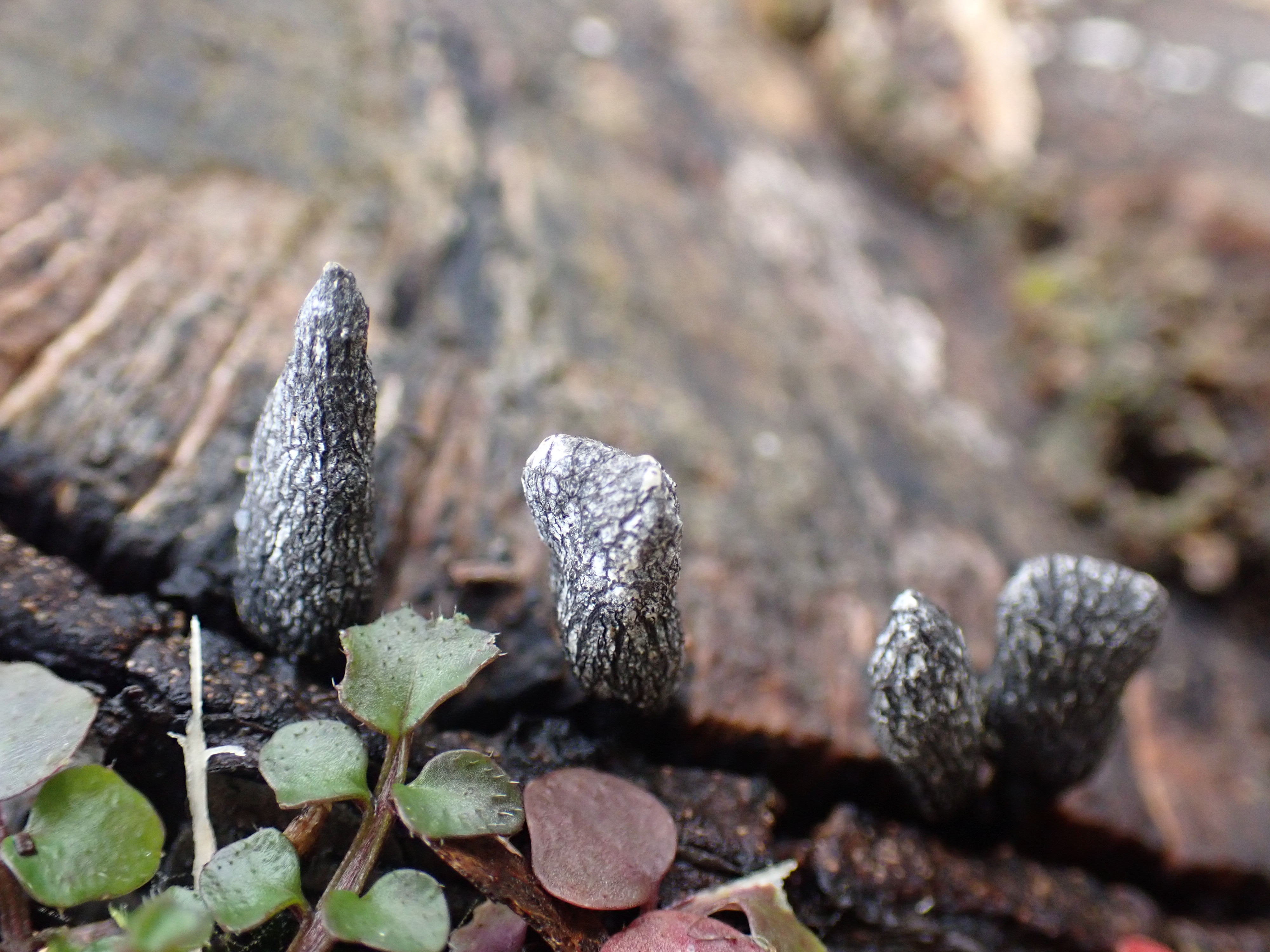
And a new fungus! This is Xylaria cinerea.
Then on to Ventnor Botanic Gardens. Mark had found this ant new to Britain sometime before my visit, it's Tapinoma ibericum. It's so numerous there that I spotted it on the first evening when Karen and I walked up to the gardens only to find them closing and I noticed it on the walls by the toilet block without realising the significance. They form impressive long lines.
A millipede that's only found here is, this one is particularly pale, Cylindroiulus apenninorum.
But Mark breaths first for Britain, so it didn't take long before he found one in the form of this weevil, under a rock. Likely to be associated with Cork Oak, Mark says it's in the genus Echinodera.
And another lifer in the car park for me. The rather odd looking reticulated slug, Tandonia cristata.
Karen and I went back to the gardens on a rainy day, when I discovered this fenced-off tunnel and just how good at light gathering the camera is on my new phone (I upgraded after nearly seven years). This was pitch black to the naked eye. The open end apparently comes out half way up a cliff, so no spidering in the for me.
And I turned a couple of stones and got the shelled slug we missed first time, Mark says it's most likely. Ear Shelled Slug Testacella haliotidea.
And no trip to the Isle of Wight is complete without visiting the Needles. I love the soils here.
So that's it for the part 2. What a week. It was a really great pan-species listing holiday, that was also in part research for the book on pan-species listing I am now 50,000 words into. A HUGE thanks to Mark for giving me so much of his time and knowledge, it was so much fun!
Yet my field season has started and I didn't quite get this out in time before I hit this period of high pressure (today is day four of a straight run of field work and I've already walked 19 miles since Sunday). I have made over 1000 records in the last three days and have just hit 200,000 records. So I think my next post will be a celebration of biological recording. I will leave you with my 2nd favourite photo of the week, a Carrion Crow that joined the ferry about a fifth of the way across and stayed with the boat all the way to the island!
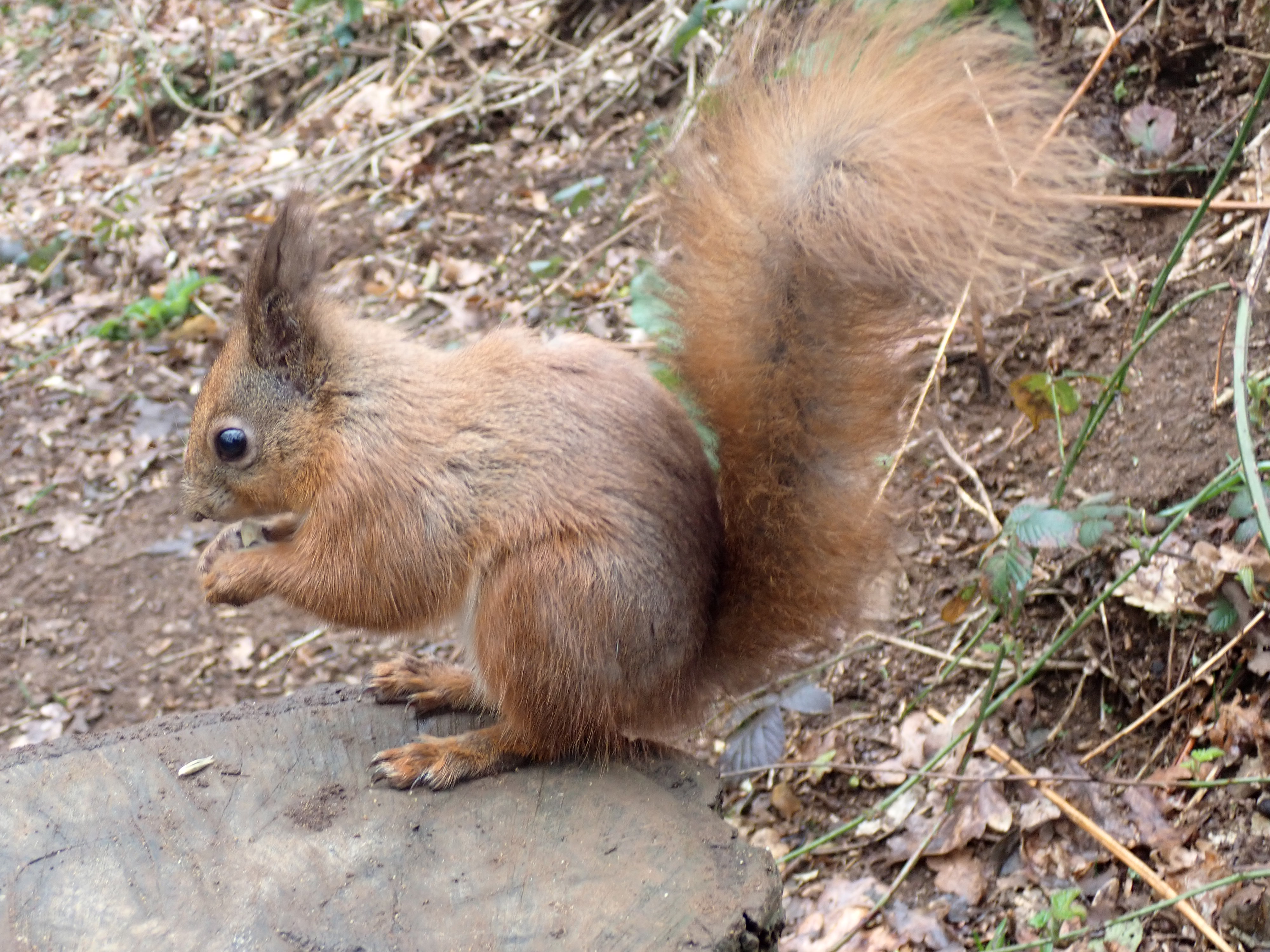
On a clear day, you can just about see the eastern end of the Isle of Wight from the higher parts of Brighton. Tantalisingly close. I have only ever been once before on a day trip in 2011. This time though, Karen and I had a week out there and, as Mark Telfer has recently moved to the island, I spent a couple of days in the field with him (and one day with Iain Outlaw). Where to begin? Nothing, quite competes with the moment you realise a wild Red Squirrel is about to run up and feed right out of your hand! So I'll start there. I was so excited to see them! Here are some more shots and a very cute video.
This all started at a place called Alverstone Mead when I was struck by how tame the Great Tits were, I put my hand out to show the nearest tit that I didn't have anything and I was gobsmacked when it instantly landed on my hand. I tried again and it did it again, we rushed back to the car for some nuts.
When tits attack!
Enough of that. Rock-pooling was pretty awesome actually. I saw four Solar-powered Sea Slugs Elysia viridis (at both Castle Cove and Freshwater Bay). I'm quite taken with these beauties, they seem to be quite common on the island. Purple is so well represented in rock pool life!
Castle Cove was pretty cool, Mark said his favourite thing to see in a rock pool would be a sea spider. I rarely see them, so wasn't expecting to find one under the next rock I turned. More Snakelocks Anemones than I have seen before, too.
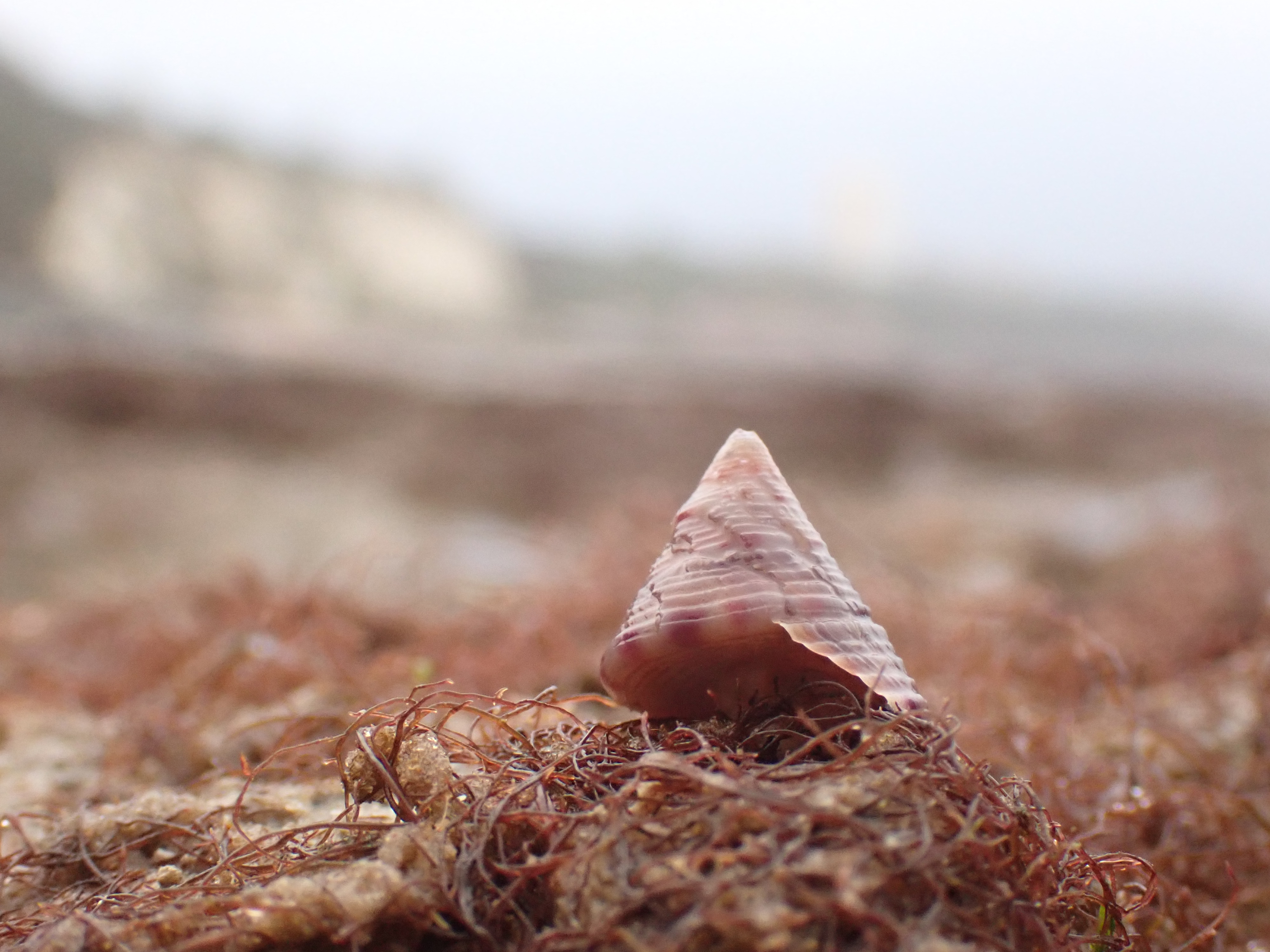
The west side of Freshwater Bay has wonderful rock pools. Found this huge Painted Topshell there.
And this was a lifer. A Four-horned Spider Crab.
A few Small-headed(?) Clingfish. The overall fish count was low, with Rock Goby the commonest species, Worm Pipefish and a Ballan Wrasse were the only other fish. I didn't actually see a Shanny!
A White Tortoiseshell Limpet was nice.
But what I really wanted was a nudibranch! There were a few Yellow-plumed Sea Slugs and my back was getting very sore from turning rocks, when I noticed a very bright orange and purple blob on the underside of a rock. Could it be a nudibranch? Yes! And it was an awesome one I hadn't seen before! I am pretty sure this can be nothing other than Edmundsella pedata. Just look at it (try Googling the name too)! It was only about 5 mm long and was firmly stuck to the underside of a very deep rock, so I couldn't properly submerge it for a decent photo. The only way I could take photos of it unfurled was by pouring water on it continuously with my Ferrero Rocher container. This is my 7th nudibranch.
This is what it looks like out of the water. So be prepared when looking for these to really scour the underside of the rocks with your eyes - they're often smaller than you think. I might have to leave the plants and inverts for another post, with nearly 800 records made, we sure did get around the island. This is an amazing place for wildlife and a great place for a holiday.
I was meant to be going to Cornwall early this morning, but late last night I remembered it was quite a good low tide today, at the ungodly hour of 7.13 am. So, 4.30 am the alarm went off and I was at Holywell for 6.30 am, and got utterly soaked within about 15 minutes. It was a really stupid idea, especially as the water was so murky due to all the recent rain. And the light was so bad. So here are basically a load of things reflecting my ring flash back at you.
First up, my first Sussex Painted Top Shell! I love these things, so was very pleased to see a young on under one of the last rocks I looked under and quite close to the shore. It's quite tall in proportion to width, but I think we can rule out Jujubinus.
I saw four species of fish. Loads of Shanny (including c10 under one rock), a couple of Rock Gobies and one Tompot Blenny. You tend to only see these on the lowest tides. The water was so murky though, even the Ferrero Rocher container wasn't working, it just made this Tompot Blenny look like a Guild Navigator from David Lynch's Dune. "I did not say this. I am not here."
And four Worm Pipefish, I had no idea how amazing they were up close. I thought it was gonna look like a bit of old shoe lace! Look at that! The ring flash kinda ruins in but they eye is magic.
I think this must be a young Sea Gherkin, I have seen much larger, whiter ones here before.
And under the same rock, a similar sized translucent, shiny worm. I have never seen this before, no idea what it was. Quite like a large tipulid larva.
And one of the two large, hairy chitons in the genus Acanthochitona (probably crinitus).
And then right at the end, a couple of sea slugs under one rock. I think these are Acanthodoris pilosa. I have seen them here before but not often, and strangely this one seems to like it quite high up the beach. The tide was coming in by this point, along with the murkiest waters I have ever seen down there. This was taken through about 5 cm of water (the second shot was taken with the camera under water but wasn't much better).
Not bad considering the conditions. That's pretty much how I see my life right now. After Mum's funeral, I got straight back in the saddle and started writing the book on pan-species listing. I am about 45,000 words in now, hope to get to 60,000 by the end of March. Field season is looming ever closer though and I am now excited an energised to get going at the start of April.
On a very different note, I am becoming deeply worried about the lack of natural history expertise in conservation organisations, what is driving this trend? One thing I know for sure, I have never seen more people into nature (the PSL movement being just one thing that is changing the shape of natural history in the British Isles) than I do now, so why are there so few people with good natural history skills in some conservation NGO's? I am going to be writing a bit more about this over the coming weeks, and I know I am not the only one who is concerned. Until it's recognised by some organisations, the problem will continue to grow.
One thing I know for sure is that most life-long naturalists are idealists, and idealists can be a thorn in the side of the organisations they work for. An important thorn though, as they keep them on the straight and narrow and prevent mission creep, let alone bring the actual skills needed to manage nature reserves and organisations that manage nature reserves. Skills that often take decades to develop. These skills need to be rewarded and nurtured, not just dismissed, thrown away or forgotten about. If conservationists can't take natural history seriously, how do they expect the general public to?
It's been a rough start for the year but despite this, I am ahead of the game for once with work. I needed a new project to focus my recording efforts. In 2021, some of my most exciting spider finds were in chalk pits, at Amberley Chalk Pits (chiefly, Centromerus albidus found whilst looking for other rarities - a species not seen in the UK since 1969!) and at a small pit at Iford. This got me thinking, how many more of these small sites are there out there and what might be hiding there? Many of them seem to have never been looked at for biodiversity in anyway.
They are often not that inviting, the one in the image above was huge but mostly vertical and clearly only the base was accessible, while others are a little easier to record. There are loads of them, peppered around the South Downs (just drive along the A27 and look for big white patches) and I am only just starting to get a mental map of where they are and who owns them, so that I can start gaining access.
I have data for nine sites so far, six of these are historic (and two of these represent full surveys) and three are from new sites I have looked at in the last two weeks.
I have pulled all this data into one matrix, with species down the side and each quarry listed as a column on the spreadsheet. Amazingly, this is already up to 97 species of spider and even more amazing, 18 of these have conservation status (18.5%). Clearly, chalk pits hold a significant number of rare and specialised spiders. Of these 18, five species are listed as Nationally Rare.
It's not just spiders, I have recorded 531 species so far in these nine pits, 384 of which are invertebrates.
What are the outputs of this survey, I hear you ask?
Enjoy myself at a relaxed pace.
To find and access as many chalk pits as possible with landowner permission and get me to some new, bite-sized, close-to-home, unrecorded areas of Sussex.
To record as many spiders as possible in these pits.
Use some subterranean/pitfall traps in a few places.
To record other taxa in a casual way, whilst doing the above.
To take some very basic chalk pit biometrics.
Percentage chalk/vegetation
Slope
Aspect
Presence of scree
Presence of sievable moss
Write it all up at an undetermined timescale. I'm talking years not months.
Use the data collected to generate a list of "Chalk Pit Indicator Species" (CPIS) of spiders and analyse using the biometrics to assess and the rank the assemblage of chalk pits in Sussex for their spiders and other wildlife.
I visited a new site yesterday, and recorded four spiders with conservation status. The highlight was the Nationally Scarce Hahnia pusilla, a spider I have only ever seen in bogs before. Here is the 1.5 mm spider showing her epigyne. It's only my 3rd record (out of 28,551 spider records).
The others were the ubiquitous Agyneta mollis (this over-designated spider is listed as Nationally Rare, Near Threatened and Section 41). My hunch is that it should not even be Nationally Scarce. It is now the most frequently recorded spider with status that I record, and the third most frequently recorded invertebrate with status that I record (after Small Heath and Lygus pratensis). I am working on proving this spider is not a conservation concern, it's not habitat restricted, it just likes open places. I have even found it on boring lawns with the sucker. The other two were both surprises. Theridiosoma gemmosm and Monocephalus castaneipes (this latter is not a common spider in Sussex).
In bryophytes, the base of the quarry was covered int the liverwort Leiocolea turbinata (Top Notchwort). And a singing Marsh Tit was a pleasant surprise.
But all of this was eclipsed by a "WTF is that?!" moment! I love that there are so many beetles, that you could bump into one you have never even heard of before (this being my 1624th species of beetle in the UK) just a few miles down the road. This is the Hop Root Weevil Mitoplinthus caliginosus (Nationally scarce a) and Mark Gurney tells me it's really scarce and hard to find, as it lives in litter and soil. Sieving it from moss then is probably the way you are most likely to find it, like I did.
What I think is also really cool, is that the entire insect is covered in huge pits, each filled with muddy chalk. It's a walking chalk pit assemblage, and a fitting find for the start of my chalk pit survey. It's also a great thing to find when you are writing a book about pan-species listing, as it goes to show that when you are surveying for one specific thing like spiders, if you have an approach where everything counts and anything is fair game, then you can come away with your highlight being something totally different, in this case a stonking weevil!
If you have a chalk pit, have access to one or know of one that you think I might not know of, please get in touch. Small ones can be good but the thing is, they need to be at least partially open (grown over with trees is no good) and at least some exposed chalk. Those with scree and thick (sieveable) moss on top of this, tend to have more diversity too.
But unless you're a moth larva, moth pupa or a False Truffle (and you might well be yet) you're probably OK. Either way, I am hoping that a shameless blog title like this will get lots of hits and shares.
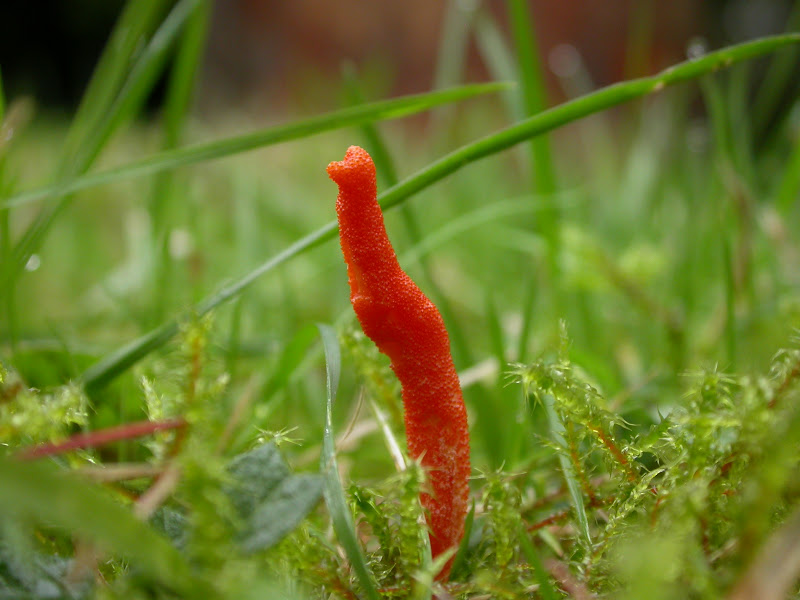
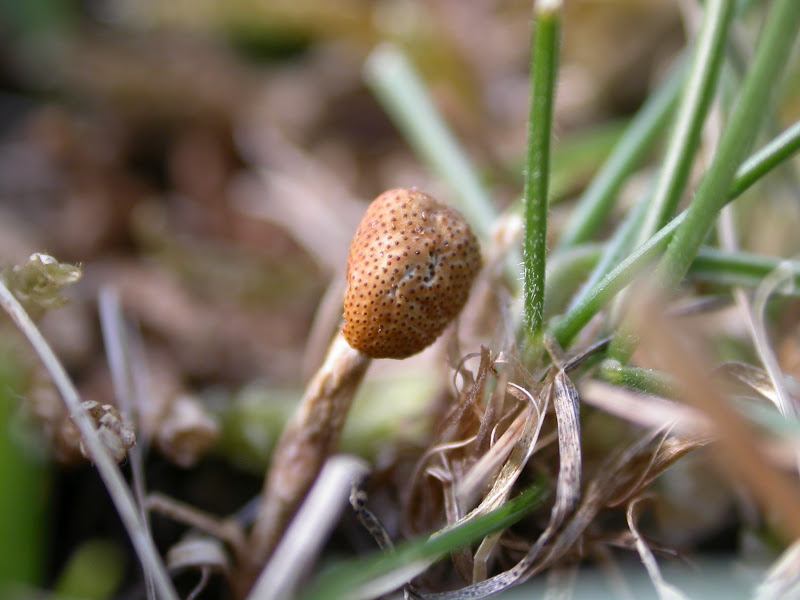
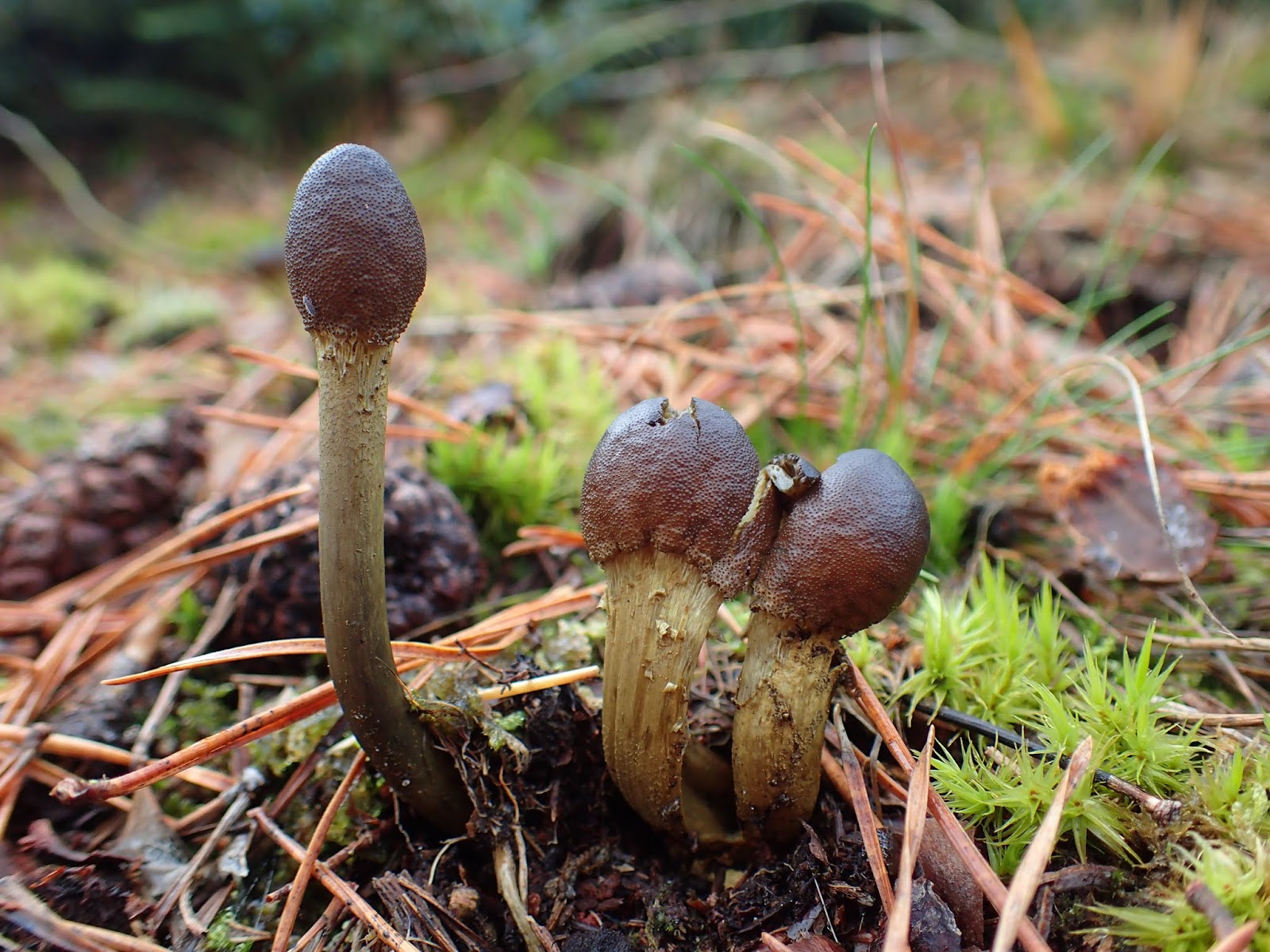
Before the TV show, before even the computer game, I have been onsessed with this weird group of fungi. I have seen four of the fungi that are generally referred to as Cordyceps but three of these are actually in two different genera now (Tolypocladium and Ophiocrodyceps - this latter was specifically referred to in The Last of Us though).
Anyway, here are the four species I have seen in Sussex and Surrey, in order of how frequent they are on the NBN.
Scarlet Caterpillarclub (Cordyceps militaris)
Who doesn't love Nice 'n Spicy Nik Naks? This one parisitises moth pupae underground, bursting right out of the poor sods with these bizarre orange-red fruiting bodies. Ebernoe Churchyard is a great place to see them. I have also seen them in Brookwood Cemetery and Kent & Sussex Cemetery but that's about it.
This is one of the ones that parisitises False Truffles, rather than insects. I have only seen it once, at Brookwood Cemetery. Such a great English name!
Ophiocordyceps gracilis
This one parisitises moth larva, I think I read maybe even specifically the Common Swift, which feeds underground at the roots of various plants. I was shown this one several years back in 2012 at Mill. We stumbled on another in 2017 at Levin Down and then I found one in chalky secondary woodland at the back of Brighton in 2020. I have only ever found one at a time and never in the same place twice.
Drumstick Truffleclub (Tolypocladium capitatum)
The other species that targets False Truffles. Probably my favourite of the four, because I stumbled on this one myself at Graffham Common a few years back while looking for spiders. They look like cartoon matchsticks.
There are some other species, I believe. But I am yet to see them. Would love to see photos of other UK species if anyone has them, especially if the host is known.
So, I don't think we are quite at the stage where these fungi are going to start infecting Human brains but it's nice to see just how close to home the very real nature that inspired the computer game and the excellent TV adaption came from.
I don't think I have ever done anything that was so gut-wrenchingly difficult and simultaneously, beautiful and profound as this. It was a great privilege to read a very personal piece about my Mum at her funeral. I really wanted to share it with other friends and family who couldn't be there and some who couldn't hear it. Now it's also up online forever, for those that want to read it again. And some Cat Stevens too.
Thank you.
Thank you, Mum; Mother, Irene, Irene Tooth, Irene Jeanette
Tooth (what a lovely middle name that is), Irene Lyons, Irene Carlin. Thank
you.
Mother, sister, daughter and granddaughter. Mother, aunt,
grandmother and great grandmother. Mother, fighter, survivor. Artist, devourer
of books, lover of animals, lover of family. Lover.
Thank you for dragging my
consciousness out of nothing but star dust.
Thank you for a happy childhood; showered
with love and made to feel safe. Protected from harm.
Thank you for all those Star Wars
figures and all the sweets, chocolate & marzipan, even when money was
tight.
Thank you for all the dental
work.
Thank you for a childhood running
wild and free, with endless summer days spent up the Brook catching Bullheads with
Daz and Gilly, or roughing it with William under the stars in the spinney
around a camp fire. Thank you for that long leash. For letting me be more than
a little feral.
Thank you for nurturing my love
of nature, for placing me “here on earth to grasp the meaning of its wild enchantment
and to call each thing by its right name.”* I would be lost without it. I’m
gutted you won’t get to read my first book. I’m writing it now and dedicating
it to you, Mum.
Thank you for selling all my Star
Wars figures so I could buy my first car.
Thank you for making me fiercely
independent and for the gift of enjoying my own company.
Thank you for not going too mad
when I accidentally appeared naked in the News of the World aged 14 at that
Pagan festival in Fradley.
Thank you for a house full of animals,
especially those five lovely cats; Humbug, Treacle, Crystal, Dixie and
Marmalade.
Thanks for those cherished memories
of holidays to North Wales, climbing up the River Ysgethin and to the mountains
beyond and spending hours playing pool with Steve.
Thank you for letting me grow
“food plants for insects I was breeding” in the garden.
Thank you for my three sisters:
Humbug, Treacle and- Oh no, wait. Wrong bit, sorry: Bev, Max and Teri.
Thank you for encouraging my love
of science, space and the fantastical. Tonight, a rare green comet, not seen
from the Earth in 50,000 years, makes its closest approach. I imagine it’s your
emerald chariot, perfectly timed to return you back to the stars.
Thank you for Steve, he is stuck
with us now and we will stand by him. We promise we’ll look after him, Mum.
Thank you for my fierce sense of
justice and strict moral code. Thank you for teaching me to not hold grudges.
And that people make mistakes but can change.
Thank you for making me value
truth, above all else.
Thank you for teaching me to read
before starting infant school, so I could read the Radio Times and pretend to
be sick on the days that Chock-a-block was on. *cough*
Thank you for making me question
everything. All of the time. For being that one kid at school who always
refused to pray in assembly. For igniting the fire in my belly.
Thank you for teaching me to
care, not just about myself and those close to me, but for everyone on this
planet. And to never vote Tory.
Thank you for my creativity, it
bleeds out into my life in so many different ways. As it did yours and still
does now in all of your children.
Thank you for the gift of my
middle name; Trevor. Yeah. Thanks for that one, Mum.
And thank you for never teaching
me to say my ‘th’s’ properly.
Thank you for all these wonderful
gifts, Mum. Luv you .We’ll bloody miss you.


 Posts