But unless you're a moth larva, moth pupa or a False Truffle (and you might well be yet) you're probably OK. Either way, I am hoping that a shameless blog title like this will get lots of hits and shares.
Before the TV show, before even the computer game, I have been onsessed with this weird group of fungi. I have seen four of the fungi that are generally referred to as Cordyceps but three of these are actually in two different genera now (Tolypocladium and Ophiocrodyceps - this latter was specifically referred to in The Last of Us though).
Anyway, here are the four species I have seen in Sussex and Surrey, in order of how frequent they are on the NBN.
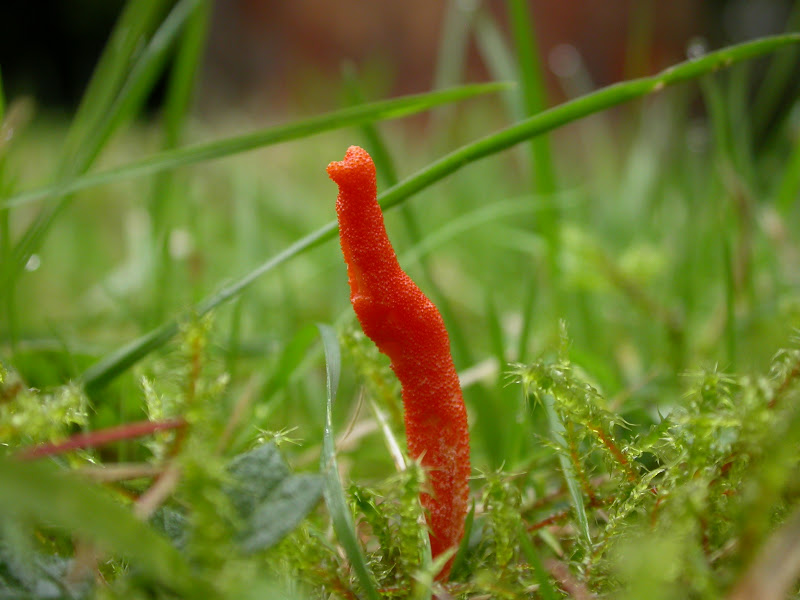
Scarlet Caterpillarclub (Cordyceps militaris)
Who doesn't love Nice 'n Spicy Nik Naks? This one parisitises moth pupae underground, bursting right out of the poor sods with these bizarre orange-red fruiting bodies. Ebernoe Churchyard is a great place to see them. I have also seen them in Brookwood Cemetery and Kent & Sussex Cemetery but that's about it.
Snaketongue Truffleclub (Tolypocladium ophioglossoides)
This is one of the ones that parisitises False Truffles, rather than insects. I have only seen it once, at Brookwood Cemetery. Such a great English name!
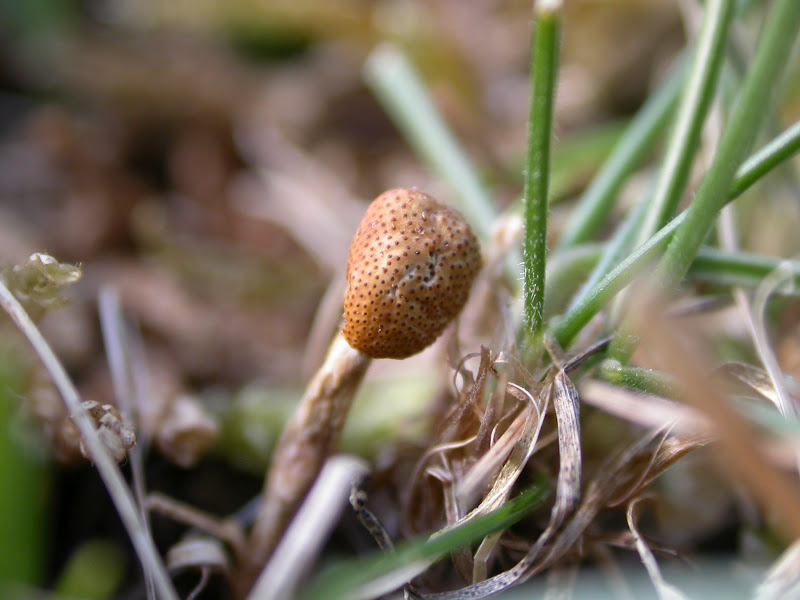
Ophiocordyceps gracilis
This one parisitises moth larva, I think I read maybe even specifically the Common Swift, which feeds underground at the roots of various plants. I was shown this one several years back in 2012 at Mill. We stumbled on another in 2017 at Levin Down and then I found one in chalky secondary woodland at the back of Brighton in 2020. I have only ever found one at a time and never in the same place twice.
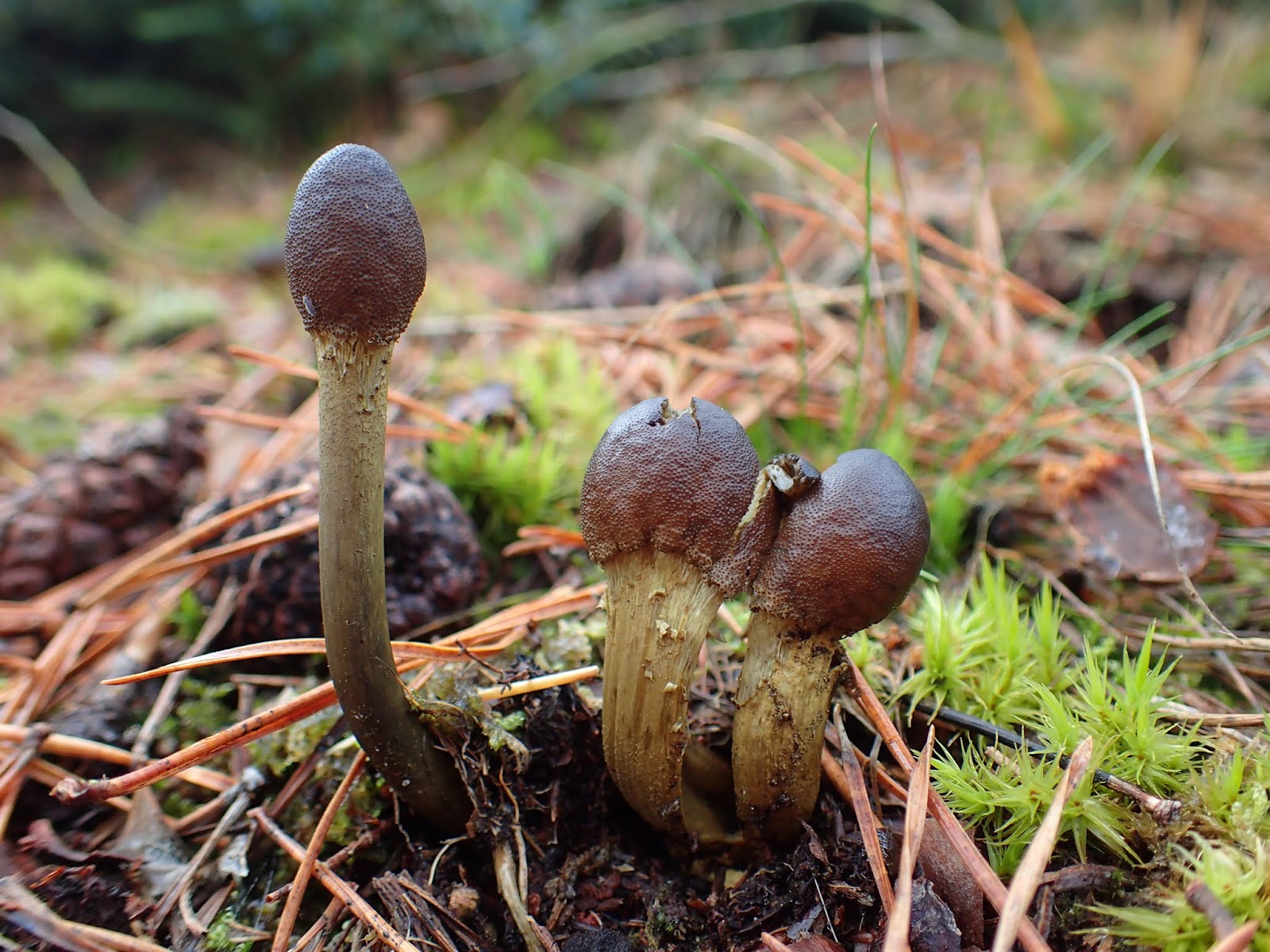
Drumstick Truffleclub (Tolypocladium capitatum)
The other species that targets False Truffles. Probably my favourite of the four, because I stumbled on this one myself at Graffham Common a few years back while looking for spiders. They look like cartoon matchsticks.
There are some other species, I believe. But I am yet to see them. Would love to see photos of other UK species if anyone has them, especially if the host is known.
So, I don't think we are quite at the stage where these fungi are going to start infecting Human brains but it's nice to see just how close to home the very real nature that inspired the computer game and the excellent TV adaption came from.
Last Sunday I went to Brookwood Cemetery in Surrey with the WWFRG again but this time I took Bryony in addition to meeting up with Tony and Shaun. We found a wealth of fungi that day but none were as showy as the HUGE (sorry Artist Formerly Known as Prince, the similarities stop there) the Prince or Agaricus augustus as it prefers to be known these days. Always wanted to see this beast of a mushroom.
I was amazed at how rich the site was and it wasn't long before we found the Snaketongue Trufflecub, a Cordyceps species that parasitises False Truffles! Such strange looking things.
In a matter of minutes Bryony got me a tick! Here is Lactarius subumbonatus.
And this Tricholoma batschii is found here and only two other sites in the country!
But it was the Cedarwood Waxcap that I was perhaps most excited about seeing, or should I say smelling! Waxcaps have been so fantastic this autumn that they have become my favourite fungi family of the year! It smells of Russian leather or lead pencils, both smells that I have no experience with but I can tell you the smell is quite distinct. It makes me think, what will the books state that fungi smell like in another generation or two? Smells strongly of chai latte or an iPhone perhaps.
We also found a couple of interesting Amanitas. This Jewelled Amanita was a looker...
And Bryony found this specimen that Dick Alder hasn't been able to identify as it might not have opened up enough. I was hoping it was going to be Warted Amanita but it looks like we might have to let this one go. A huge thanks again to Dick and the WWFRG, I would be very lost with fungi without their guidance so I am very grateful for these field trips. Now, I'm only 18 species away from 6000.


 Posts
Posts