An Alternative Natural History of Sussex.
This blog shows the highlights of my day to day findings as a naturalist and ecologist living and working in Sussex. Delivered with a pinch of nihilism, a dash of sarcasm and absolutely no tweeness, here is my attempt to show natural history as it really is: Brutal, beautiful, uncompromising and fascinating...and occasionally ridiculous.
I have been studying natural history for some thirty years, nineteen in a professional capacity. I currently work in Sussex as a freelance entomologist, ecologist and botanist and specialise in nature reserve and rewilding management advice based on the interpretation of the surveys I carry out. I also run a number of identification courses. An advocate of the pan-species listing approach. My main areas of interest are birds, plants and invertebrates and a lot of my spare time is spent in the field. I am the county recorder for spiders and bugs.
Are you doing a degree in biology, zoology, marine biology, ecology & conservation or something similar? Then Biodiversity Challenge might be for you.
Imagine two students, one has a first class degree in ecology and conservation, the other has the same but leaves university with the ability to identify 2,851 species. Which one is likely more employable in a conservation ecology role? Biodiversity Challenge is about setting yourself an achievable target (say something like 1,000, 2,000 or even 3,000 species beyond where you are starting from - you set your target) and using the Pan-species Listing approach to British natural history to reach that target by the end of your time at your university. It's that simple.
You should aim to do it at a rate where you can assimilate the knowledge as you go, if you rush through it using AI on most things, you're only going to cheat yourself and is missing the point. The idea is to use the PSL website and all that free time during your degree to build a sound knowledge base of British natural history that you can then put on your CV. I wish I had been able to do pan-species listing at university. We live in a golden age of natural history, it's never been easier to identify things than it is now due to all of the amazing field guides and keys being published, along with all the online resources and Facebook groups that connect us all together.
Here's how to get involved:
1). Sign up to the free Pan-species Listing website here www.panspecieslisting.com. Set up your life list using the PSL location of: "Britain, Ireland, Isle of Man and Channel Islands (PSL)", you won't be able to take part in Biodiversity Challenge if you don't set this as the location for your life list.
2). Tick off any species you have already seen or start from scratch. Biodiversity Challenge isn't about things you only see on your campus or during your time at university, your PSL life list is a long term effort to find and record as much wildlife in the British Isles as you can over the course of your life. We are not a recording platform though, generally in Great Britain we encourage you to use iRecord for submitting records of everything you tick off on PSL but other recording platforms might be more relevant in your country/county/region.
3). Add your list to your university by clicking on 'view lists' on the drop down menu, then select 'view communities'. You can filter the list of communities by 'higher education'. What you are looking at here are the rankings of the collective totals for each university.
Either join the relevant community/university or if it's not there, create it yourself (please remember to assign all universities to the community type of 'higher education'). Stick to the official title of your university so that others can find it easily. Anyone can join any community.
4). Click on your university to see the full species list, then click on the 'view base list rankings' icon.
This will take you to the rankings within your university, Bangor University rankings looked like this at the time of writing.
5). Degree, masters, PhD, post doc and university staff all count (we encourage lecturers to get involved too) but the idea of these rankings is that when you finish university, you should leave the community. That way, the next wave of students have the opportunity to reach the number one spot (albeit only temporarily).
6). Get out there and get pan-species listing, you never know where it might take you by the end of your degree. You could even set up a PSL group at your university. Have a look if there is a PSL group active within your region/county too, we are a sociable lot and always happy to help the next generation of naturalists. It's fun, worthwhile and a great source of dopamine! Although you leave the community at the end of your course, ideally you'll maintain your pan-species list throughout your whole life. After 16 years of PSL, I have just recorded my 10,000th species!
Louis Tapster of Unorthodox Sketch created the artwork for this, which I absolutely love (the collective totals shown are entirely random and are meant as an example only). We record across 38 different taxonomic groups in Pan-species Listing (not just the eight examples shown here). There's lots more information about what PSL is all about on the website here. For a deeper dive, you could also read my book, which you can buy straight from Pelagic here (you can get a 25% discount after you have signed up to the website).
Finally, please do remember this is about building a sound knowledge base and not just about ticking things off a list. Go at a rate that you are comfortable with, record everything as you go, teach your fellow students (and they'll help you in turn) and only use AI when you've exhausted all other options - picture matching and keying out are vital skills to learn to become a good naturalist and help you retain that hard won identification knowledge. There are some brilliant Gen Z naturalists already coming out of university with thousands of species under their belts, the approach really does work.
For the last few years, I have been keeping a daily total of all the invertebrates I have identified in the field (field dets) on any given day's surveying on a single site. Every day I do this and weirdly, I seem to be able to remember each day, within one or two species. So why bother? There is a very good reason; gamification. By constantly competing against myself, I get better and better at identifying in the field. This serves a number of important functions:
1) I have to kill fewer invertebrates to identify them. They are very happy about this.
2) Which further saves me time in the winter at the microscope.
3) I become a more effective naturalist, by understanding what I am seeing in the field as I see it, which benefits my understanding of autecology. Identifying all specimens at home feels a very detached way to record to me.
4) It helps to push the boundaries of what is considered identifiable material, something that is particularly relevant with spider recording.
5) It allows me to frame how good the day's surveying has been based on the other totals I have been recording that year. Anything over 200 always feels like a good day and 250 is exceptional, for example.
6) It keeps my energy levels up and is fun!
This shot was taken by the owner of the site, Bianca Pitt. It's been great that Bianca was able to come out with me not just once but on every visit. So much so that I could see Bianca learning her plants over the summer but also, it's a great way to learn about habitat management, grazing, surveying etc etc and the two way flow of information makes it easier for me to write my report and tailor the recommendations. And I enjoyed having the company, as it's rare that someone is so keen to come out. I wish all my clients would do this at least once. So many people who work in land management find themselves too busy to spend time in the field, learning about wildlife and understanding the sites they are managing. How can this be right?
I digress, back to the field identifications! If I am not sure, I still take the specimen and 'ground truth' it back home, this being an important 'bridging' technique towards being comfortable at making a call in the field, however some species will never be field identifiable and you will always have to take them to ID them correctly. It's important to state that you can't fast-track this process; you can only confidently identify in the field after spending years identifying things at the microscope. You need to know exactly how and in what position to hold the invertebrate, where to point the hand lens and what to look for and do this efficiently. You also need to be able to hold identification guides, keys and spider genitalia images in your head. Again, something that comes from a great deal of repetition. It's peak entomology!
Late May/early June has always seemed like the time that I would get the biggest lists. Last year, I got two sites in the 270s in this time period, with the record for the total number after microscopic identifications being 355. Prior to this my record was at Ken Hill in 2019, again in May/June. So, I was not expecting to blow this out of the water in early August! Especially, as to the untrained eye, it might seem like a bad year for invertebrates; it really is not though. There is a LOT out there at the moment, with some very high species-counts to be made.
The site was Hoyle Farm in West Sussex. It has a number of features that make it perfect for a large day list:
1) It's in the West Weald. This part of Sussex is a fantastic landscape for invertebrates.
2) It's on the edge of the Green Sand, so has some magic soils and associated vegetation but this moves to heavier soils in places, adding to the diversity. There is some woodland with glades too, that is also very rich in invertebrate life.
3) It's a medium-sized site at c100 ha, that's compact and easy to get around, so I could spend six hours solid recording without lots of time moving between compartments.
4) The site is sympathetically managed. Chiefly, the grassland is not over or under-grazed and significant parts of the woodland have an open structure. The site has a great deal of nectar sources, bare ground, some old growth oak, plenty of shelter shelter and structural heterogeneity - perfect conditions for invertebrates.
The method was my standard farm 'bioblitz' method for recording on farms. Split the site into six roughly similar blocks and spend an hour in each. I record as many invertebrates, plants, birds, mammals etc as I can. I was pretty surprised therefore, that this methodology (and not just an invertebrate survey) would be the one to beat my record and it wasn't until I finished the first hour that I thought I stood a good chance of beating that record. I was on 101 species and had recorded the sandiest, most open compartment first. In this 101, I think I had had about 10 species with conservation status. So, I decided to go for the record. Five hours later, I was on 298 field identifications. I fast-tracked the microscope work, adding a further 69 species. This ended up being 367 species in all (with a whopping 32 of these having conservation status). A total of 789 records were made on the day. Rewarding but exhausting work
This is an amazing site. I can honestly say it's the nicest acid-grassland I have seen in Sussex and some of the best I have seen anywhere away from the coast or the Brecks. It has some amazing plants that I could write a blog about alone (including several I have not seen in Sussex before), including; Hoary Cinquefoil, Mossy Stonecrop, Smooth Cat's-ear, Knotted Clover, Subterranean Clover, Common Cudweed, Corn Spurrey and more Common Stork's-bill (below in May) than I have seen before! The first bird I heard as I got out of the car on my first visit was a Woodlark.
So here are some of the goodies from 2rd August (I have included a full species list of the 367 species found on the day below). One of my all time favourites, the Hornet Beetle Leptura aurulenta, a Nationally Scarce longhorn beetle and THE beetle that got me into beetles, after I went looking for it in 2009 at Ebernoe on a hunch, and found it! Fourteen years later, I have seen 1653 species of beetle in the UK.
Beating this Lichen Running-spiderPhilodromus margaritatus from Ash was a real surprise! After Graffham Common and Lavington Common, this is only the 3rd known site for this charismatic spider in Sussex. Nationally Rare, Near Threatened and Section 41.
And I had a trio of lifers too.
The hopper Aguriahana stellulata, which I have long coveted.
The Nationally scarce a weevil that feeds on Dark Mullein, Cionus nigritarsis, was a long overdue lifer too.
And a striking cranefly swept from the woods (with yellow wings and legs) turned out to be the Nationally notable Tipula livida. Here is the female's paraphernalia under the microscope.
Other highlights included Woodland Grasshopper (Nationally Scarce).
And Attactagenus plumbeus, a Nb weevil I see on acid-grassland occasionally.
This was taken earlier in the year, but the much smaller spiderlings of Alopecosa cuneata are still field identifiable now and are much more widespread. Another benefit to learning the early stages of species.
Probably the rarest thing though was a species I had new to Sussex at the neighbouring farm in 2020 (c500 m away from this record). The pRDB1 Scythris potentillella (no photo I am afraid). Scythris are small micro moths that I encounter (possibly more than any moth-er in Sussex does) by using my suction sampler, which is a great way to record this whole genus - almost all of which are classed as scarce or rarer. This one feeds on Sheep's Sorrel. Targeting Sheep's Sorrel for Dalman's Leatherbug is therefore the way to find this rare moth (as on both occasions, that's what I was looking for). I also found the Nationally Rare rhopalid bug Rhoaplus rufus.
I run the day's data through Pantheon (the Biological Record Centre's online database for analysing lists of invertebrates) and the SQI (a measure of site quality based on the proportion and weighting of the rarities present) came out at 137, this is really high for one of my surveys (my average is 123.9). The true SQI is likely to drop a little when the the three dates are combined but this was a really interesting exercise. A total of 32 species for the day (at least 50 for the whole survey) is quite remarkable. My average for all surveys (ranging from three to six days - not just one visit!) is 34.5 species with status. Showing this has both quantity and quality. Here is the sward in August, full of nectar and rare invertebrates.
We discussed habitat management at length and it's great that many of the changes required to make this site even better are tweaks rather than radical changes in direction. This is an important, low nutrient, low pH site, with an invertebrate assemblage closer to a nature reserve than a farm and I am glad it's in safe hands. I can't wait to go back in a few years and see how it has changed! Now, here is the entire species list, starting with the field identifications. Species with status highlight in bold and conservation statuses in brackets are thought to be out of date. NS = Nationally Scarce, NR = Nationally Rare, Nb = Nationally scarce b, Na = Nationally scarce a, NT = Near Threatened, S.41 = Section 41, Nn = Nationally notable, etc.
And then a further 69 species identified at the microscope, which I fast-tracked so I could write this blog.
Less than four weeks into the field season already and I have completed my work for April. I am over 20% into the year's field work, which just seems weird! I have lost over 4 kg, some 5% of my body weight. Walked over 120 miles carrying around 15 kg of gear. But most importantly, I have made shed loads of records and found some really awesome stuff. 6279 records to be precise. Of 1016 species, including 612 invertebrates, 203 of these are spiders! I do tend to skim through the specimen jars to look at the spiders early on, meaning that most of the other stuff will wait until the winter (so most of the invertebrate orders below are just field dets at this stage). Here is what I have recorded and where, so far.
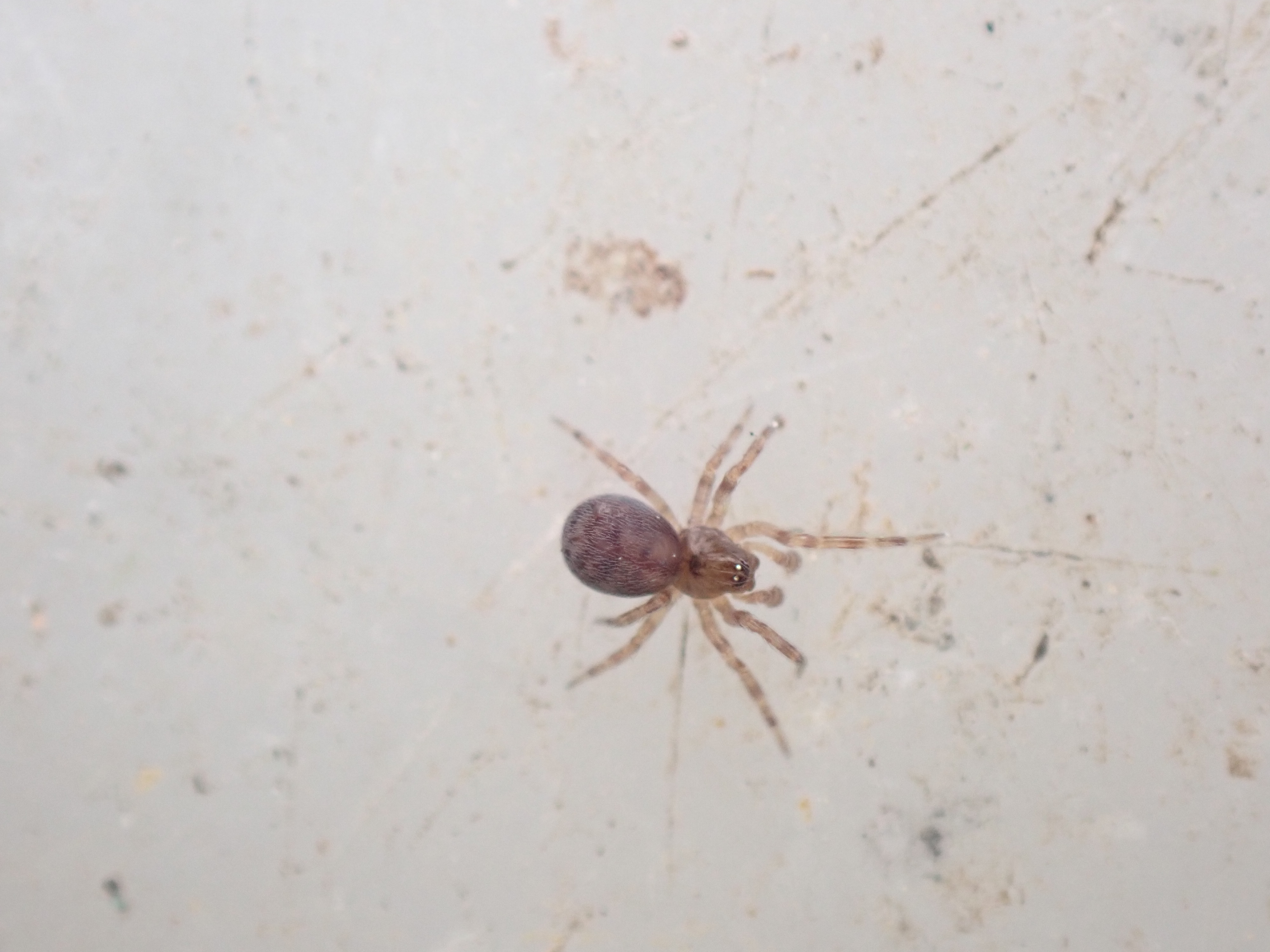
And now for some highlights. On my first day out at Iping Common, I found two Nationally Rare spiders new to the site, new hectads for them too and the first time I have seen either in Sussex, I was pretty stoked with that! At the top of this blog is Zora silvestris, Identifiable by the spines on the leg even as an immature. This Critically Rare spider is only known from six post-1992 hectads, now it's seven! Nearby was a healthy population of Lathys heterophthalma (below), a Vulnerable species known only from four hectads post-1992, now five!
Over to Old Lodge in East Sussex. Only the 2nd ever record in Sussex for Theonoe minutissima. A midget among the spiders. A much commoner species in the north and west. I sieved it from Sphagnum where it has surely been here for years, undetected. Amazingly it's new to Ashdown Forest.
I had a new hectad for Hypomma fulva in East Sussex and had it new to West Sussex near Amberley.
I bumped into some Golden-eye Lichen on a farm survey in Brighton.
Only the second time I have seen the ground bug Emblethis denticollis. This was down on the shingle restoration at Black Rock in Brighton.
To Bedfordshire and a voluntary job for BBOWT at Strawberry Hill. Only the 2nd time I have seen Liocranoeca striata and it was also new to Bedfordshire, it was quite common there.
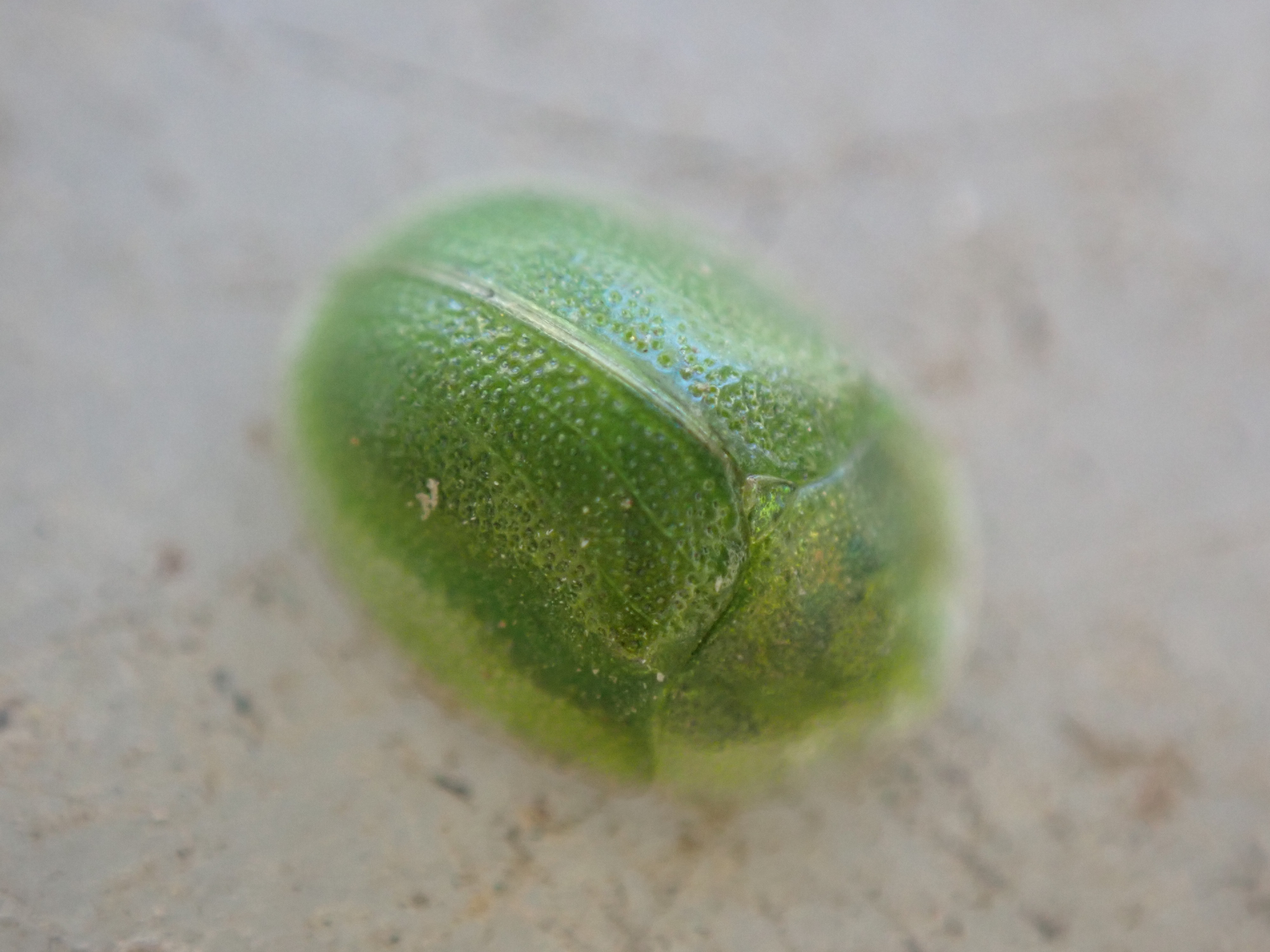
To Franchises Lodge in Wiltshire, although it still very much feels like the New Forest. Some nice records like only the 3rd time I have seen Cassida hemisphaerica.
And a new hectad for Crustulina sticta.
I have been enjoying the Sussex woodland this spring, with lots of AWIs in flower, such as this Goldilocks Buttercup. Photo-bombed by a Wood Anemone!
Finding a new site for Mossy Stonecrop in West Sussex on a lovely sandy farm was a real highlight. This is my first Sussex record of this species.
And that good old rule, if you find one good thing, you'll probably find more stood up yet again. My first Sussex records of Hoary Cinquefoil.
Over to a farm and woodland in East Sussex. The world's worst photo of an Ash-black Slug.
Found a flush in an unassuming field and it's full of Bog Pondweed and Lesser Spearwort. I will be back here.
And in the woods, only the 2nd time I have seen the scarce (Na) weevil, Tropiphorus elevatus.
And then down to Devon where I have never seen so many Violet Oil-beetles.
I was amazed when I checked the one bee I had collected in a separate tube to the others to see that it had a triangulin attached to it! It was a male Nomada goodeniana, a parasite on a parasite.
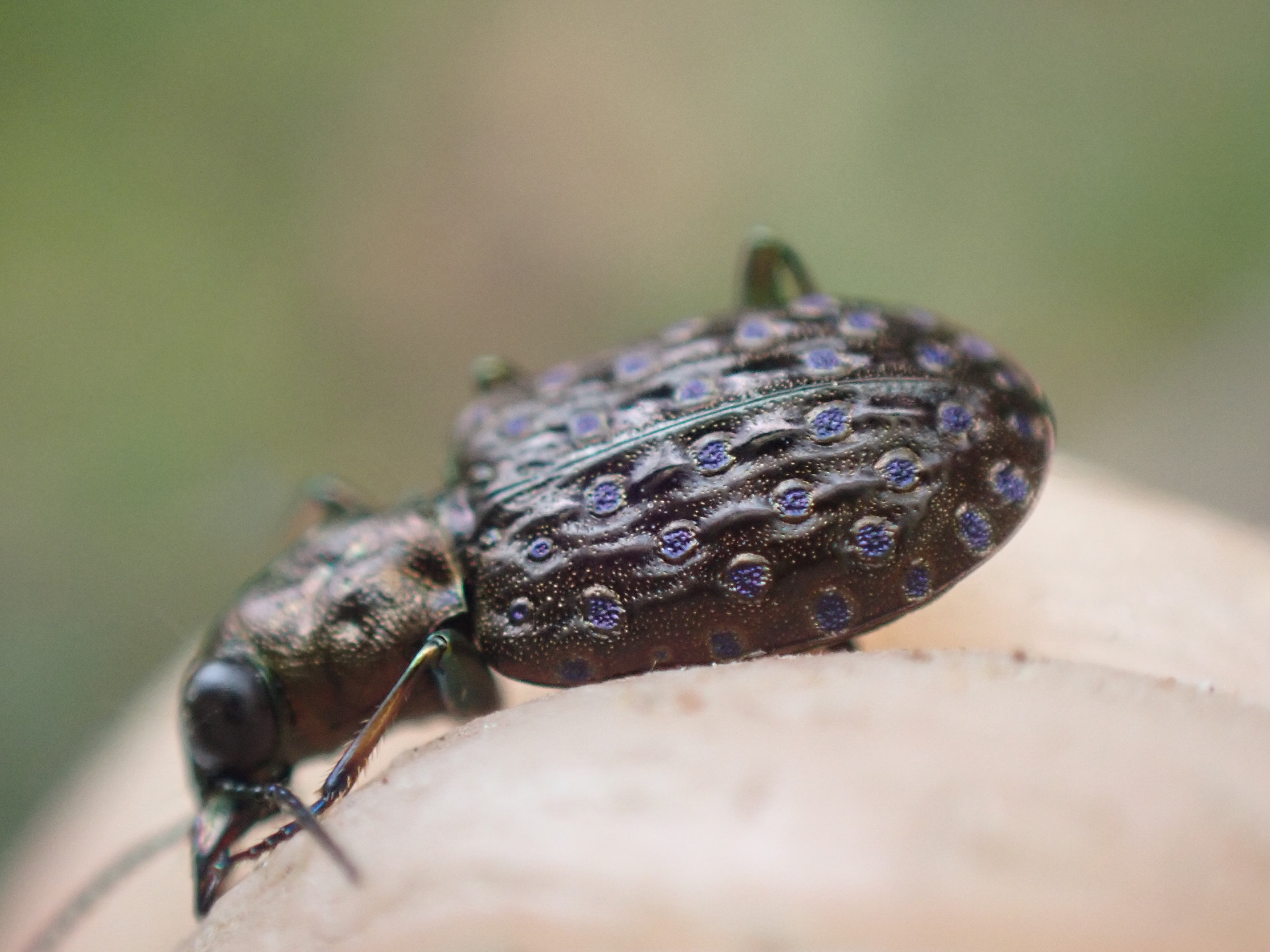
And it's been a while since I've seen Elaphrus cupreus, what a beetle up close!
It's been a great four weeks. I really wanted to write this blog to show people just how important a month April is, even if it's not that sunny. I always like to get a round of monitoring in before leaf-burst, chiefly armed with the suction sampler (and three batteries) as this often picks up species that are being missed if you don't start until May. I love April, it's by far my favourite month for surveying. No hay fever, no rank vegetation, very little heat and loads of good records! Now, it's City Nature Challenge time and I have big plans this year...I am aiming for 4000 records in four days. Gulp.
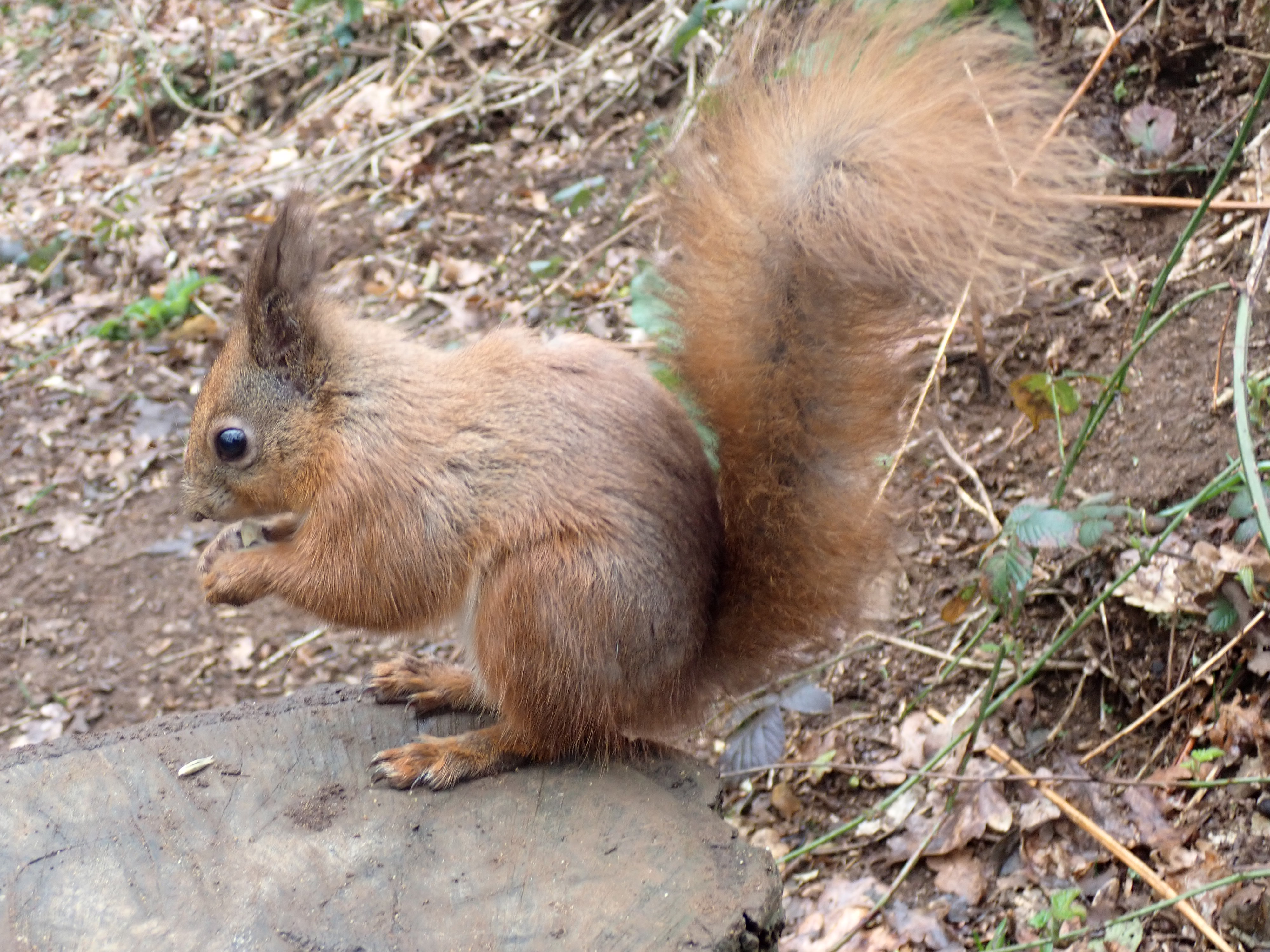
On a clear day, you can just about see the eastern end of the Isle of Wight from the higher parts of Brighton. Tantalisingly close. I have only ever been once before on a day trip in 2011. This time though, Karen and I had a week out there and, as Mark Telfer has recently moved to the island, I spent a couple of days in the field with him (and one day with Iain Outlaw). Where to begin? Nothing, quite competes with the moment you realise a wild Red Squirrel is about to run up and feed right out of your hand! So I'll start there. I was so excited to see them! Here are some more shots and a very cute video.
This all started at a place called Alverstone Mead when I was struck by how tame the Great Tits were, I put my hand out to show the nearest tit that I didn't have anything and I was gobsmacked when it instantly landed on my hand. I tried again and it did it again, we rushed back to the car for some nuts.
When tits attack!
Enough of that. Rock-pooling was pretty awesome actually. I saw four Solar-powered Sea Slugs Elysia viridis (at both Castle Cove and Freshwater Bay). I'm quite taken with these beauties, they seem to be quite common on the island. Purple is so well represented in rock pool life!
Castle Cove was pretty cool, Mark said his favourite thing to see in a rock pool would be a sea spider. I rarely see them, so wasn't expecting to find one under the next rock I turned. More Snakelocks Anemones than I have seen before, too.
The west side of Freshwater Bay has wonderful rock pools. Found this huge Painted Topshell there.
And this was a lifer. A Four-horned Spider Crab.
A few Small-headed(?) Clingfish. The overall fish count was low, with Rock Goby the commonest species, Worm Pipefish and a Ballan Wrasse were the only other fish. I didn't actually see a Shanny!
A White Tortoiseshell Limpet was nice.
But what I really wanted was a nudibranch! There were a few Yellow-plumed Sea Slugs and my back was getting very sore from turning rocks, when I noticed a very bright orange and purple blob on the underside of a rock. Could it be a nudibranch? Yes! And it was an awesome one I hadn't seen before! I am pretty sure this can be nothing other than Edmundsella pedata. Just look at it (try Googling the name too)! It was only about 5 mm long and was firmly stuck to the underside of a very deep rock, so I couldn't properly submerge it for a decent photo. The only way I could take photos of it unfurled was by pouring water on it continuously with my Ferrero Rocher container. This is my 7th nudibranch.
This is what it looks like out of the water. So be prepared when looking for these to really scour the underside of the rocks with your eyes - they're often smaller than you think. I might have to leave the plants and inverts for another post, with nearly 800 records made, we sure did get around the island. This is an amazing place for wildlife and a great place for a holiday.


 Posts
Posts