An Alternative Natural History of Sussex.
This blog shows the highlights of my day to day findings as a naturalist and ecologist living and working in Sussex. Delivered with a pinch of nihilism, a dash of sarcasm and absolutely no tweeness, here is my attempt to show natural history as it really is: Brutal, beautiful, uncompromising and fascinating...and occasionally ridiculous.
I have been studying natural history for some thirty years, nineteen in a professional capacity. I currently work in Sussex as a freelance entomologist, ecologist and botanist and specialise in nature reserve and rewilding management advice based on the interpretation of the surveys I carry out. I also run a number of identification courses. An advocate of the pan-species listing approach. My main areas of interest are birds, plants and invertebrates and a lot of my spare time is spent in the field. I am the county recorder for spiders and bugs.
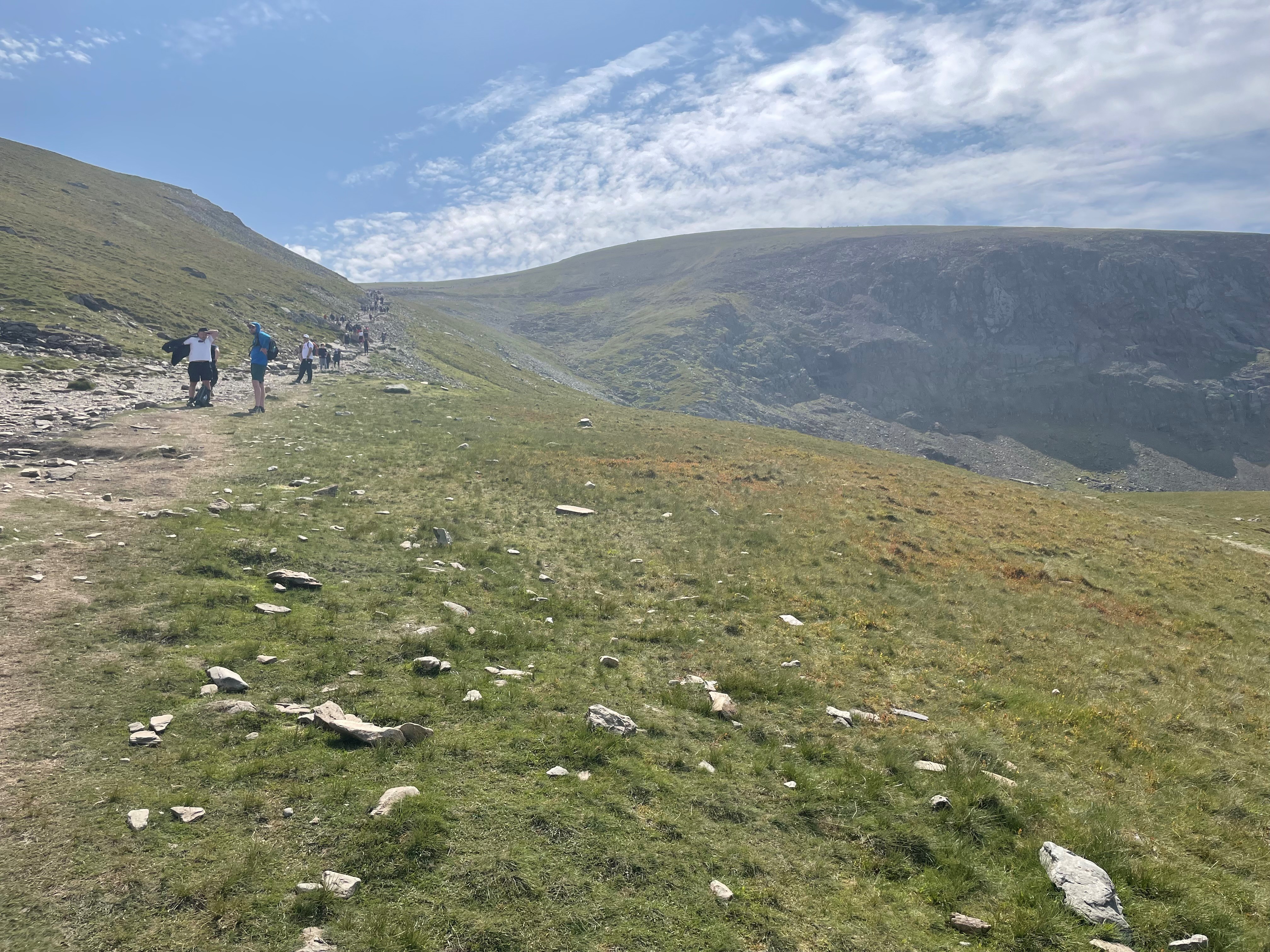
What do you do, when you are walking 50 miles a week for work and buy yourself a long weekend off at the end of May? Climb two mountains back to back looking for rare spiders and walk nearly 35 miles in three days of course! But before we get to Snowdon (photo) and Cadair Idris though, I'll start with my first ever visit to the Great Orme...
Apologies, I seemed to have some water on my lens for a few photos here. It's amazing how dry everything is after such a wet spring. And the grassland here on the south side of the Orme is distinctly arid and Mediterranean-like. A huge thanks to Richard Gallon for being my guide and putting up with me for three days! The sward here is dominated by Hoary Rock-rose. I have only seen this once before in the Burren. We had three target spiders here and we got two of them. There were large patches of Nottingham Catchfly and Bloody Crane's-bill here too.
We found several Drassyllus praeficus (spider no. 519) under rocks in this area but it was incredibly dry here. It also did not take long to find the weevil known only from this area that feeds on rock-rose, Helianthemapion aciculare. Liocranum rupicola (520)took some more finding though, and it was pretty much under the last rock I could handle lifting. In fact, it was just the thought of having to come out at night after being up since 4.00 am to find this spider that was keeping me going and then, there it was! It was only a small immature but under the same rock was also an Atypus affinis web, and another Drassyllus praeficus! What a rock.
And these freshly emerged Silver-studded Blues were quite something. And endemic subspecies too! We had also seen the endemic subspecies of Grayling earlier.
But the Thin White Duke had spotted a big spider in the mountains, so the next day we headed off to Cadair Idris.
Day 2. Richard and his colleague Thom Dallimore were working under contract surveying the inverts on the mountain, I was tagging along to see Pardosa trailli. A big old alpine wolfy.
I was worried by knee would play up, the last time I climbed a mountain in 2016, it really did on the way down but it held. The best thing I learned from Richard was that the good stuff happens over 750 m. And it did just that!
I spotted my first Pardosa trailli (521) myself, a smart looking male. But this dust covered male was the only decent shot I got of one. This means there is only one Pardosa I am yet to see in the UK.
Here is the female, quite a striking and well-marked spider with very long, tapering legs. I only had my phone for this one though.
We didn't get a huge number of other invertebrates, but I was pleased to see my first Carabus arvensis in 10 years! We did see some odd things up high though, most likely blown there. I found a female Tanyptera atrata, Rhagium bifasciatum and Thanatophilus rugosus all over 700 m!
Oh and Ctenicera cuprea were everywhere, something I have not seen for about 20 years as I do so little up north!
Alpine plants were limited on Cadair but this Stiff Sedge stuck out. Look at those glumes! That was about 12.4 miles to ascend to 880 m and we didn't get back until nearly 10.00 pm. What a day.
Day 3. Just me and Richard today. And about a 1000 other people. Who climbs Snowdon on a Bank Holiday Weekend?! We were heading to that dome on the horizon, about 1000 m, just shy of the top (which we proudly didn't go to). It's 13 years since I last went up here, and coincidentally my first ever blog was from here. How things have changed in that time. Lots more idiots with portable speakers and drones for a start.
Such an amazing landscape.
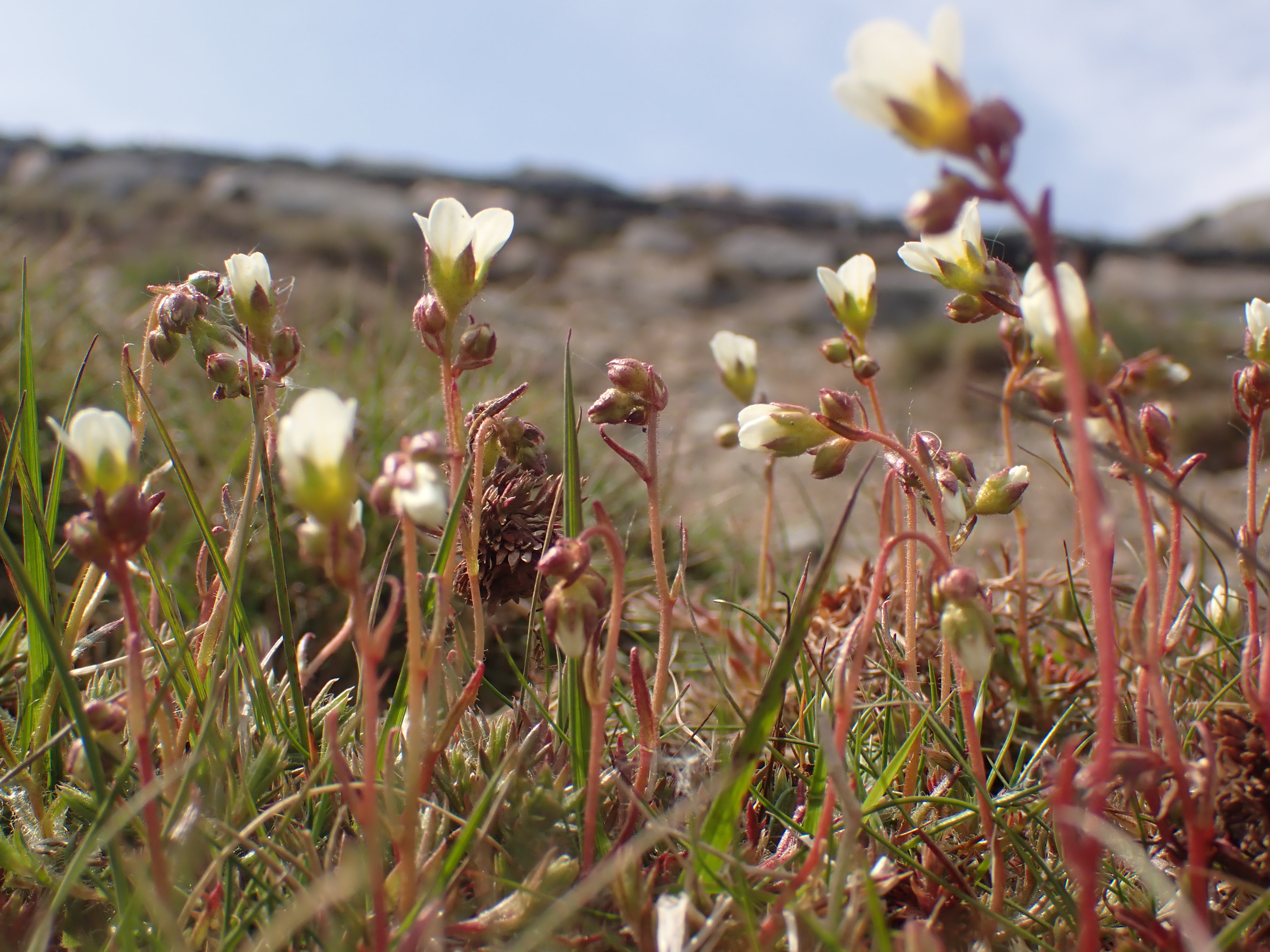
And plants that I have not seen for some 15 years were very welcome. Such as Mossy Saxifrage.
We fought our way past the hordes to the frost-shattered rocky landscape of the near summit and began flippin'. I got three alpine spiders, all being lifers. The first and probably my favourite of them all was this Oreonetides vaginatus. In this area we also found Agyneta gulosa and Piniphantes pincola. A massive thanks to Richard for getting me to 524 species of spider. Wheatears, Choughs and a male Ring Ouzel provided the soundtrack.
And now, we headed to see Snowdon Lilly, a species I have wanted to see for years. But before that. Some mountain plant madness. Dwarf Willow near the top.
Starry Saxifrage.
Mossy Campion.
Roseroot. Phwoar!!!
Green Spleenwort. A lifer for me.
No idea what this stuff is.
Meadow Saxifrage. Think this is my favourite of the three saxifrages featured here.
And a real surprise, as I don't remember clocking it at the time. There are a lot of similar white plants on mountains. This looks good for Spring Sandwort. Another one I have seen but not for decades.
Two for one here with Common Butterwort and Alpine Meadow-rue. I have not seen many of these plants since I went up Glenn Feshie in 2004! Half a life time ago.
Beech Fern.
Two very odd looking bryophytes.
And a lichen very like a Cladonia but I think it must be something else.
It's been a while. I think this must be Dioecious Sedge.
Closer now. Only the second time I have seen Northern Rock-cress.
Then, there it was! The enigmatic Snowdon Lilly! What a beaty!
What an amazing trip, and a massive thanks to Breeze B&B in Llandudno for being such great hosts and a HUGE thanks to Richard for being such a great guide. We walked 15.6 miles that day, the most I have walked in years. And the day after another mountain, I was surprised how quickly I recovered (apart from some awful lurgy I picked up). Anyways, that leaves me one last spider on the way home...
Day 4. A quick nip in to a site to spot Rugathodes bellicosa. My 525th UK spider. I think that means, for the time being at least, I have seen more spiders than anyone else in the UK. But I would love to be proven wrong!
Yesterday was the ten year year anniversary of my first ever blog post. A thousand posts and over a half a million hits later and here we are. It's been a hoot, so much has changed for me in the last decade. Pan-species listing being a big feature of my natural history adventures which in turn led to becoming an entomologist and eventually going fully freelance and leaving Sussex Wildlife Trust. Working on those reserves though was an incredible experience and three of top ten were on Trust reserves.
When I first put my list together I had only seen 2748 species, as of today I am on 7648 species, that's almost tripled. I must admit I do love blogging, it's a nice way to inspire other naturalists as well as acting like a journal and a photo library. Oh and gripping friends off of course. I am at present however limiting my time on social media as it feels healthy to do so in this crisis. That said I put the 24th April in my diary at the start of the year so I wouldn't miss this date.
Before I get to the top ten of of top tens, I must say a huge thank you to Jo Knell for encouraging me to start the blog. Jo is sadly no longer with us and without her encouragement I doubt I would have started it. Here is the link to my first post which was about an encounter with a Snow Bunting we had at the top of Snowdon during a holiday. I've been blogging for so long now I can't remember not blogging.
Now for the top ten in reverse order. ALL of these encounters were in Sussex. If you didn't read these the first time round or need refreshing, I have included the links to the original posts, please do follow these as there are plenty of anecdotes for each encounter.
10). Pardosa paludicola
In April 2017 I found a healthy colony of this incredibly rare and impressive wolf spider at Butcherlands, Sussex Wildlife Trust's rewilding project, this being only the 8th site in the UK for this species. I have since found it another site. Read more here.
9). Columbus Crabs
In February 2016, after watching reports online, I had a hunch that I might find these crabs on Brighton beach after a storm and low and behold, there they were. This species lives in goose barnacles and floats across the oceans. These were the first records for the county.
8). Portuguese Man o' War
As above, there were reports about these washing up along the south west coast after storms in October 2017 and I really wanted to find the first Sussex one. I wasn't quite quick enough but did find my own one on Portslade beach.
7). Melodious Warbler
Last June, when I was finishing up a bird survey at Butcherlands that I had been doing for nearly a decade, I had a WTF moment when I heard a warbler singing I didn't recognise. After nearly losing it, I got a good view and a sound recording. So exciting. The fastest bird song I have ever heard. I loved that site and that survey. Butcherlands features twice in this list!
6). Philodromus fallax
The spider year listing challenge of 2019 was extremely fun and by October I had almost given up. Right at the end of a day of recording in Camber Dunes, a spider I had long given up hope of finding popped out! What a beautiful spider.
5). Polycera quadrilineata
2019 was probably my best overall year for natural history, so it's not surprising that four of the top ten are from this year. In March at the spring tide, I usually try and get down to the Pound at Holywell. This time Evan Jones and I had an amazing evening with four sea slug lifers, Evan found most of them but this one I found by netting sea weed, the tropical looking Polycera quadrilineata. See the rest of the blog for the other species.
4). Crimson Speckled
The oldest post here from October 2011. Michael Blencowe and I trapping at Beachy Head. We very nearly never even saw this moth that was resting in a bush, not the trap. I will never forget shouting CRIMSON SPECKLED!!!
3). Large Tortoiseshell
A lunch time walk at Woods Mill in March 2018 produced a Large Tortoiseshell. It's a terrible photo but just enough to clinch the ID. Another one that almost didn't happen as it flew off so quickly.
2). Coptosoma scutellata
My first first for Britain and an entirely new family of shieldbug at that. This was from Marline in July 2019, Where DO the wings go?!
1). Calosoma sycophanta
Stumbling across this beauty in an arable field at Bishopstone in June 2016 is going to take some beating. It really was mind-blowingly lucky. Big, beautiful, rare. It ticks all the boxes.
So that's it. Ten years reduced into one post. What a decade. So now what for the Lyons Share? Is it time to call it a day?


 Posts
Posts