An Alternative Natural History of Sussex.
This blog shows the highlights of my day to day findings as a naturalist and ecologist living and working in Sussex. Delivered with a pinch of nihilism, a dash of sarcasm and absolutely no tweeness, here is my attempt to show natural history as it really is: Brutal, beautiful, uncompromising and fascinating...and occasionally ridiculous.
I have been studying natural history for some thirty years, nineteen in a professional capacity. I currently work in Sussex as a freelance entomologist, ecologist and botanist and specialise in nature reserve and rewilding management advice based on the interpretation of the surveys I carry out. I also run a number of identification courses. An advocate of the pan-species listing approach. My main areas of interest are birds, plants and invertebrates and a lot of my spare time is spent in the field. I am the county recorder for spiders and bugs.
Less than four weeks into the field season already and I have completed my work for April. I am over 20% into the year's field work, which just seems weird! I have lost over 4 kg, some 5% of my body weight. Walked over 120 miles carrying around 15 kg of gear. But most importantly, I have made shed loads of records and found some really awesome stuff. 6279 records to be precise. Of 1016 species, including 612 invertebrates, 203 of these are spiders! I do tend to skim through the specimen jars to look at the spiders early on, meaning that most of the other stuff will wait until the winter (so most of the invertebrate orders below are just field dets at this stage). Here is what I have recorded and where, so far.
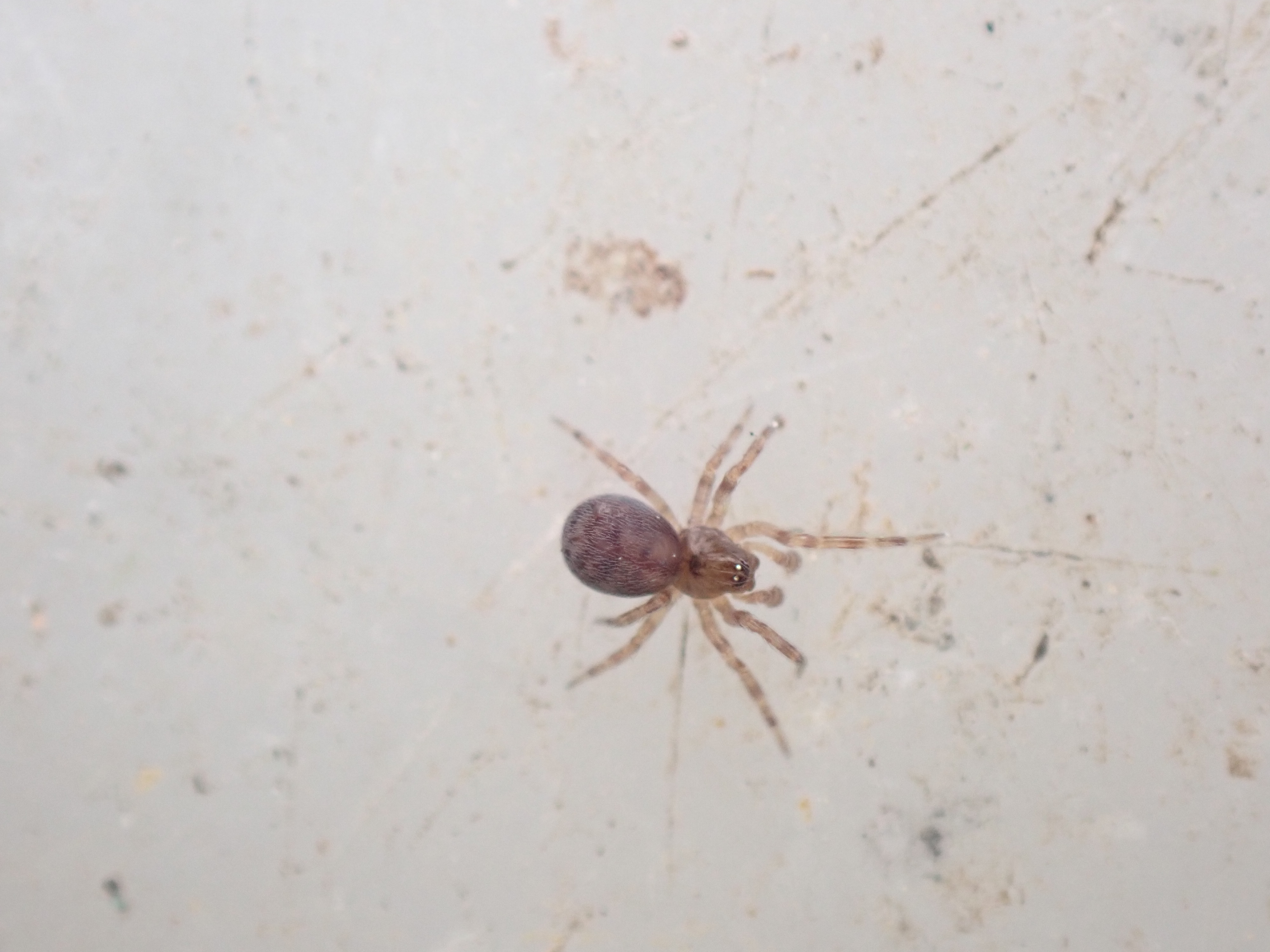
And now for some highlights. On my first day out at Iping Common, I found two Nationally Rare spiders new to the site, new hectads for them too and the first time I have seen either in Sussex, I was pretty stoked with that! At the top of this blog is Zora silvestris, Identifiable by the spines on the leg even as an immature. This Critically Rare spider is only known from six post-1992 hectads, now it's seven! Nearby was a healthy population of Lathys heterophthalma (below), a Vulnerable species known only from four hectads post-1992, now five!
Over to Old Lodge in East Sussex. Only the 2nd ever record in Sussex for Theonoe minutissima. A midget among the spiders. A much commoner species in the north and west. I sieved it from Sphagnum where it has surely been here for years, undetected. Amazingly it's new to Ashdown Forest.
I had a new hectad for Hypomma fulva in East Sussex and had it new to West Sussex near Amberley.
I bumped into some Golden-eye Lichen on a farm survey in Brighton.
Only the second time I have seen the ground bug Emblethis denticollis. This was down on the shingle restoration at Black Rock in Brighton.
To Bedfordshire and a voluntary job for BBOWT at Strawberry Hill. Only the 2nd time I have seen Liocranoeca striata and it was also new to Bedfordshire, it was quite common there.
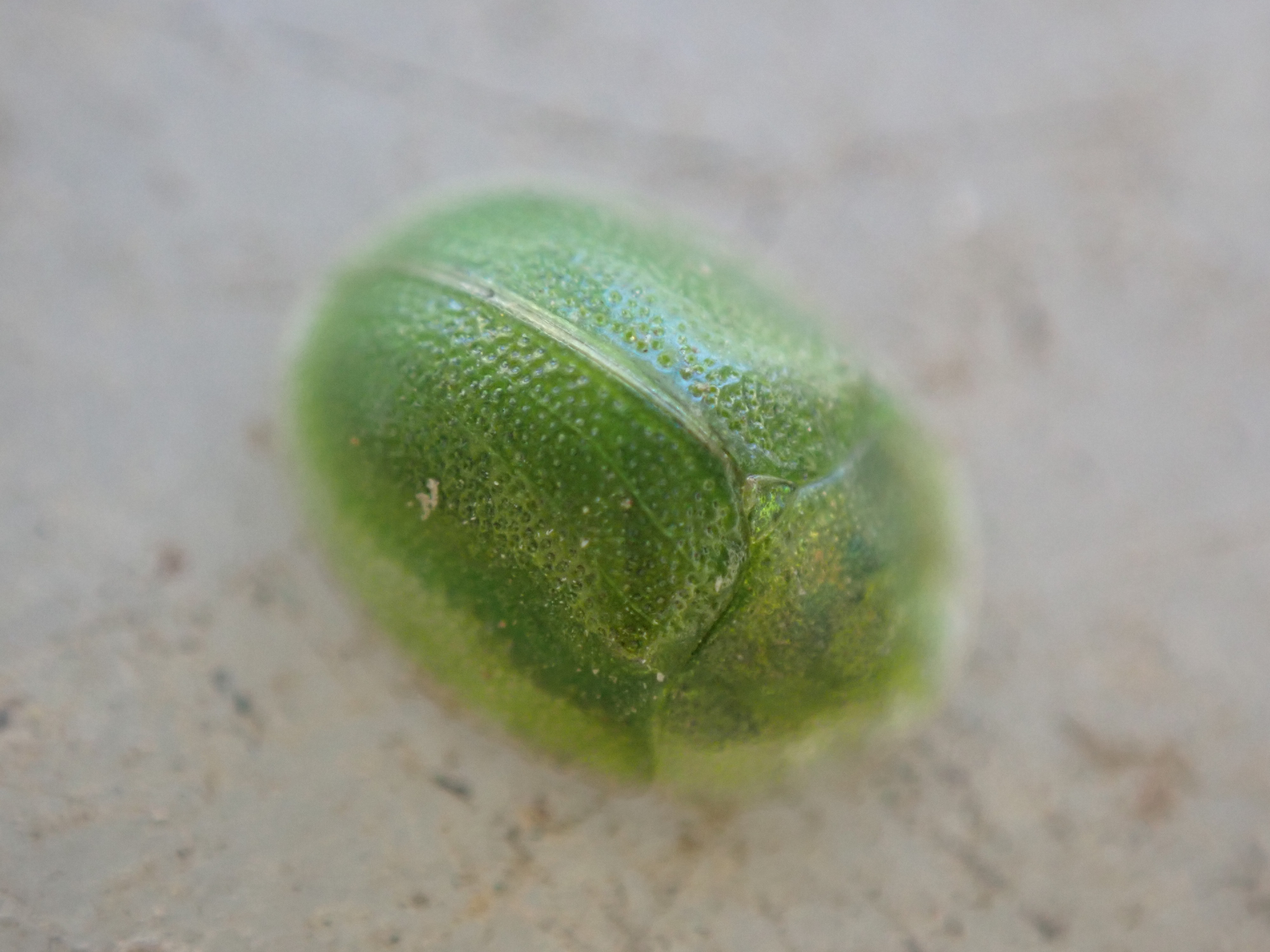
To Franchises Lodge in Wiltshire, although it still very much feels like the New Forest. Some nice records like only the 3rd time I have seen Cassida hemisphaerica.
And a new hectad for Crustulina sticta.
I have been enjoying the Sussex woodland this spring, with lots of AWIs in flower, such as this Goldilocks Buttercup. Photo-bombed by a Wood Anemone!
Finding a new site for Mossy Stonecrop in West Sussex on a lovely sandy farm was a real highlight. This is my first Sussex record of this species.
And that good old rule, if you find one good thing, you'll probably find more stood up yet again. My first Sussex records of Hoary Cinquefoil.
Over to a farm and woodland in East Sussex. The world's worst photo of an Ash-black Slug.
Found a flush in an unassuming field and it's full of Bog Pondweed and Lesser Spearwort. I will be back here.
And in the woods, only the 2nd time I have seen the scarce (Na) weevil, Tropiphorus elevatus.
And then down to Devon where I have never seen so many Violet Oil-beetles.
I was amazed when I checked the one bee I had collected in a separate tube to the others to see that it had a triangulin attached to it! It was a male Nomada goodeniana, a parasite on a parasite.
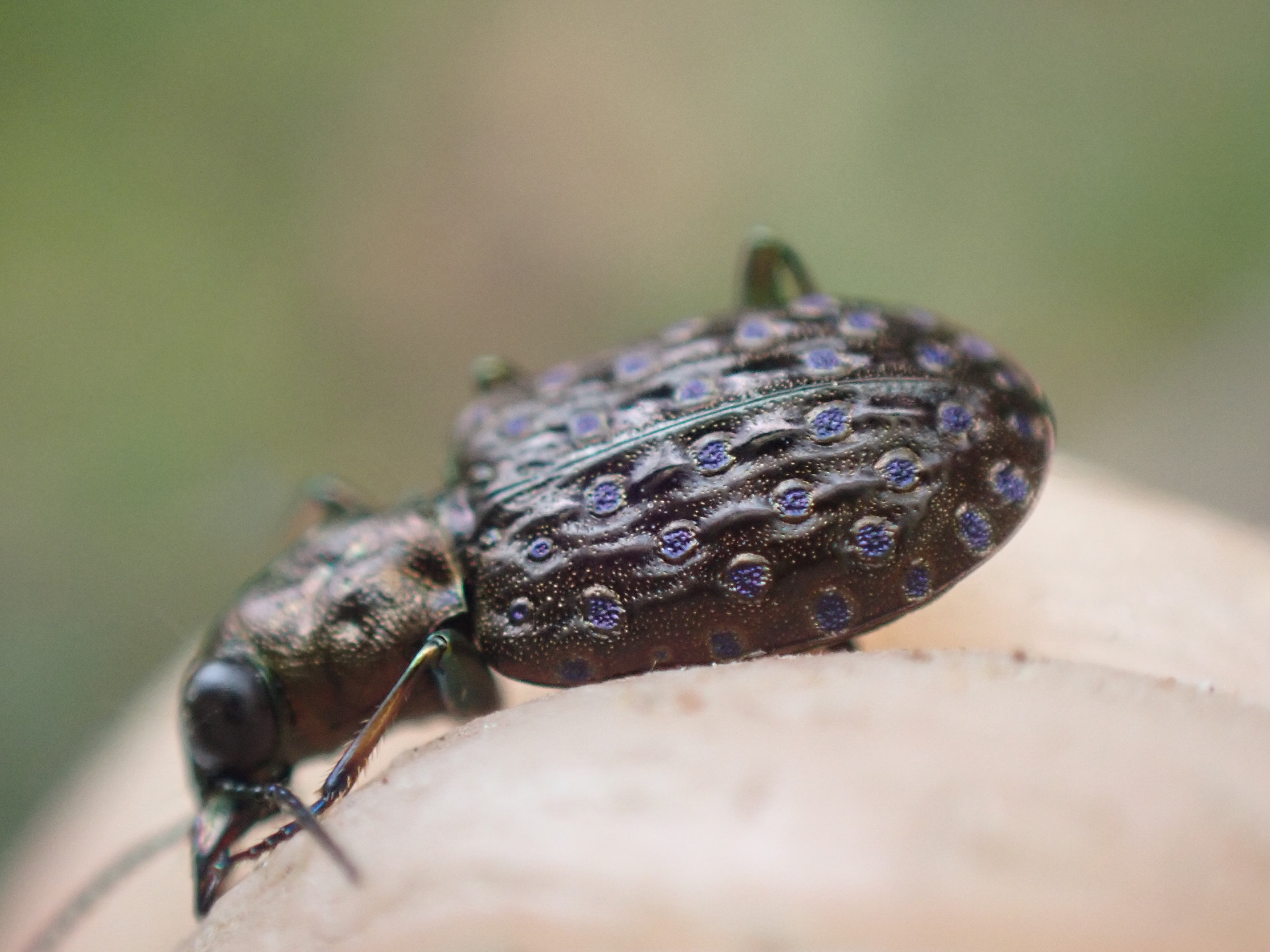
And it's been a while since I've seen Elaphrus cupreus, what a beetle up close!
It's been a great four weeks. I really wanted to write this blog to show people just how important a month April is, even if it's not that sunny. I always like to get a round of monitoring in before leaf-burst, chiefly armed with the suction sampler (and three batteries) as this often picks up species that are being missed if you don't start until May. I love April, it's by far my favourite month for surveying. No hay fever, no rank vegetation, very little heat and loads of good records! Now, it's City Nature Challenge time and I have big plans this year...I am aiming for 4000 records in four days. Gulp.
The Roaches will always be one of the places that absolutely blow me away. Only 35 miles from where I grew up (as far as Iping Common is from home) but it felt like another country growing up. So this morning I headed to this site to do some upland spidering and had a pretty awesome day. I got a lifer in the first sample. The embarrassingly common Poecilonta variegata. It's great coming up 'north'!
Then on the second suction sample I got another lifer. It wasn't until I got home that |I realised which Bolyphantes I had but all the specimens I took were Bolyphantes luteolus and not the more northern species. And at about 400 m I saw on my phone that Matt had pulled ahead meaning we were now level-pegging on 373. The tension!
I suction-sampled a lovely adult male Walckneaeria acuminata. Look at that eye turret!
It got a little colder and I slowed down but the surprise of a male Snow Flea in the suction sampler was awesome!
It's such an alien landscape. Love it up there. My first Red Grouse in over 15 years was a welcome distraction.
Plants I grew up with like Crowberry and Cowberry seem exotic to me now.
At over 450 m, Megabunus diadema was surprisingly hardy. A new 10 km square for this species.
Then I found what I was looking for, some stones to turn over. Here is an adult female Segestria senoculata at nearly 450 m.
A Hedgehog Slug.
I picked up two female Centromerus prudens, another lifer for me (374). What also turned out to be a lifer, the nationally scarce Porrhomma montanum below (375). And I have just spent an hour figuring out what the last spider was, another nationally scarce lifer!!! Scotinotylus evansi (376). Now, I'm off back up north to Gun Moor...
Wow. What a weekend. I had wanted to keep up with my blogs over the weekend but slow wi-fi in the B&B scuppered that. Anyway, this is Saturday's adventure...
So many people, so many arachnids. I finally got to meet Tylan Berry and Debs Rylands yesterday (who was kind enough to take this shot of the 'spider year-listers'). Nicola Bacciu drove us down to Plymouth where we met up with Tylan, Kev, Debs, James McGill and John Walters.
Our first site was arguably the rarest spider in Britain. Within minutes we had seen FOUR Horrid Ground-weavers Nothophantes horridus. Now this is an endemic spider, only known since 1989 and only from a handful of extremely threatened sites. We saw 3% of all the Nothophantes horridus that have ever been seen in the world in an an hour. I think from looking at the habitat the hyphen is in the wrong place and Horrid-ground Weaver is more apt. No suction samplers needed at this point, just turning over stones. Or without the hyphen, I think it is the best name for our band in the top photo, the Horrid Ground Weavers!
A male in the first photo and a female in the second photo. That's a Tramp Slug for scale. And a quick video.
A photo from John Walters of all photographing horridus.
Then James found one of the other targets, Centetostoma bacilliferum. It looks like Pinhead from Hellraiser. The Cenobite version of a regular harvestman.
Then I stupidly got Matt a year tick, Epsinus maculipes. I was actually increasing the gap! Also present, only the third time I have ever seen Dipoena inornata.
Then onto another site where I stumbled across a botanical lifer, only my third ever broomrape being Ivy Broomrape.
And the incredibly strange little orange harvestman that is Scotolemon doriae. What an odd little thing it is.
And a video. Why does someone always ruin them with swearing!?
Then I had TWO lifers in the car park leaving the site. Eratagina saeva!
And of course, Cryptachaea blattea! Thanks Tylan for showing me that one. Bigger than I thought it would be.
Then back to Bovey Tracey for Matt's first for Britain. The tiny Pelecopsis susannae which we found without too much effort sampling tree trunks. All in all it was an amazing day, a huge thank you for everyone involved. Next up I head to Cornwall for even more spider action. I will add though that as of today I am only THREE species behind Matt on 366 species having had 15 lifers in Devon and Cornwall. When I publish the 4th day I will write out the species list for all four days as it is pretty epic.
Had an unexpected day free Sunday so headed to Seaford Head for a spot of bird-watching when I suddenly realised the tide was pretty good. Bird-watching soon turned into rock-pooling and about the third rock I turned over had a lifer on it! It was a Grey Sea Slug Aeolidia papillosa. It really reminds me of those weird floral vintage swimming caps that used to give me the creeps. It's my fourth sea-slug, all of which I have seen in the last two years and all from between Seaford and Beachy Head.
I like this last shot. It looks like it's just devoured a tiny Human and the only bits left are two tiny fingers giving the peace sign as they too are slowly absorbed. So long, tiny Human!
Later on, I found this purple triangular crab under a rock. Pretty sure this is Pisa armata, not a species I have seen before.
This thing had me scouring the Handbook though. I thought it was some bizarre mollusc. Then I thought it was a pistachio macaron for a while. Now I believe it's actually a fossilised mollusc. Thanks to Robin Shrubsole for pointing me in this direction.
A Tramp SlugDeroceras invadens in fact. You can tell it by the pale patch around the breathing pore. I think it was 'compost bin assisted' in its provenance though.
The reason I am posting this is I have finally got round to putting my garden on the PSL location rankings. You can see it here. The garden is currently ranked 63rd out of 66 (albeit 64 to 66 have no records yet, so effectively I'm at the bottom). You have to start somewhere though. I need to add 28 species to go up a rank. I bought the flat back on the 13th November and made my first records that day. Today I have added a few bits just by being on the phone in the garden and finally got Sparrowhawk on the list. So as of today I have recorded 61 species in my 36 square-metres of garden. There is no lawn by the way and until very recently it was mostly covered in palms and non-native ferns. This is all changing though.
Probably the commonest invertebrate at the moment is Girdled Snail. My highlight though so far has been a Stock Dove that landed on the shed for 15 second and the obligatory Psilochorus simoni that seems to follow me around in boxes of books. I am yet to add a beetle or a moth to the list! the garden STINKS of Red Fox. Here is the breakdown:
Birds - 27
Plants - 12
Molluscs - 5
Spiders - 5
Mammals - 3
Crustaceans - 2
Springtails - 2
Bryophytes - 2
Butterflies - 1
Bugs - 1
Hymenoptera - 1
So why not start a list for your garden? It's a great way of getting records in. You can do this in iRecord and set up your list total by joining the pan-species listing website here.
I forgot this. I was Googling Tramp Slug as I forgot the scientific name and this came up...


 Posts
Posts