An Alternative Natural History of Sussex.
This blog shows the highlights of my day to day findings as a naturalist and ecologist living and working in Sussex. Delivered with a pinch of nihilism, a dash of sarcasm and absolutely no tweeness, here is my attempt to show natural history as it really is: Brutal, beautiful, uncompromising and fascinating...and occasionally ridiculous.
I have been studying natural history for some thirty years, nineteen in a professional capacity. I currently work in Sussex as a freelance entomologist, ecologist and botanist and specialise in nature reserve and rewilding management advice based on the interpretation of the surveys I carry out. I also run a number of identification courses. An advocate of the pan-species listing approach. My main areas of interest are birds, plants and invertebrates and a lot of my spare time is spent in the field. I am the county recorder for spiders and bugs.
It's took quite some effort to race through the remaining specimens and get the data into a useful format, though here we are. First off, all the photos in the post (unless I state otherwise) are Dave's that he took with his phone (like this stonking Stenocorus meridianus on Wood Spurge at Hoyle). They are far better (and more numerous) than the few I took on the day.
Before I start, a massive thanks to everyone who donated. We raised an incredible £2680! You can still donate here.
First off, the overall total for the challenge was 1072 species found, recorded and identified on the day. Just 37 species more than we managed in 2017. However, with the specimens I took, that figure rose to 1158 species. Pretty pleased with that. The total number of invertebrates found and identified on the day was 555 species, rising to 622 with all the identifications added. Here's how are totals compared to 2017 and what they looked like after the identifications made post 25th May were added. I was surprised we had such lower plant totals but we really did well on spiders and beetles.
Our route went: Burton Pond, Graffham Common, Hoyle Farm, Levin Down, Rewell Wood, Climping Dunes, Peppering Farm and then back to Dave's. Singleton and Charlton were also pretty good!
Burton Pond
I'll put the full species list at the end but for now, some highlights. First up, Burton Pond. We spend the first seven hours at this very diverse site on the Greensand Ridge. I was pleased to find that we recorded 73 species of invertebrate there that had not been recorded there before, including five species never recorded on a Trust reserve before. Such as this Nationally Scarce sapro, Prionychus melanarius I found under bark in the Warren.
We set the moth traps up and turned them on at exactly midnight, with one minute to spare! We then got onto beating, sweeping and suctioning before the dew started. I am not good on very little sleep and spent the first two hours trying to overcome an intense sense of impending doom. Then the Moon came up and it started to get pretty cold - but it was really weird being out so long that we watched the Moon go back down again. We did get a few good moths though, including 15 species new to the site. Surprising for such a small moth list and a well-recorded site!
Bird's Wing was indeed new to the site and Dave got excited by it!
A Privet Hawk-moth scared the bejesus out of us!
While we got a few larvae as well, including a couple I have not come across before. This is Dingy Footman.
And this two-tone fluffkin is actually a Rosy Footman!
Nightjars were all over Burton, which really surprised me. Over the day we got to 77 bird species, which I think is pretty good as we did not chase a single bird. We didn't however see a Kestrel, Little Egret or Bullfinch (the Great White Egret we had over Welch's Common on the reccy was a big ask to see on the day). I think I got about 10 lifers (which has helped get my personal pan-species list to 9000 species, wahoo!), mostly through the specimens but this gelechid was common at light there. It's Carpatolechia proximella.
We left Burton after a glorious sunrise to head to Graffham Common. Great photo, Dave!
Graffham Common
For some reason, we didn't take any photos at all at Graffham. It was oddly quiet there. Uloborus walckenaerius was in the first sweep net and we soon heard Hobby, Siskin, Crossbill and Garden Warbler. We still got 12 species new to the site, including (and this really surprises me) Lesser Cockroach - which was new to the Trust reserve network. I am sure it must have been reported from Rye Harbour?
Hoyle Farm
We got to Hoyle shortly after 9.00 am. I first surveyed this site last year and my third visit of the survey produced the most field dets I have ever had (297 inverts in just six hours of recording back in August last year). So we had to visit it. It did not disappoint. After a slow start at Graffham Common, it soon felt like we might make the 1500 species after 2.5 hours at Hoyle. Despite recording 621 species over three days last year, we still recorded 50 species on Saturday that I did not pick up last year. A highlight for me was this Pilemostoma fastusoa (Nationally Rare and Near Threatened) this species is not that uncommon on Common Fleabane in the West Weald. In fact, we had five species of tortoise beetle in an hour. So have a Nationally Scarce Cassida prasina too! These are my only photos here, my lens looks scratched compared to how bright Dave's phone shots are.
I was explaining to Dave my rule that if I see something, I have to sample it. I saw a big stand of Blackthorn and tapped it. Out popped a Brown Hairstreak! It's not every day you see this Vulnerable, Section 41 butterfly and it made up for the lack of any Purple Hairstreak larva.
We got into the woods there which were also really great, including large charismatic species such as the longhorn at the top and this Chrysomela populi on Aspen.
A massive thanks to Bianca for hosting us and a providing coffee and nuts! I'm glad we were able to find so many new species for the site, including some really key invertebrates.
Levin Down (via Singleton and Charlton)
It got very hot between 1 and 2 pm and I started feeling a bit unwell in the sun. But I ploughed on. Obviously we added a lot of new plants but the inverts were not coming through as thick and fast as we would have liked.
We did get a few nice spiders though. Including the Nationally Rare/Vulnerable Trichoncus saxicola, at its only Sussex site. Entelecara flavipes (another Nationally Scarce money spider) was new to the whole reserve network. Butterflies were good, with Grizzled Skipper, Dingy Skipper and Small Blue added here (we had 15 butterflies on the day!). This ball of Common Blues in mating frenzy was something!
A few nice bees too but they were not new to the site, Stelis ornatula, Andrena florea, Ceratina cyanea and Osmia bicolor were all nice and easy to ID species (although I didn't spot the Ceratina in the field). However, the super rare stonefly Nemoura lacustris that I found in the specimens was a lifer and another species new to the reserve network. On the NBN, there is a cluster of records around Charlton would you believe it. I guess it must be a chalk stream thing! What a result. I am so pleased we added 24 species to the Levin site list. In fact, between the three Trust sites we surveyed, 109 were new site records and a whopping NINE species had never been recorded on any Trust reserves.
Rewell Wood
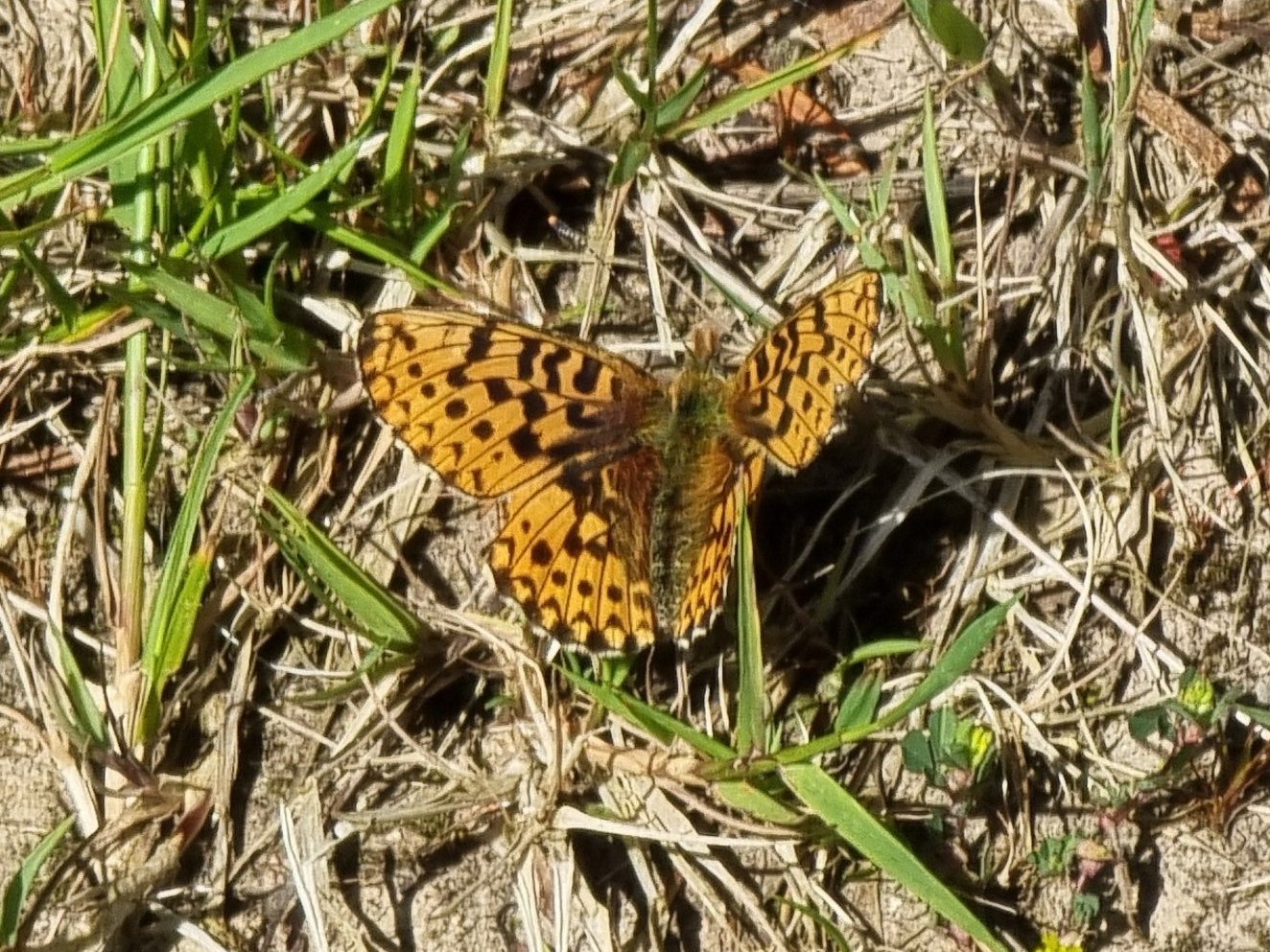
This site really didn't pay off for some reason (two many species already picked up on similar soils maybe) and it went from being swelteringly hot to cool in the blink of an eye. A Pearl-bordered Fritillary was a target but the Cream-spot Tiger netted in flight was a highlight. It was at Rewell that it dawned on us that we were not going to make the 1500 species.
Climping Dunes
It was quite cold by the time we got to Climping, so many of the species I found on the reccy could not be refound. The plants were great though. And Sand Catchfly was a highlight for the whole day. There were a few nice inverts like Grey Bush-cricket, Dune Robberfly and Acrosathe annulata.
And the days only fish...a Small-potted Catshark.
And then back to Dave's for more moth-trapping and microscope work. It wasn't long before this Pygmy Shrew paid us a visit!
Although the first moth trapping at Burton was quiet, the trap was quite lively with an Alder Kitten a rare encounter for me. The last species of the day was this Great Silver Water Beetle. I was sat at the microscope for 2.5 hours but probably only added about 40 species. It was much harder doing this tired in someone else's house than I expected. In fact, it took about 15 hours to process all the specimens, and they only added about 150 species. So, for the 24 hour challenge, I actually think you are better not taking specimens. From a records point of view though, many of the best records came out of this lot.
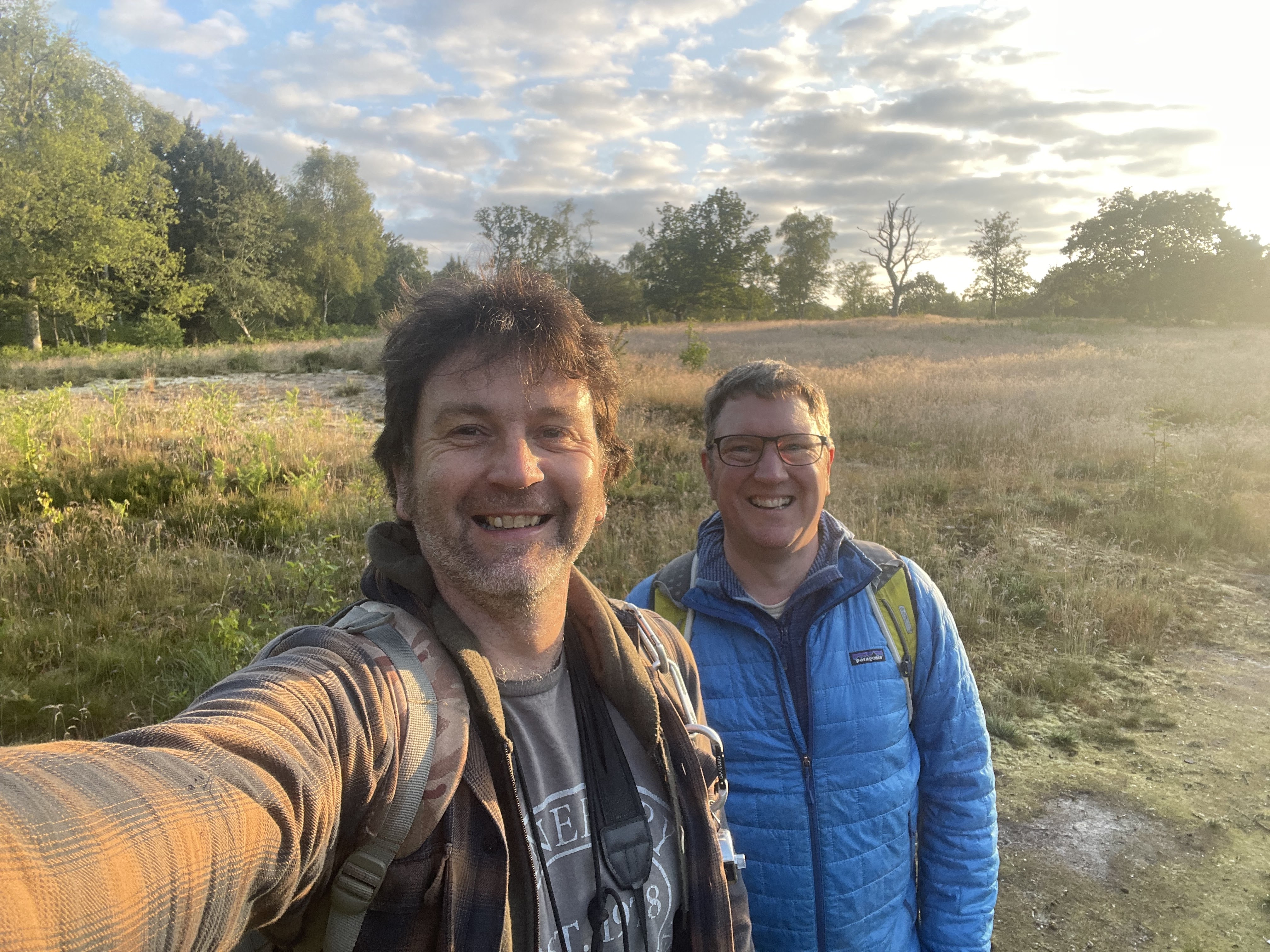
So that's it! Here's us at about 7.00 am. We did not look like that by the second midnight! So before I finish with the entire species list, it's so long until the next time we are crazy enough to try something like this again.
Oh, one last thing. Out of the 622 inverts we recorded on the day, a whopping 58 had some form of conservation status (such species are included in bold in the following list). Many of these are now out of date but I have not had time to differentiate these. Also, this list is the full 1158 species and includes the 86 microscope IDs added after the challenge, I'll try and update it if I get time but a period of high pressure means I will be head down with work for days/weeks now.
So, we didn't get to 1500 species as hoped. In fact, we were considerably short of it. We got to 1,069 species (expect this number to change a bit as I process the data, I suspect it might go up a little actually but not by much). Now this is more than we achieved in 2017 but not by much and interestingly in 2017 we got to 1,000 species way before we did this time (in 2017, species 1,000 was Drilus flavescens at around 19:30 at Levin, while on Saturday it was Rosy Footman at 22:00!). Despite seven years more experience, better planning and better health (hay fever and bad knees didn't scupper us this time), we struggled at times to build up that big list of inverts we had hoped for.
The same view as above obscured by two dodgy-looking Homo sapiens (species no 1).
Firstly, it wasn't for want of trying - the whole thing was a mixture of incredible highs and a few lows. We did not stop for the whole 24 hours. Getting up at 22:45 with just four hours sleep was brutal. Then hearing Nightjars, Field Crickets, Woodlarks and Nightingales all around Burton and watching the sunrise there was just wonderful. Feeling feint on Levin was really nasty but seeing the huge diversity of wildlife at Hoyle Farm was a site to behold. From species 2 at 00:00 being Field Cricket through to the final species at 23:59 being Great Silver Water Beetle at light, we did not stop for the whole 24 hours except to drive between sites and eat.
Several things didn't line up for us. Despite great weather in the day, between 02:00 and 8:00 it got very cold, and the dew was so heavy at Burton Pond it made sampling then impossible. It's not been a great season for moths either, so the first moth traps at Burton, were very light on moths. We also had a couple of sites that didn't produce as many species as we had hoped and finally, by 17:00 the sun went in and it got very cold again. It's also a lot harder to identify species at the microscope when you are tired out of your mind than I was expecting! And collecting specimens takes time too, which must eat into this. Game theory is quite key to this challenge and some things that you think will work in your favour don't necessarily pay off. However, all of these specimens will be identified (probably this week looking at the weather). And I will include them when I write a more detailed blog later this week.
I have entered nearly half the data so far and a few early stats include 109 species of spider, 15 species of butterfly (including this lovely Brown Hairstreak larva at Hoyle Farm) and and 146 beetles. I was hoping for something like 400 beetles and 200 spiders, clearly I was wrong to aim so high. Is 1,000 inverts possible in day? I think so easily but maybe if you are only doing inverts. Not sure how many plants we have but the Sand Catchfly at Climping was a highlight for Dave.
And finally, the really amazing thing is how much people have donated! We have raised £2284 for Sussex Wildlife's Trust reserve management! A huge thanks to everyone who donated, especially to the Pebble Trust, Edward Norfolk and Charlie Burrell for their incredibly generous donations. You can still donate here on the Just Giving page. Anyways, watch this space for a full write up later this week.
I finished an invertebrate survey at Holmwood Common today for the National Trust in Surrey. I was pleasantly surprised by how much stuff I found today but the lep. larvae were the highlights. This is the first time I have see a Purple Emperor larva, so you won't be surprised to see I took a LOT of photos of it. Enjoy!
What a cute little dude! Hard to believe next year this could become our biggest butterfly. If it's lucky!
Nearby I beat some gorse and got this remarkable looking lichen mimic moth larva. At first I thought Brussel's Lace, then a Light Emerald and thanks to Jeroen Voogd on the Caterpillars UK & EUROPE Facebook group he pointed me in the right direction. It's not a geometrid at all. It's Beautiful Hook-tip. A moth I have seen hundreds of times but another larva tick!
And then, a massive Pale Tussock! I couldn't get it to unfurl.
The black stuff on Pale Tussocks is like that Vantablack paint, it reflects no light at all. I was staring into that blackness when I was reminded of the Fast Show...
I was just looking for a blog title when I saw that the actor who played my favourite character in my favourite film has just passed away. So the title is a quote that many of you will get but still kinda works for this post. I think some Vangelis is needed at this point and it has to be this one from the soundtrack.
I just got back from Ken Hill again and it was another amazing week. I'll start with the vegetation structure and composition plots. The good news is I only have 28 left to complete. The woods are much harder going than the arable and grassland plots but have some interesting surprises. The biggest tree I have found so far is the Horse Chestnut shown above with a Girth at Breast Height (GBH) of 4.37 metres! Them conkers are bonkers! It was however the arable plants that were the most interesting again. Here is a quick recap on last month, we got to an index of 79 (which is already of international significance according to Plantlife's index). Here is a quick recap on the species recorded so far. Those in bold have conservation status.
This time, I found a few more goodies. First up only a single plant of Gold-of-pleasure, a plant I had never actually heard of before. Thanks to Richard Carter (vice county recorder) for his help with the identification of this one. I only found one plant of this. This is listed as nationally scarce and scores 5. That's 84.
The big surprise though was finding a lens of sand in a field I thought was dominated by Yorkshire-fog. It was dominated by Smooth Cat's-ear! I have only ever seen it as small plants before, never dominated the sward. This is listed as Vulnerable and scores 7, that's 91.
But in among this mass of pappus, there were scattered plants of Annual Knawel. Listed as Endangered (the highest scoring so far), this scores 8 bring the site up to 99. It's not much to look at.
Green Field Speedwell - scores 1, that's 100.
Grey Field Speedwell - scores 2, 102.
Common Broomrape - scores 2, 104.
Slender Parsley-piert - scores 1, so that's an incredible 105. I did have a look for Red-tipped Cudweed but didn't find it on site. I may have found it nearby though but the jury's still out on this one.
And with it, some Small-flowered Catchfly! My first on the mainland. Anyway back on to the Estate. A large patch of Harbells were present on the Plain.
And this veteran Holly, with a GBH of 2.37 m! It's definitely the biggest I have ever seen.
Birds were pretty quiet but the highlight was an Osprey flying overhead out to sea! If you've had enough of Vangelis, have a listen to this Woodlark (and Yellowhammer) singing at the south of the site.
Now for the invertebrates. After four visits I am up to 583 species and this is really just field dets, exciting species and the spiders, there are lots of specimens yet to identify over the winter and two more field sessions to add to this. On the last morning I spotted this female Pantaloon BeeDasypoda hirtipes. Couldn't get a good shot though so the second one is a stock photo.
Lots of males about too.
As I watched this female fly into her burrow, immediately two of these flies appeared and jostled for position. As far as I can tell they are Miltogramma germeri (rare). Thanks to Stephen Plummer for his help with these.
This Megalonotus antennatus was a new one for me and also means I have now seen the whole genus. I swept this from St John's-wort.
I swept this Chamomile Shark from some mayweed.
But the other larva I swept in the same net stumped me. A quick post on the UK caterpillars page and some suggested Heliothis. Which realistically for Norfolk means it could be Marbled Clover! I would be interested to see if this can be verified. Alas Tony Davis has just suggested it could also be Scarce Bordered Straw so it looks like I am stuck with Heliothis sp.. I have only ever seen Marbled Clover once when Mark Telfer showed me an amazing triangle of arable plants in the Brecks some 15 years ago. Whilst looking at Sand Catchfly, an adult came in to feed! Never seen one since.
Next month I will try again for Red-tipped Cudweed! I bet there are more arable plants yet to be discovered out there.
"All these moments will be lost in time like tears in rain."
Technically they'll live on in my notebooks, reference collection, blog and in the relevant records centres but it was the line in Bladerunner that got me hooked as a nihilistic teenager. It's still my favourite movie after all these years but here's a sobering thought. Bladerunner was released exactly halfway between now and the end of the 2nd World War.


 Posts
Posts