So I have just got back from the longest holiday I have had in a decade. Ten days on Jersey. After really getting the bug last September, I was desperate to get back there and get in the rock pools again and this time I timed it so I could do some rock-pooling every day for that whole period. More importantly though, I was accompanied each day by Nicolas Jouault, who took us to all the best places on the island (including a two day trip to the Ecrehous, which was so awesome it's getting its own blog post). Nick's knowledge of the island's marine species and where and how to find them is incredible and I am so grateful for all the time he gave me. Here's me, Karen, Nick and Lou Wagstaffe (Lou came out with us to La Pulente and showed us loads of stuff there - check out Lou's amazing photography here).
We did find rather a lot! Before I get to Nick's discovery of Discodoris rosi, please indulge me in this sequence of dorids, neatly setting me up for a rather stupid gag...
We saw plenty of these Warty Doris Doris verrucosa. Not a new one for me but a pleasure to see these large nudis again. They're almost too big for the macro!
On the second morning out with Nick, we headed to Le Hocq and Nick soon found our target species. The behemoth among nudibranchs, Dendrodoris limbata. This massive species should be handled with care, as it secretes a toxin to help it consume the sponges that it feeds on. I went on to find another three animals, including two immatures! I could not get enough of them. This was one of the key targets for me on this trip. They are a recent arrival to Jersey.
Terrible photo, but turning a rock to see Dendrodoris limbata and a Green Ormer in a 'yin and yang' like embrace is the most Jersey thing ever! There were three species of nudibranch under this rock. While I am at it, it's vital to turn rocks back the way you found them and gently too. It kills the life under them that can't move very quickly. There are some utter tools out there doing this wholesale, likely driven by illegal fishing. Just turn the rocks back, it really isn't that hard. Anyway, rant over.
We saw quite a few Sea Lemons Doris pseudoargus. A common and widespread dorid.
This one was a lifer. Geitodoris planata. Large and dark, often with pale starry patterns on them. These were at La Rocque and also the Ecrehous.
Then back to the star of the show. Nick found a bright orange-red dorid under a rock at La Pulente. We thought it was something else at first but then noticed the pale rings. It's the ridiculously named Discodoris rosi. DISCODORIS! FREAK OUT! And freak out, I did. That was the most unexpected find and completely new to the Channel Islands! Nice one, Nick.
Here are the best of my shots. Check out the translucent bases to the rhinophores.
And finally, Grannydoris hominesis. A recent DNA test led to the discovery that I am one quarter nudibranch, explaining my obsession with these awesome creatures! You see, my late Granny Doris fooled everyone for decades - we had no idea she was a nudibranch (to be fair, I did always think it was odd that she got through so many sponges). Here she is with her rhinophores retracted, awaiting a fresh delivery of sponge from Kwik Save. Miss ya, Gran.
Anyways. Back to reality. Another lifer for me was the awesome little Celtic Sea Slug Onchidella celtica (not a nudi though). They are all over the pier at La Rocque, we saw some 50 animals in a square metre. You find these sitting out of the water quite high up the shore, they are very slug-like but cute.

Edmundsella pedata was the commonest sea slug on Jersey. I saw 50 in one day and well over a 100 on the trip.
Nice to see a tiny Montagu's Blenny right at the top of the beach. This was a four blenny trip, I think well over 20 species of fish in all. I'll cover them more on the Ecrehous post.
I got a lot of lifers in the squidgy groups, like sponges and tunicates! Here we have Pyura tessellata.
And what I have as Ascidiella scabra.
I should have warned this post goes on for ever. Aeolidiella alderi was widespread but in low numbers. We had one or two on each session.
And what I believe are their eggs. A bit of foreshadowing here. Many nudibranchs are identifiable by their eggs through experience, association and deduction...
Remember the rock I said had three nudibranchs under at Le Hocq? It had a single Dendrodoris and a couple of Edmundsella and round the edge it looked to be covered in small hydroids. I went for the close focus binocular trick and spotted a tiny bit of egg white with yellow highlights. Hold on a minute, that's a nudi! We gently got it into the lid of the Ferroro Rocher box and it was none other than Trapania maculata (turns out this was only the 4th record for the island). For the record, this was a 12 nudibranch trip!
At Rozel I found my first cup corals. These were common on the Ecrehous. This is Scarlet-and-gold Cup Coral Balanophyllia regia.
Also there, Manilla Clam Ruditapes phillipinarum. A recent non-native introduction to the island.
Facelina auriculata is surprisingly uncommon there. We only found two (one at La Rocque, one al La Pulente).
This place is incredible, like the surface of some alien world. Just watch these tides though, you can get caught out here easily. It's dangerous if you are not experienced and reading the tide all the time to go out far.
We found a couple of these stalked jellyfish Calvadosia campanulata, which is the one I see most often.
Nick identified this bryozoan at La Pulente, as the rarely-recorded Schizomavella sarniensis. There's so much stuff like this on the rocks, most of which I am clueless about. It's humbling but insanely addictive. I love being outside of my comfort zone.
I got very excited by this mollusc, only to figure out it's just an immature cowrie sp. (Trivia).
Round the other side of the island to Archirondel, Karen found these two Parasitic Anemones Calliactis parasitica.

And Nick showed me this incredible sea weed there too. It's Codium bursar and is quite scarce. It feels like a sponge and well deserves the colloquial name of French Beret.
Man, I can't get enough of this stuff. As you can imagine, I am pretty stoked. A huge thanks to Nick for all his help, time and knowledge. We were lucky with the weather but we saw no one else out recording in the rock pools. I am surprised that so few people are recording marine wildlife on Jersey. It's really important to record and submit records, so this is a plea for anyone reading this on the island or travelling there for a break, to do so. It's changing all the time too through climate change and accidental introductions and documenting these changes is really important stuff.
Furthermore, you can support the study of natural history on Jersey by joining the Societe Jersiaise here.
OK, I need a breather after all that. But I leave you with this collage that says it all really. Each of these was a lifer from this trip. I think I added about 55 species!

WOW! We have just got back from a week on Jersey and it was INSANE! I will have to write several posts to cover just how much stuff we saw there, this one being concerned with the marine side of things. Rock-pooling to the south east of the island is incredible. The first thing you need to know about rock-pooling here is that there is a huge tidal reach but (and this is where I went wrong last time I went in 2017) it's not just about going as far out as you can. In fact, it's as much about getting as low as you can. So yes, you'll see more on the lower tides but that can still be quite close to the shore. This is where I went wrong last time, legging it out as far as I could, I spent so much time worried about getting cut off, that I barely found anything.

I had at least 44 lifers on this trip, the majority of these coming from the rock-pools. So here, in no particular order are some of the amazing things we saw. I am starting with the nudibranchs and other sea-slug like creatures as they are the thing I have become most obsessed with! First up above is Facelina auriculata, a new one for me and the only one we found (at Green Island). Only about 5 mm long. Who needs to watch science fiction when there is an alien world on your doorstep?
I was very pleased to find five Edmundsella pedata! At both Green Island and La Rocque. I found this last year on the Isle of Wight and this was the sea-slug I found the most on this trip. Again, all only about 5 mm long on the underside of rocks.
A lifer for me was the huge Warty Doris Doris verrucosa. Karen spotted the first one by finding the egg mass (image below).
Just one Aeolidiae filomenae at Green Island.
I am definitely getting better at spotting nudibranchs. This one at Ouaisne was so inconspicuous at first when I turned the stone but it soon unfurled. I believe this is the star-ascidian-eating Goniodoris castanea. I saw one of these at Kimmeridge Bay last year but this was a much larger animal. It might not be that bright but the shape of the thing is incredible. Like a snow plough crossed with a WW1 tank. I was pleased with five species of nudibranch for this trip.
There were quite a few Yellow-plumed Sea Slugs (Berthella pulumella) about but I didn't photograph them and I believe these things are Lamellaria perspicua (a sea-slug like snail). I have seen this at the Pound in Eastbourne but again I am pleased to be getting better at spotting them. Close-focus binoculars are pretty useful in rock-pools.
Now for the other molluscs. When I turned a rock shortly after starting to find FIVE Green Ormers under it, my mind was blown. This is a huge, fast-moving mollusc and a real Channel Island speciality. I could not get enough of their weird beauty. I reckon I saw 50 of these on Saturday 21st, which was one of the lowest tides of the year.
Key-hole Limpet (Diodora graeca) was a long-overdue lifer too. Quite different to what I was expecting with the key-hole itself mostly obscured, the shell covered in debris and the mantle rising up around the base of the shell.
Anemones were pretty amazing too but my favourite was the Parasitic Anemone. We found two of these, really quite large.
And this one was the Trumpet Anemone. Thanks to Nicolas Jouault for his help with some identifications and gen for La Rocque and to John Walters for his gen too.
I am rather out of my depth with sponges and tunicates but I was told this one was Sea Strawberry (Aplidium elegans).
I am pretty sure this large sea-squirt was the Yellow-ringed Sea Squirt Ciona intestinalis.

And this thing was the size of a hand! It was huge. This must surely be the amazingly-named Neptune's Heart Sea Squirt Phallusia mammillata. That hand belongs to Tim Ransom by the way, I'll come back to Tim in the blog about the terrestrial stuff when I get some time. We had a great few hours yesterday morning looking at the marine stuff. Even on a rubbish tide, La Rocque is incredible just a few hundred metres out from the beach.
My only sponge tick was these orange-sized blobs I believe to be Tethya citrina. There is so much more there that I am not even attempting to ID.
Now for the worms. Karen spotted the first one of these huge worms but it shot in when she touched it. We found another though, easily disturbed if you are not quiet. This is Sabella spallanzanii. Listed as the Feather Duster Worm on the UKSI but called the Mediterranean Fan Worm on iNaturalist. This is my greatest issue with iNaturalist, the use of non-standard or Americanised English names for species. However, it was very good at seeing what people had been recording locally on the island, especially so when you have left most of your books at home. I wish iRecord could be as slick as iNaturalist for features like this. Thanks again to Nicolas for pointing this feature out though.
Nearby, the Twin Fanworm (Bispira vilutacornis) was a real looker. Yet another lifer.
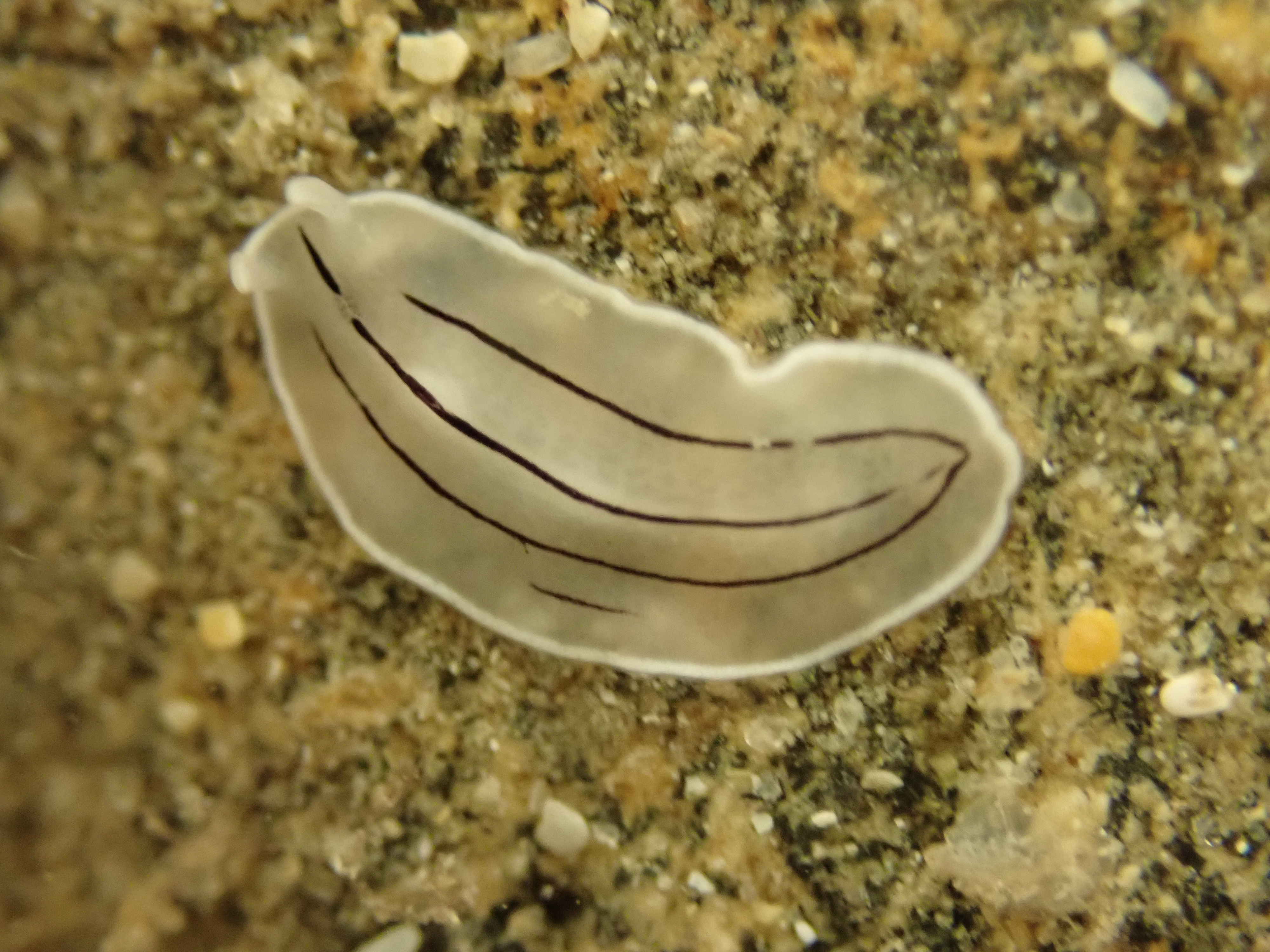
We only saw two of these, but very pleased to finally catch up with Candy-striped Flatworm. This was a tiny one, spotted using the close-focus binoculars (barely 5 mm long).
Now for the crustaceans. So less than an hour into rock-pooling, we saw the most amazing thing but it got away. Perhaps the most brightly-coloured crustacean I have ever seen. With a little help, it was clear that what we saw was an immature of a Spiny Squat Lobster. Quite different to what the adults look like. Gutted I didn't get a photo though but what an experience seeing this red, orange, blue, yellow and white thing darting around our feet!
An incredibly attractive species this one but I was sad to realise it was a non-native. This is the Asian Shore Crab. Quite common higher up the shore.
There were lots of spider crabs about. I think this one is Macropodia deflexa but I was running out of time here and didn't get as many shots as I would have liked.
And this one is a mystery to me. It was much bigger than all the other spider crabs that I saw (the commonest seems to be Leach's Spider Crab (Inachus phalangium). This was almost twice as big with huge claws with a distinctive shape. I can't see anything that matches in "Shallow-water crabs". Is it just a large male Inachus phalangium? Those pincers are huge! EDIT: Thanks to Nicolas, it's a large male Pisa tetraodon.
And finally, the fish. I think the fish list for the week was nearly 14 species and three of these were lifers. I was surprised at how common Connemara Clingfish was! What a gorgeous fish this is.
Yesterday I found two Giant Gobies at La Rocque, which was also a lifer but no photo. Here is a Ballan Wrasse, we also had a Corkwing yesterday, as well as three species of blenny. Too much stuff to photograph.And on the way back, I saw Blue-fin Tuna from the ferry near Alderney! No photo though, they were quick. As was the ferry.
It was pretty amazing. I couldn't drag myself away from the sea. I even overcame my fear of being in the water. I bought a snorkel and mask and went out with Bouley Bay Diving Centre who were great at helping me overcome my fears. After 10 minutes I got my breathing and heart-rate down and absolutely loved it. I didn't want to come out. A huge thanks to them for this. I am already planning on a buying wet suit for more snorkelling action more locally. I even had a shave, so that my mask wouldn't fill with water (always one of my big fears with this being a contact lens wearer). I got close to Pollack, Montagu's Blenny and Two-spot Goby here but it was much harder to use my camera than I was expecting!
So that's it for now, part two will be some time next week now as I have lots to do back home. Here's Karen and I on the way back enjoying the sunset. I will not be waiting another seven years before I go back to the Channel Islands. It is amazing!


 Posts
Posts