But unless you're a moth larva, moth pupa or a False Truffle (and you might well be yet) you're probably OK. Either way, I am hoping that a shameless blog title like this will get lots of hits and shares.
Before the TV show, before even the computer game, I have been onsessed with this weird group of fungi. I have seen four of the fungi that are generally referred to as Cordyceps but three of these are actually in two different genera now (Tolypocladium and Ophiocrodyceps - this latter was specifically referred to in The Last of Us though).
Anyway, here are the four species I have seen in Sussex and Surrey, in order of how frequent they are on the NBN.
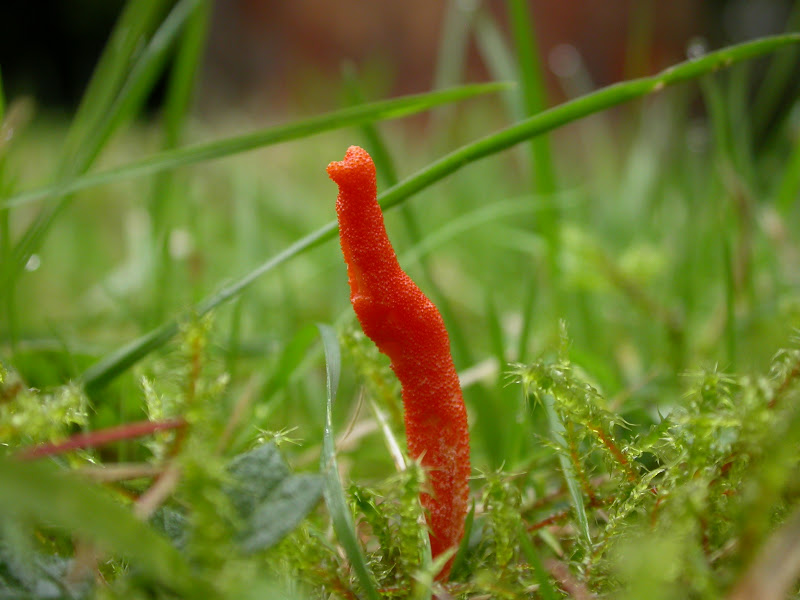
Scarlet Caterpillarclub (Cordyceps militaris)
Who doesn't love Nice 'n Spicy Nik Naks? This one parisitises moth pupae underground, bursting right out of the poor sods with these bizarre orange-red fruiting bodies. Ebernoe Churchyard is a great place to see them. I have also seen them in Brookwood Cemetery and Kent & Sussex Cemetery but that's about it.
Snaketongue Truffleclub (Tolypocladium ophioglossoides)
This is one of the ones that parisitises False Truffles, rather than insects. I have only seen it once, at Brookwood Cemetery. Such a great English name!
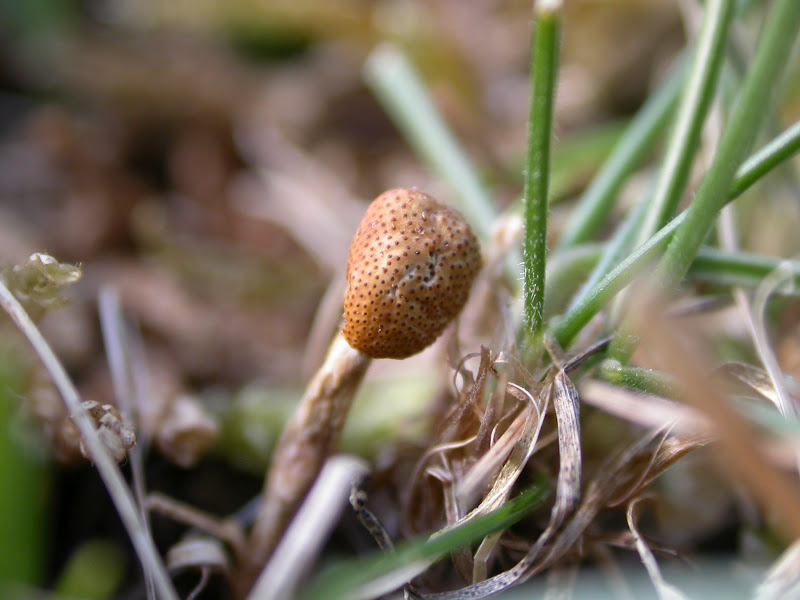
Ophiocordyceps gracilis
This one parisitises moth larva, I think I read maybe even specifically the Common Swift, which feeds underground at the roots of various plants. I was shown this one several years back in 2012 at Mill. We stumbled on another in 2017 at Levin Down and then I found one in chalky secondary woodland at the back of Brighton in 2020. I have only ever found one at a time and never in the same place twice.
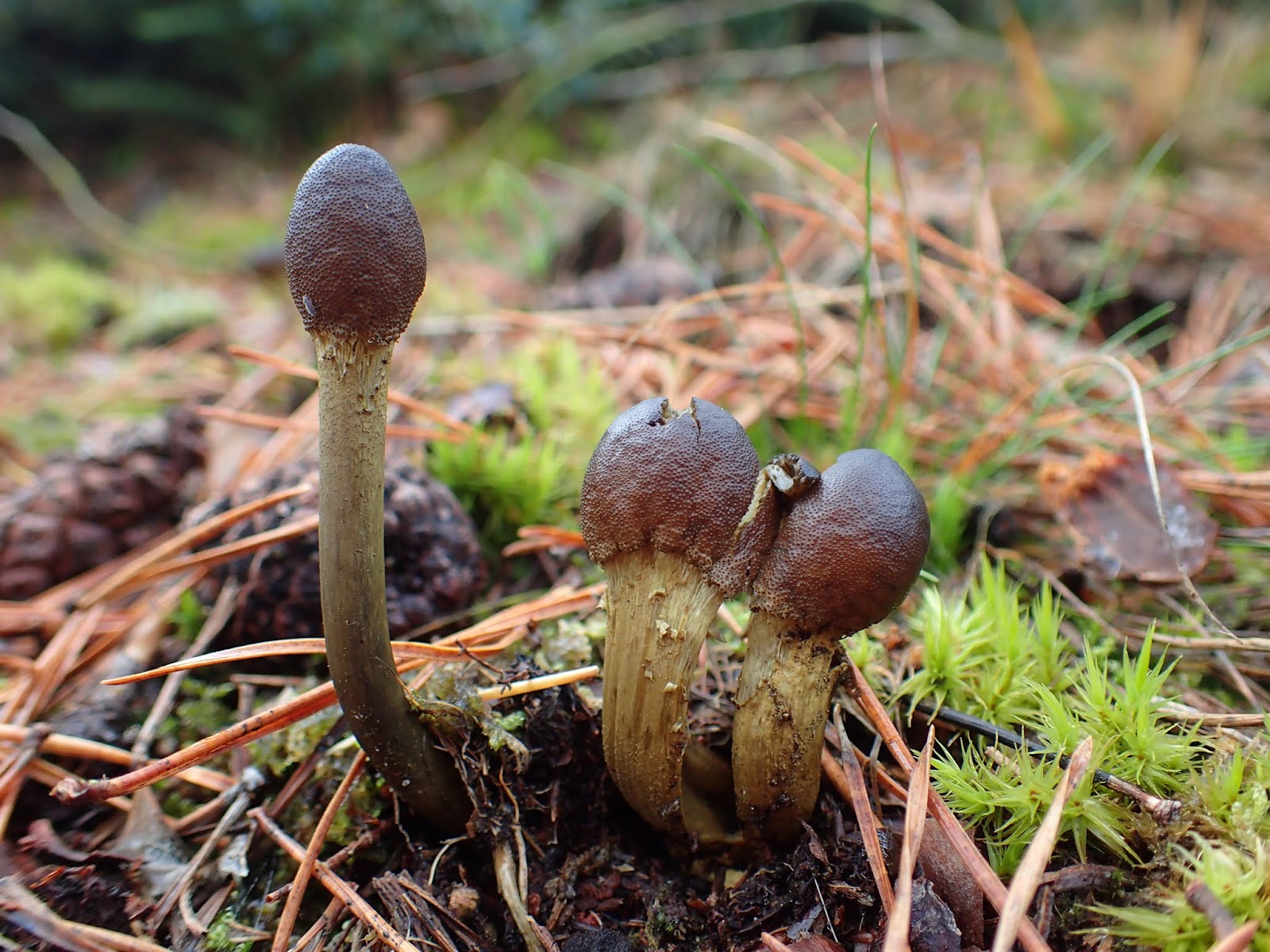
Drumstick Truffleclub (Tolypocladium capitatum)
The other species that targets False Truffles. Probably my favourite of the four, because I stumbled on this one myself at Graffham Common a few years back while looking for spiders. They look like cartoon matchsticks.
There are some other species, I believe. But I am yet to see them. Would love to see photos of other UK species if anyone has them, especially if the host is known.
So, I don't think we are quite at the stage where these fungi are going to start infecting Human brains but it's nice to see just how close to home the very real nature that inspired the computer game and the excellent TV adaption came from.
I can't get enough of waxcaps. I mean, look at them! They're some of our most charismatic species, they're also extremely good indicators of good quality, well-managed, nutrient-poor grasslands. On Tuesday I went on a grassland fungi training course at the Kent & Sussex Cemetery in Tunbridge Wells. Andy McLay of the Natural England Field Unit lea the course and Janet Whitman made the whole thing happen. Thanks to Clare Blencowe for inviting me too.
There is a scoring system for five main groups of grassland fungi known as CHEGD. Each letter refers to the first letter of the genus. The H is for Hygrocybe or waxcaps and that's what I am particularly interested in. I had seen 16 species up until Tuesday but thanks to Andy we saw 11 species on the day and four of these were new to me making my list now stand at 20 in all.
In the above image from top left to bottom right you have: Oily*, Blackening*, Parrot*, Snowy*, Goblet*, Crimson*, Earthy*, Splendid, Slimy, Scarlet, Golden*, Pink, Fibrous, Cedarwood, Dune, Meadow*, Honey* and Heath (I have no photos of Butter or Spangle*). Those with stars we recorded on the day.
The best thing about the course was realising that these fungi are better identified from macroscopic characters rather than microscopic ones. The other was that I have always been worried I am overlooking Crimson Waxcap among the Scarlets and Splendids. I now realise that I have not been doing so, I have just never seen it before. Until Tuesday that is. Here is Crimson Waxcap, quite a beefy or blood-red colour with a robust and fibrous stipe.


This is the Oily Waxcap. It smells of bed bugs apparently but having not seen a bed bug, I have also never smelt one. Turns out that the smell is actually just the general smell that most bugs release, it's the reason that shieldbugs are called stinkbugs in the USA. So I was able to temporarily 'acquire' a bug (a Juniper Shieldbug I found on the toilet wall). Once people had smelt the actual smell, it was much easier to pick up the same diluted version of the smell in the fungus. It's like an overpowering chemically-version of coriander. A great example of different areas of natural history interacting.
Andy got excited about this one, the Earthy Waxcap, with unusually arched gills where they join the stem. Other than this it's a pretty boring looking one but it's a really good indicator.
And Goblet Waxcap. A bit more matt to the naked eye compared to the miriad of shiny Spangle Waxcaps it was hiding amongst. Well spotted Clare! A bit 'scurfy' under the hand lens, you can just about see that here.
This one's not a waxcap but it is the commonest member of the genus Dermoloma (or the D in CHEGD). Also known as Crazed Cap and you can see why here.
I also realised that a waxcap that I stumbled across in Badlands back on the 14th July 2016 happened to be quite a goody. I don't think I ever featured it on this blog but here it is. Fibrous Waxcap. A big, robust waxcap, incredibly fibrous all over and with white-chocolate coloured (and textured) gills. The early fruiting time is also key, I wonder if that means it is under-recorded? That said, I have never seen it doing quadrats before anywhere.
A massive thank you to everyone involved in this course, particularly Andy for sharing his incredible knowledge. It has totally reinvigorated my interest in fungi and I am now thinking I might try and go and look for some of the other species we have in Sussex that I have not seen yet, Such as Toasted Waxcap. This just leaves me one question that I forgot to ask on the course.
Why on Earth are they so brightly and variably coloured? What is the point?! Is it a deterrent to grazing animals?


 Posts
Posts