An Alternative Natural History of Sussex.
This blog shows the highlights of my day to day findings as a naturalist and ecologist living and working in Sussex. Delivered with a pinch of nihilism, a dash of sarcasm and absolutely no tweeness, here is my attempt to show natural history as it really is: Brutal, beautiful, uncompromising and fascinating...and occasionally ridiculous.
I have been studying natural history for some thirty years, nineteen in a professional capacity. I currently work in Sussex as a freelance entomologist, ecologist and botanist and specialise in nature reserve and rewilding management advice based on the interpretation of the surveys I carry out. I also run a number of identification courses. An advocate of the pan-species listing approach. My main areas of interest are birds, plants and invertebrates and a lot of my spare time is spent in the field. I am the county recorder for spiders and bugs.
I've just finished a repeat of the farm surveys I did last in 2010/11. This time it was just the four summer visits but it still ends up being 288 miles! Each one is about 11 or 12 miles and it's a relief to have finished. Now begins the write-up! It's too early for me to say what the differences in the bird life are but in terms of composition of the assemblages, there is little change. In terms of oddities and rarities, this year lacked the Black Kite and Honey Buzzard of 2011, I suppose the oddest was Grey Plover and Turnstone flying over my most easterly site just north of Bishopstone and three singing Quail just north of Brighton and one just north of Worthing were also great to hear (I haven't heard Quail since summer 2011).
Obviously, you must have heard about Calasoma sycophanta but I had a few exciting arable plant finds that day that were rather eclipsed by the excitement of the beetle. In the June and July visits I stumbled across three plants I had never seen before, something that just doesn't happen these days. Usually if I want to see something new I have to twitch plants so this was great. First up was Field Gromwell (EN - 8). By this time I began using Plantlife's arable plant index to assess the farms quality for arable plants (the rarer the plant, the higher the index).
Th other endangered plant I recorded there five years ago and is Narrow-fruited Cornsalad (EN - 8, running total 16).
And masses of Field Woundwort (NT - 6, running total 22) growing among Phacelia (where if anything, there was so much it was suppressing the Phacelia!). This area of the farm was more acidic. I didn't record this on any of the others farms last time and I've only ever seen it once.
Others that day included Prickly Poppy (VU - 7, running total 29).
Rough Poppy (3, running total 32). A score of 30 is needed for county importance, so that's in the bank.
Dwarf Spurge (NT - 6, running total 38).
Others not photographed in June were:
Small Toadflax (1, running total 39).
Grey Field Speedwell (2, running total 41).
Henbit Dead-nettle (1, running total 42.)
Round-leaved Fluellen (3, running total 45). A score of 45 is needed for a site of UK importance. So that's in the bank!
Sharp-leaved Fluellen (2, running total 47).
Dwarf Mallow (2, running total 49).
And the these Common Broomrapes (2, running total 51).
Great. A site of UK importance. And there I thought it would stay until things got really exciting on the July visit!
First up I refound a few Night-flowering Catchfly (VU - 7, running total 58) scattered about the farm.
I found what I thought may have been the exceptionally rare Upright Goosefoot but closer examination of the seeds proved this to be Nettle-leaved Goosefoot (VU - 7, running total 65). New for me, not seen this on any of the other farms.
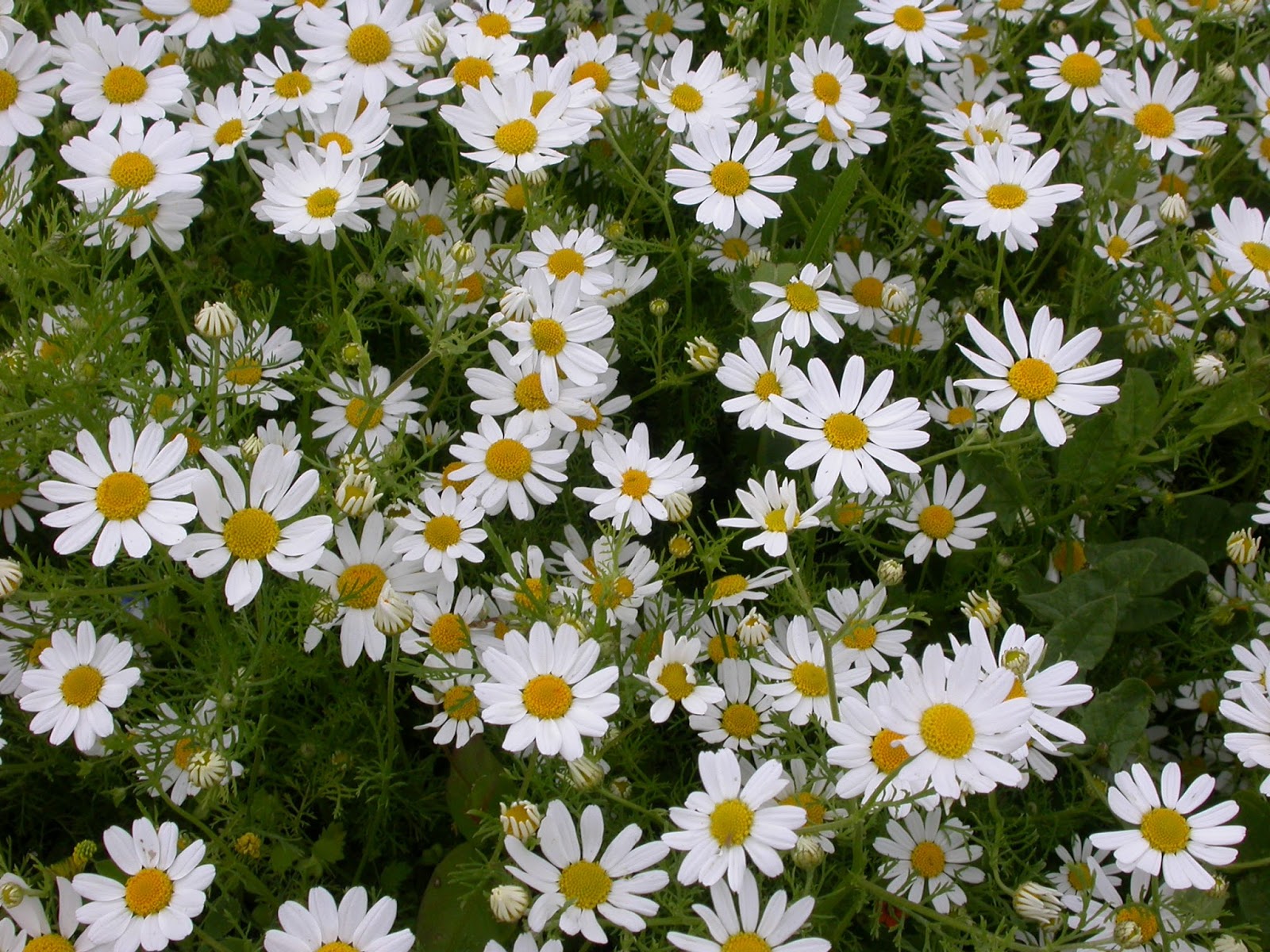
In the same field as the Narrow-fruited Cornsalad, yet another life. Stinking Chamomile (VU - 7, running total 72).
And then in the Field Woundwort area, another plant new to these surveys (as it's more an acid soil thing) Corn Spurrey (VU - 7, running total 79).
So two EN and five VU species! I thought it was possible I might actually get to 90, the threshold for European significance. So I mopped up a few more species to get it.
Slender Parsley-piert (1, running total 80).
Black-grass (2, running total 82).
Annual Mercury (2, running total 84).
Black Mustard (2, running total 86).
Upright Hedge-parsley (3, running total 89).
Field Madder (1, running total 90) WAHOOO!!! European significance!
It continues though...
Cornfield Knotgrass (3, running total 93).
Fig-leaved Goosefoot (2, running total 95). Thanks to David Streeter for pointing this out to me, I've been spotting it on almost all the farms since.
What a great result. I look forward to writing this up properly and getting some comments from Plantlife!
Jessica: "(Uncle Graeme) do you have Pokemon Go?"
Graeme: "My whole life's Pokemon Go!"
Above is the weedle, sorry weevil, Mogulones geographicus. It's a Nb species associated with Viper's Bugloss. I've only seen it once before in the Brecks so was very pleased to see it on three of the five recording areas on a repeat invertebrate survey of Friston Forest. Other highlights included Beautiful Carpet, Nemophora cupriacella and the tiny cuckoo-bee Nomada sheppardana.
The weevil was very obliging and I managed to get lots of photos of the striking little beast and thank to posting the above photo on facebook, I might have helped someone secure this as a first for West Sussex too! But before I show you some more pictures, what about this Pokemon Go business? Well it's parallels with Pan-species Listing are clear but the difference is that Pokemon Go only benefits the users, while PSL has benefits to wildlife and the wider recording community. However, I've seen a lot of negativity towards people who are essentially going outside enjoying themselves with a hand-held computer. Firstly, it's people who probably wouldn't go to those places getting out and about exploring, keeping fit and having a laugh. It's not likely taking naturalists away from their hobby (if that has happened anywhere then I would be very sorry about that). Wait, news just in: Jonty Denton has quit naturalist history and is now the UK's Pokemon Go champion.
So what's the problem? It's amazing how something in a week or so has gathered more active users than Twitter. I'm sure it will just be a fad but I won't be discouraging anyone from getting out in the field recording (fictitious) creatures. You never know, they might even find some real wildlife on the way (I've seen reports of this happening already on social media). Yet there is one negative side to this. I have a very thick skin when it comes to stopping anywhere to grab hold of bugs in odd places where people are watching, I've had some very good ticks this way and I'll never stop. But yesterday walking back to the Southerham office I stopped to photograph a butterfly with my phone and as there was an audience in the form of crawling traffic, I suddenly thought:
"Oh no, what if they all think I'm playing Pokemon Go?" For a second, a split second, I was self-conscious and then it passed and I carried on doing what I''ll always do. So it seems the only negative aspect I can see is mostly based upon the negativity towards the game, not the game itself.
Anyway, here are some more shots of this most glorious of weevils.
It's ironic that I was with Mike Edwards when he found the first record for Downland Villa Villa cingulata in Sussex the day after I watched my first ever football match. It's a type of bee-fly and is quite a smart looking beast. It hovers around in chalk-grassland looking for its host which is thought to be noctuid moth larvae. Having swept the grassland there all day yesterday, the only noctuid larvae we found in any abundance was Dusky Sallow. Could it be host-specific on this moth larvae?
Other exciting finds included the Mistletoe specialist bug Pinalitus viscicola which is new to West Sussex. Great also to see a male Araneus angulatus, only seen the females before.
Also new for me was this Six-belted Clearwing that I swept off a bank of Bird's-foot Trefoil. It was a bit worn from being swept but great to see my fifth clearwing (ALL without pheremones I should add).
This pyralid is also nationally scarce (Nb) and feeds on Knapweed. It's Paratalanta hyalinalis (yes that's seven 'a's).
Also, a couple of new beetles including Cleopus pulchellus. A rather smart little weevil.
A good day with two county firsts, four new flies, two new beetles, two new moths and one new bug.
OK. I'm about nine miles into one of my farm surveys somewhere near Bishopstone in East Sussex and have had a good day with arable plants including one lifer. That all seems so tedious now, I'm going to have to write a separate blog about this. I'm keeping one eye on the ground for arable plants when this happened in my head.
"What's that Rose Chafer doing scrabbling around on the floor? Rainbow-coloured Rose Chafer?. No carabid, wait, that's the Sycophant Calosoma sycophanta, SYCOPHANT! AAAGGGHHHHHH!!!"
Aaaagghhhhhhh!!!!! was emitted rather loudly as I scrambled to get a pot out of my bag. Jesus, that was unexpected, my heart's still beating like a big clock. Thanks to Mark Telfer for his pretty instant help on this species' recent records. The following is derived from Mark's notes: It was last seen alive in the UK 23 years ago at Thursley in Surrey and last recorded as fragments representing a breeding population 19 years ago near Thetford. There were only two other records in the 19th Century but it is stated that it was much more frequent as a vagrant in the 18th Century where it was recorded from East Sussex. So it's not a county first but it is the first in Sussex since the 18th Century. Pretty damn cool indeed. Especially as it featured in a blog I wrote about three years ago which makes for interesting reading in the context of how few people have actually seen this alive in the last 100 years or more. I mean, how many people have written a blog about seeing this and then actually seen it three years later? Kind of freaks me out thinking about it. And also asks the question, "which family member DID I trade in?".
Enjoy some more photos of the beast.
I found it walking along the 50 cm or so gap of bare ground between a winter wheat field and a set-aside margin, it wasn't a particularly interesting part of the site, just at the bottom of a chalk grassland slope with scrub. I think it's very unlikely that this represents a population, I didn't see any more and in it's home territory, it is more of a woodland species preying on the larvae of processionary and tussock moth larvae. Not something at all represented on the site I'd think. It was very fresh and Mark thinks this suggests it's more likely to be a vagrant. In fact, as the crow flies, it was only 1.5 miles from the coast. So, was this just amazing luck or are there more out there? It's hard to miss, about the size of Carabus violaceus. It just goes to show, that if you walk around anywhere long enough, eventually something amazing appears. I was also really pleased to bump into the farmer at just the right time to show him. Amazing. I'm not so gutted that I had to miss the Pan-species Listing recording weekend in Norfolk now due to work commitments. The find of the decade?!
UPDATE: Thanks to @bugmanjones for the updated title.
Finally connected with a new species of orchid, here is Sword-leaved Helleborine. This Hampshire Wildlife Trust (Chappetts Copse) is right next to one of the farms I am surveying but I missed them five years ago. There are hundreds of them there, if not thousands. Lots of Sweet Woodruff too.
Prior to this I went and helped Susy Jones get to 1000 species. This is significant in its own right but particularly so that she is now the 100th person to reach a 1000 species! Go and have a look at the top 100 listers and sign up if you haven't already! We even found a really scarce bug Dalman's Leatherbug Spathocera dalmanniwhich I've only seen once before.
Last week we carried out an invertebrate survey at Seaford Head and it was peak Potter Flower BeeAnthophora retusa time. We saw lots more retusa than we did plumipes but it was great to catch them and see the differences so clearly. We found them on three of the seven compartments we looked at. I struggled to get decent photos that show the critical identification features that separate them from plumipes but here are the best. Above is the female and below is the male.
I was frustrated at these shots but never mind. In this one he even seems to be 'flipping me the middle finger' (or front tarsus to be precise), which my camera kindly focused on.
I also saw Bryony Mining-bee Andrena florea for the first time. Yesterday, I must of seen 50 of them at Friston Forest where it was the commonest bee.
This is the stunning Chrysolina sanguinolenta (Na). It's quite unusual how I came by seeing this awesome beetle. About a month ago, I received a Twitter message from Jane Hawkins and Vicki Morgan (it was Vicki and her daughter Tilly, who found the original specimen) saying they had found an odd looking beetle on their allotment at Craven Vale & Whitehawk Hill in Brighton. I went up to look for it but couldn't find it. Several weeks later, they found another but this one escaped. Finally, third time lucky I went and had a look. I love the genus Chrysolina, has to be up there as my favourite genus. What I wouldn't do to see cerealis! What's your favourite genus? Anyway, a big thank you to Jane and Vicki.
Here he is again playing dead. This rare species hasn't been recorded in Sussex for some time. It feeds on toadflax so it's food stuff is hardly in short supply. It's very distinctive though and I think it's unlikely that it has been over-looked.
I am a big fan of Terrence Malick. Most of all the film The Thin Red Line. I'm not really a fan of war films but this is something else. Beautifully slow, full of internal dialogue and perfectly shot scenes of wildlife and landscape. This is a war film for people who don't like war films. It's a powerful movie. I often think about my Great Great Grandfather who we'll never know the name of but who died at the Battle of the Somme without knowing his partner was pregnant and without knowing he would father six generations. He died alone thinking his partner had forsaken him when what was really happening was her mother was intercepting the letters he sent, so she thought he had left her. All those people that exist because of that guy and he never even knew it. So, whoever you were. Thank you.
Back in 2009, we carried out many surveys at Ebernoe including one looking specifically at deadwood beetles with Mark Telfer and another looking more generally at invertebrates across the common with Mike Edwards. We are currently repeating the work with Mike Edwards seven years later so it's not easy to add new species of saproxylic invertebrate to the list but we have certainly done that over the last two months!
Back then, a lovely huge Beech had lost its limbs, one every year for three years or so providing plenty of habitat at just the right stage of decay. It was where I first saw Platystomos albinus and cut mt my teeth on saproxylic invertebrates. Six or seven years later and the fallen tree has mostly passed through the exciting stage of decay. Most of the bark has fallen away, the fungi present are hard (Lumpy Brackets and Ganodermas) and full of little other than Cis species. I suddenly remembered on the previous visit, a more recently fallen Beech with intact bark. It also had on the April visit some very fresh oysters which I figured would be nice and rancid by now. They were indeed. I broke one open and the following fell out.
Mycetophagus quadripustulatus
Mycetophagus multipunctatus
Pycnomerus fuliginosus
Triplax aenea (no other Triplax species sadly)
Glischrochilus quadripunctatus
Pediacus dermestoides
Cartodere nodifer
Rhizophagus sp.
Several staphs to be looked at later
A diverse mix but probably nothing new to the site. It was our very keen budding entomologist and trainee warden Oly Sayers who handed me a beetle I recognised instantly as the RDB3 Corticeus unicolor! Oly is close to the end of his placement with us at the Trust and he has only been out with me a few times but has proved to be good at finding rare and scarce deadwood invertebrates! It does also go to show however that the wood decay process is a dynamic process. A continuous supply of deadwood with various stages of decay is needed for a site to have a good saproxylic fauna. Everything always changes and that's also true for deadwood species. This is one reason why I have such a problem with log stacks, they promote the idea that wood decay is not a process but a static and continuously productive habitat. A log stack is really only marginally valuable for deadwood invertebrates for a few years when after that, it will mostly become a home to woodlice and centipedes and then worms (that's fine by the way - just don't kid yourself it's for deadwood invertebrates).
Anyway, back in 2011, I was with Mark Telfer when he found Corticeus unicolor new to Sussex at Cowdray. It's since been seen at Knepp and now it's been found at Ebernoe Common. I have heard its arrival in the south from its stronghold in the north has been dismissed as an introduction via timber movements. I have a problem with this as all the sites it's been found on contain old growth trees with lots of other saproxylic interest.
Anyway, having seen some 18 longhorns at Ebernoe, Including three I have seen nowhere else, I was hoping for some longhorns this week. Despite beating plenty of hawthorn, all I saw were two Tetrops praeustus and two Grammoptera ruficornis. Mike did pick up two of the amazing Criorhina asilica from the glades which has to be my favourite hoverfly. However, it was tipulid larva Mike and I found in standing deadwood that was previous cleared of Holly that proved to be most exciting. Mike took it home and it emerged as Tipula selene which is also RDB3 and is only the second time he has seen it in 20 years! Ebernoe keeps throwing up surprises. There are also plenty of species there which I have seen nowhere else, such as this lovely leaf beetle on the willows in the glades Gonioctena viminalis.
Secondary sexual characteristics of spiders can be quite unusual, like this male spider's funny hairy front legs. This is Bianor aurocinctus, a nationally scarce (Na) jumping spider that I have wanted to see for several years now. We found it on some dead wood right at the end of in invertebrate survey of Levin Down. It looks like it's only the second record for West Sussex which is really exciting. Michael Blencowe came out with me but was too scared to look at it closely with the hand lens, so he will pleased to see I have provided a photo of it down the microscope! You can see the detail of the palps also.
It was quite a damp day but we pushed on anyway. In the compartments that contain Juniper, I always concentrate my efforts there and this time it paid off with a cracking little micro moth which seems to be only the second site for it in the whole of Sussex. Argyresthia arceuthina is a really distinctive gold moth with a white head. Here is the Sussex distribution and the UK Moths page for the species. It's nationally scarce (Nb) and feeds only on Juniper!
We also spotted this bug beaten off Juniper and it seems this is an alien species that mainly feeds on garden plants such as cypresses. I'm not sure if this is also a species new to the counties!
Other highlights included Platyrhinus resinosus (on the same log I recorded it new to West Sussex last month) along with a mating pair of Platystomos albinus. Plenty of Grizzled Skippers, Dingy Skippers, Speckled Yellow and the first soldier beetle of the year Cantharis rustica.
October 1988: I made my first biological record aged ten (without really knowing what a record was) with the help of Ewart Gardner. It was a Goldeneye at Blithfield Reservoir.
September 1991: Steve Cooper showed me a moth trap for the first time on my school roof. Angleshades and Canary-shouldered Thorns blew me away.
October 1996: Partly through frustration at my A-level biology teachers ("that's not a rock-rose Graeme, it's a buttercup" - really? Is this what it's gonna be like if I do biology at university?) and partly for reasons that will forever remain a mystery, even to me, I started a degree and masters in astrophysics at Sussex University.
July 2001: I started my career in conservation at Dungeness RSPB.
May 2016: I returned to Sussex University to teach students from all over the UK about entomology.
I have just had one of the most rewarding weekends! Six month's ago Dr Alan Stewart of Sussex University asked me and a number of other specialists to come and help teach students in entomology at the campus as part of a BENHS event. For me, coming back to the university after all these years was very strange. Especially as I often used to look across from the maths and physics blocks up to the biology department thinking, "I really should be over there". I remember seeing the Biology Road sign all those years ago. So to go back and teach entomology, all be it just for a weekend, provided a great deal of catharsis for me. I gave talks on beetles, spiders and biological recording. The weirdest thing here was the lines and lines of calculus on the chalk boards, all very familiar but totally forgotten by me.
Anyway, the real stars of the show were the students. I was amazed at how keen they were, many of them turning up with reference collections and lots of equipment! On the first day we spent our time in the field by a dew pond on the campus (next to where twenty years ago Richard Attenborough gave us an introductory talk and I specifically remember him mentioning how important extra curricular activities are! - this could not be more true in the field of entomology) and the chalk-grassland at Stanmer Park. Alan and I had our petrol and electric suction-samplers respectively and this produced a wealth of material to show students. I was encouraging students to take carabid specimens to key out (the other half of the students split off with Mike Edwards to look at bees and flies).
I even managed ten new beetles with the help of Peter Hodge but it was back in the lab where the real work started walking students through keys for the first time. It was so great to see students get their first correct identification. One student picked up what I thought was a small Harapalus in the field which turned out be a male Ophonus. I helped really only by dissecting the aedeagus but the student managed to card the beetle and mount the aedeagus and we tentatively put the name Ophonus schaubergerianus which might even be new to East Sussex. I'm going to get a second opinion on this one. Sadly I didn't manage to get many photos of specimens or students. I did manage this photo of Chris Bentley and I at the microscopes.
On the second day we opened some moth traps. The highlight was the most well hidden Mullein, perfectly adapted to hiding on pegs.
We did more survey work on the campus and the highlight was finding yet another of the RDB1 Cassida denticollis. This area is clearly a hot-spot for this very rare beetle as we recorded it at Malling Down and Southerham last year. We picked it up (and two much commoner Cassida) in the suction-samplers. What was great was seeing students in the field come back with specimens they had caught such as Green Hairstreak, Rhinoceros Beetle, Andrena fulva, at least eight species of shieldbug and the saproxylic weevil Phloeophagus lignarius. The whole weekend was so exciting and I really felt like I helped make a difference. Well done to all the students and teachers alike, I hope this becomes a regular event!
Four years with my head in the stars seems like just a drop in the ocean now for me as I continue my life long journey down biology road.


 Posts
Posts