On Sunday, I breached the 1,000 species mark on a fantastic and rather unplanned trip out with the local British Bryological Society to Sullington Manor Farm, all down to bumping into Ben Benatt at Pulborough Brooks RSPB Reserve the day before. So let's call the 1,000th species I have seen this year Golden-eye Lichen Teloschistes chrysophthalmus. I am actually on 1,025 species as of Sunday, that's 17.1% of the challenge completed.
Saturday saw my attempt to go bird watching on a bird reserve with a telescope for like, the first time in about 15 years. So, Pulborough is a huge lake at the moment but boy did I find it hard work. The restrictive nature of being in a hide, scanning back and forth along a single plain used to be something I loved 20 to 30 years ago. Now, I just couldn't concentrate! I really think its PSL that's changed this for me, the chances of me finding something new or rare here were really low, while out on the heath sieving moss or vaccuming heather would have the potential to generate something really exciting. I did tick off most of the common wintering ducks, as well as finally seeing a Greenfinch (I saw a fifth of the UK's spiders before I saw one this year - bonkers). A distant Marsh Harrier was welcome. I still haven't seen Greylag though, and I proper dipped on the White-fronted Goose and Little Gull by not being able to figure out what end of my 'scope to look down, whilst day dreaming about sieving moss for tiny rare money spiders.

The RSPB staff were really really helpful, and let me do a bit of pond dipping at the centre. This got me a few nice species in return for the records. The Nationally Scarce Peltodytes caesus was a nice water beetle record, and it was good to tick off some common aquatic snails like this Giant Ramshorn. Why do I look so sinister here? I was actually trying to smile (that's a Giant Ramshorn and not an Oreo by the way). Also, that's the same telescope I have had since I was 11. And there were two Great White Egrets about 1.5 mile behind me that I ticked, thanks to the RSPB!
I then spent a few hours on Wiggonholt Common with Karen looking for spiders and other inverts. Seeing three Jack Snipe, five Snipe and two Woodock was much more like my kind of birding. I beat this Rhopalus rufus off some Gorse, this is a Nationally Rare bug that seems to be doing well on the West Sussex heaths but I don't think I have had it this far east yet.
And I sieved this Heather Shieldbug from some moss.
We headed to some very old pine stumps and Karen spotted this odd resupinate fungi under a few logs. I am pretty sure this is quite a rare fungus - Orange Netcrust Pseudomerulius aureus. The literature states it is rarely recorded on very old pine timber in the south east, almost always on heaths. Might it be a county first? There are no records on the NBN, or in the SxBRC. I am waiting for confirmation from the county recorder. Exciting!
EDIT: Not that exciting, it's not that species. Thanks to Stewart Wright, I believe this is likely to be Serpula himantioides. Still a lifer though.
Well done to Karen for finding this and thanks for remembering to take some action shots! And thanks to the RSPB for allowing access in exchange for the records, as this is not a publicly accessible heathland.

Then, I took a gamble on Sunday and it payed off. The forecast was no way near as bad as predicted and I ended up with some lifers! Three lichens and three mosses, thanks to Ben Benatt, Sue Rubenstein, Brad Scott and Sim Elliot. Yet the rarest thing I found was a spider. When we got to the chalk, I spotted a sub adult male Eratigena picta. An entirely new site for this Nationally Rare and Vulnerable spider (but also it would seem, very close to where I have found them on the Norfolk Estate in the last two years). Here's my map with the new record being the most north easterly one, still in TQ01 but very close to TQ11 now. I bet it's already there. Here are my records for the species now, with the western-most record the known site of Amberley Chalk Pit. I reckon I might have doubled the number of people who have seen this spider on Sunday!

The team found some Neckera smithii (was Leptodon) in Sullington Church Yard. I am on 85 species of bryophyte for the year now, that's 85% of my bryophyte target reached - I don't think I will fail to achieve this one now. Good to see, as it appears to have gone from Woods Mill now.
And this Nationally Scarce pink dust (now called Ingaderia vandenboomii because, why not?! - Llimonaea sorediata just wasn't exotic enough sounding for it), that grows on the north faces of old churches was one I have wanted to see for some time, as the late Simon Davey used to often talk about this species. If you imagine you had some pink wafers in a biscuit tin, but when you went to eat one, they'd all been snaffled by your greedy relatives, bar some crumbs in the bottom of the barrel - this is what this lichen looks like. Here it is responding strongly and rapidly to C+. Thanks to Ben and Sim for this one.

A lovely old track with old Ash and Field Maple was a real treat, I added Yellowhammer on call finally. I finally caught up with Ocypus olens under a stone and Nanogona polydesmoides under a log. The ludicrously small moss Seligeria calycina is always nice to 'see'. Here it is fruiting well on a lump of chalk.
Once we got to the chalk grassland, I had a fly over Corn Bunting new for the year. It was here I found the Eratigena picta.
There's plenty of Juniper here, this produced the Juniper Shiedlbug on demand for those that had never seen one. The diminutive Microbryum rectum made one very immature member of the group make some childish jokes, something I would never do. Anyways, after Brad bent down to show me his diminutive rectum, we headed on up the hill just as the rain started.
Ben found a significant patch of the Nationally Scarce Tortella squarrosa, a nice plant! Time to head back before we got proper soaked. I absolutely loved this day, lots of different complementary skill sets, with all of us learning from, and teaching, each other. A perfect day of natural history.
So, I ended the weekend on 1,025 species. Here's the exciting thing, of these 1,025 species, 519 (more than half) are invertebrates. I am very keen to use this challenge to show people that invertebrates do not disappear over the winter, there is lots to be found (and not just spiders). But also, this is a reminder that cutting everything all at once, or grazing really hard everywhere over the winter is bad for invertebrates, you need to leave some overwintering habitat. Otherwise, where are they going to go? Invertebrates don't just disappear in the winter, many overwinter as adults too.
Many thank to everyone who has sponsored me so far, please do consider sponsoring me if you can, I am fund raising for Sussex Wildlife Trust's reserves
here.
You can sign up to the pan-species listing website
here, it's totally free (although donations to the team are welcome).
And finally, my book is due to be released on the 26th Feb, less than a month to go!!! You can pre-order it
here, directly from Pelagic.
Next up, I will be heading to East Sussex for some vegetated shingle...

As my field season hurtles towards me, I better get part 2 of the trip to Isle of Wight wrapped up before I lose the window. This is mainly inverts and plants and is mostly based on two fantastic days out in the field with Mark Telfer. On the second day, Mark and I met up with Iain Outlaw, and as we got to the undercliff target area, before they had even said "here we are", I shouted "OIL-BEETLE!" And that's basically how the two days went.
Thanks to Mark, it turns out this one was a lifer for me! Black Oil-beetle, Meloe proscarabaeus my fourth oil beetle! So pleased to finally connect with this species. This male was much bigger than I thought it would be and very mobile.
Soon after this I was looking at the target species, the bryophyte Philonotis marchica.
Yet despite how rare and restricted this is, it wasn't the bryophyte lifer on the cliff face I got most excited about. The cliff was covered in hornwort, and I have never seen a hornwort before! This is Phaeoceros laevis! Here is the female with the horns.
And the male plants.
Earlier that morning, Iain took us into Shanklin to see the incredible fungus Coccomyces delta that grows on the old leaves of Bay. Such weird triangular structures, spot the four-sided one doing its own thing. I salute it.
And a quick stop to a churchyard for a naturalised clubmoss tick, Krauss's Clubmoss.
I covered three quarries over the trip. A couple with Mark and Iain but also I had a look at a quarry down by the Needles with Karen and that was a great little spot. A new hectad record for Phaeocedus braccatus was a real find!
And the ridiculously common Agyneta mollis. Two new hectads for this on the island brings the post 1992 hectads for this spider to at least 98, it's hurtling towards not even being Nationally Scarce at this rate (I had it in a playing field by my house this week).
And a Scotina, but unfortunately I lost the specimen. All are rare on the island and given I was in a chalk pit, this is quite likely to have been Scotina palliardii. I will have to go back! I got a couple of money spiders new to the island at various locations over the week, Micrargus laudatus and Parapelecopsis nemoralioides.
Rewind to a few days earlier when I went to visit Mark and his magnificent new garden. He got me four new bryophytes, really by hammering some of the really small acrocarps. But it was a new pseudoscorpion that was most exciting for me, Pselaphochernes scorpioides.
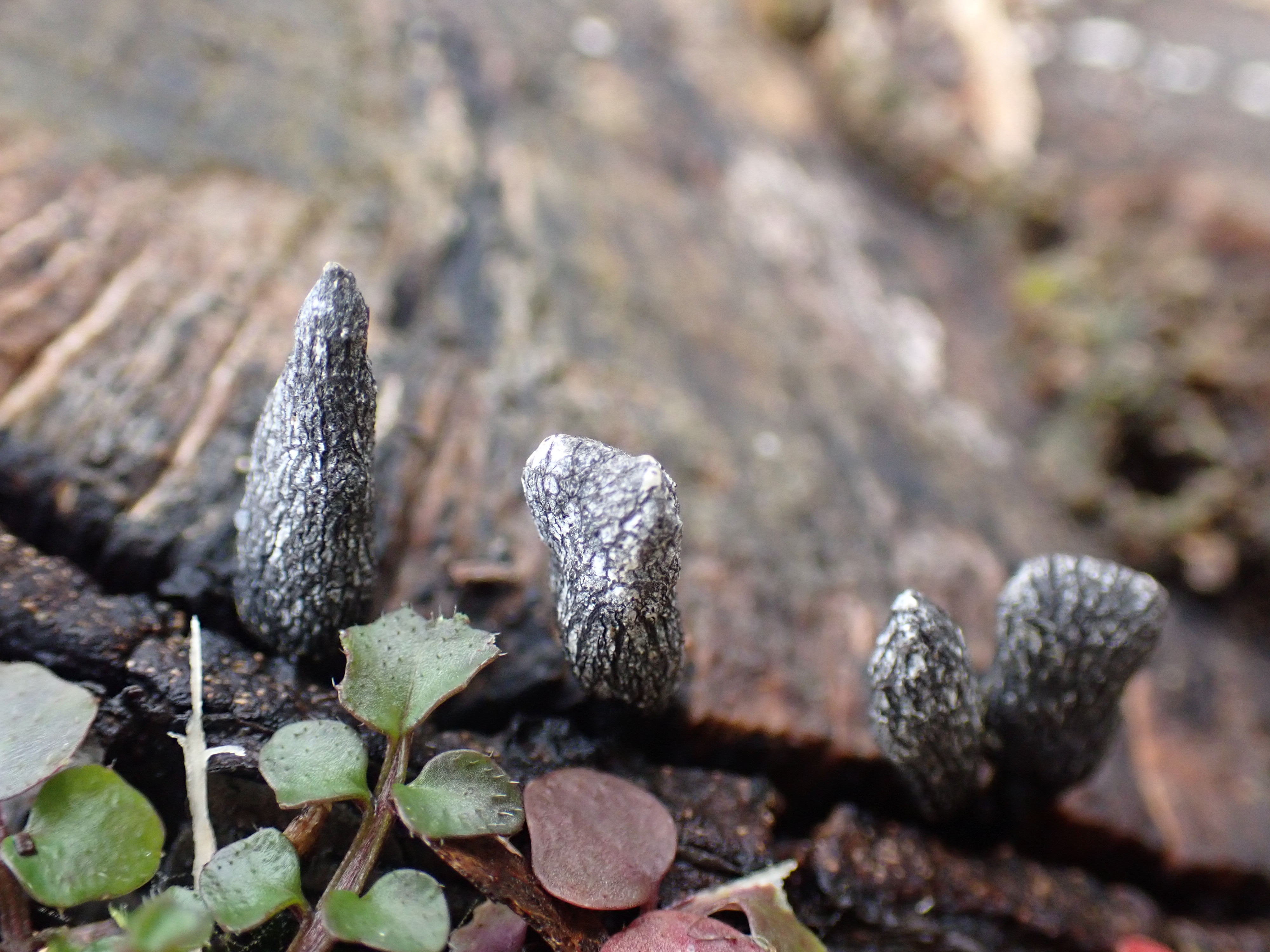
And a new fungus! This is Xylaria cinerea.
Then on to Ventnor Botanic Gardens. Mark had found this ant new to Britain sometime before my visit, it's Tapinoma ibericum. It's so numerous there that I spotted it on the first evening when Karen and I walked up to the gardens only to find them closing and I noticed it on the walls by the toilet block without realising the significance. They form impressive long lines.
A millipede that's only found here is, this one is particularly pale, Cylindroiulus apenninorum.
But Mark breaths first for Britain, so it didn't take long before he found one in the form of this weevil, under a rock. Likely to be associated with Cork Oak, Mark says it's in the genus Echinodera.
And another lifer in the car park for me. The rather odd looking reticulated slug, Tandonia cristata.
Karen and I went back to the gardens on a rainy day, when I discovered this fenced-off tunnel and just how good at light gathering the camera is on my new phone (I upgraded after nearly seven years). This was pitch black to the naked eye. The open end apparently comes out half way up a cliff, so no spidering in the for me.
And I turned a couple of stones and got the shelled slug we missed first time, Mark says it's most likely. Ear Shelled Slug Testacella haliotidea.
And no trip to the Isle of Wight is complete without visiting the Needles. I love the soils here.
So that's it for the part 2. What a week. It was a really great pan-species listing holiday, that was also in part research for the book on pan-species listing I am now 50,000 words into. A HUGE thanks to Mark for giving me so much of his time and knowledge, it was so much fun!
Yet my field season has started and I didn't quite get this out in time before I hit this period of high pressure (today is day four of a straight run of field work and I've already walked 19 miles since Sunday). I have made over 1000 records in the last three days and have just hit 200,000 records. So I think my next post will be a celebration of biological recording. I will leave you with my 2nd favourite photo of the week, a Carrion Crow that joined the ferry about a fifth of the way across and stayed with the boat all the way to the island!
But unless you're a moth larva, moth pupa or a False Truffle (and you might well be yet) you're probably OK. Either way, I am hoping that a shameless blog title like this will get lots of hits and shares.
Before the TV show, before even the computer game, I have been onsessed with this weird group of fungi. I have seen four of the fungi that are generally referred to as Cordyceps but three of these are actually in two different genera now (Tolypocladium and Ophiocrodyceps - this latter was specifically referred to in The Last of Us though).
Anyway, here are the four species I have seen in Sussex and Surrey, in order of how frequent they are on the NBN.
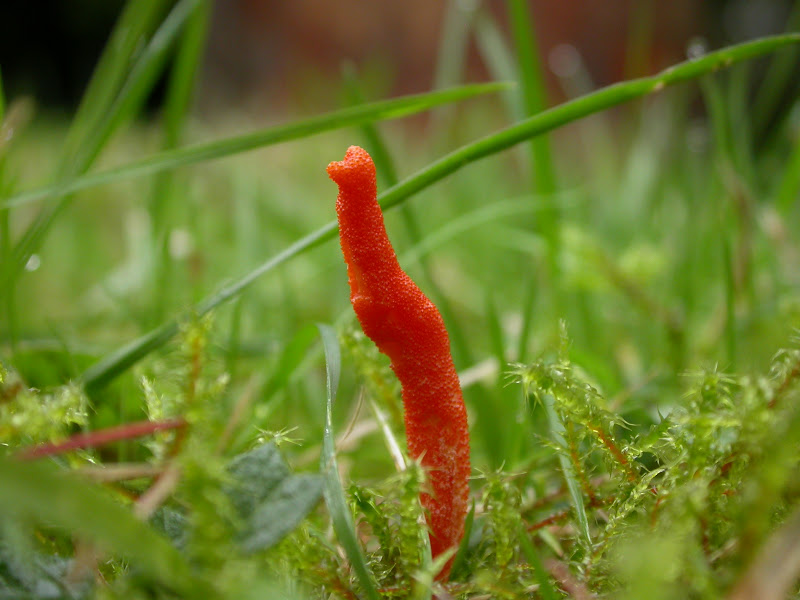
Scarlet Caterpillarclub (Cordyceps militaris)
Who doesn't love Nice 'n Spicy Nik Naks? This one parisitises moth pupae underground, bursting right out of the poor sods with these bizarre orange-red fruiting bodies. Ebernoe Churchyard is a great place to see them. I have also seen them in Brookwood Cemetery and Kent & Sussex Cemetery but that's about it.
Snaketongue Truffleclub (Tolypocladium ophioglossoides)
This is one of the ones that parisitises False Truffles, rather than insects. I have only seen it once, at Brookwood Cemetery. Such a great English name!
Ophiocordyceps gracilis
This one parisitises moth larva, I think I read maybe even specifically the Common Swift, which feeds underground at the roots of various plants. I was shown this one several years back in 2012 at Mill. We stumbled on another in 2017 at Levin Down and then I found one in chalky secondary woodland at the back of Brighton in 2020. I have only ever found one at a time and never in the same place twice.
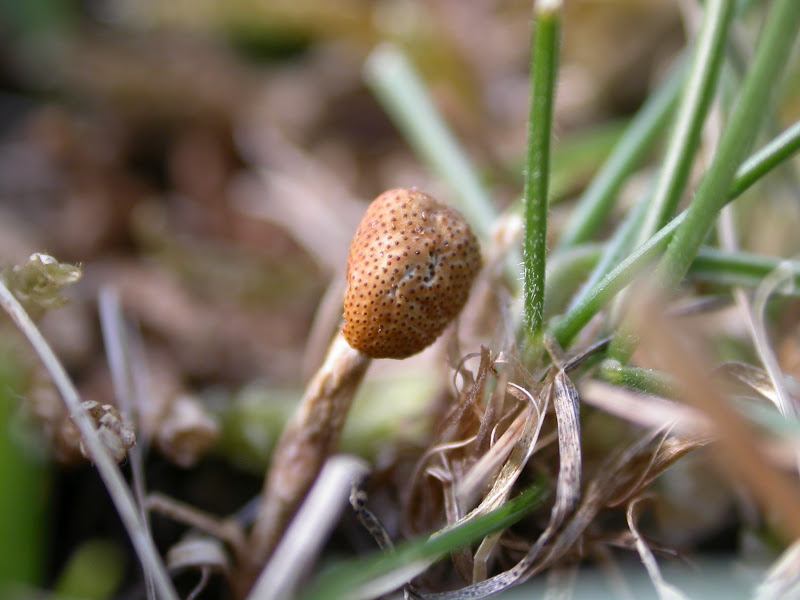
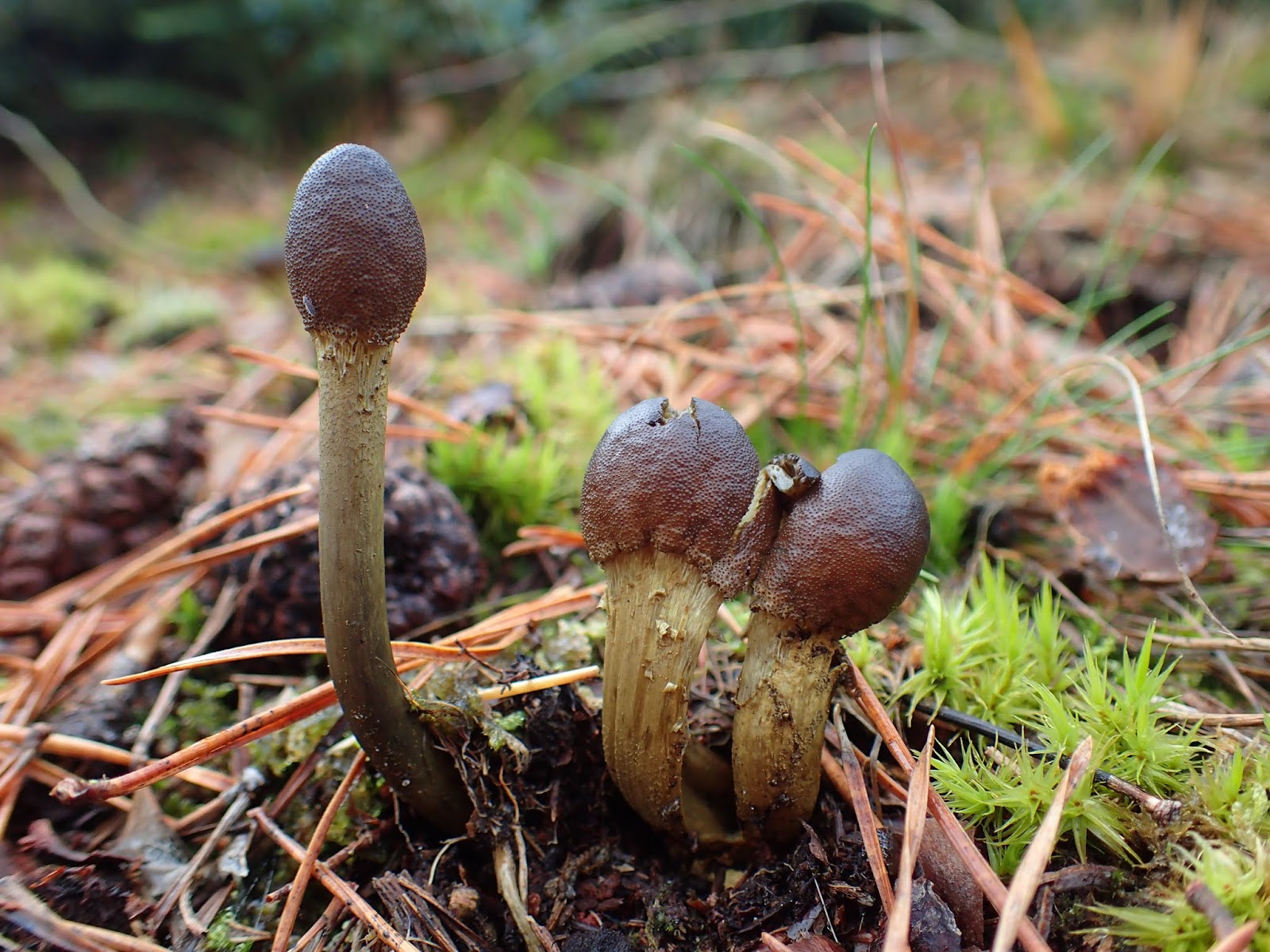
Drumstick Truffleclub (Tolypocladium capitatum)
The other species that targets False Truffles. Probably my favourite of the four, because I stumbled on this one myself at Graffham Common a few years back while looking for spiders. They look like cartoon matchsticks.
There are some other species, I believe. But I am yet to see them. Would love to see photos of other UK species if anyone has them, especially if the host is known.
So, I don't think we are quite at the stage where these fungi are going to start infecting Human brains but it's nice to see just how close to home the very real nature that inspired the computer game and the excellent TV adaption came from.
I went back to Amberley Chalk Pit today but this time, Tylan was with me. We got one of the target species. This is the first record of Eratigena picta in the UK since 2009. It was first found in the UK at Amberley Chalk Pit in 1982, but it hasn't been seen there since 1997. Now I am pretty sure I have been rearing a tiny one for the last two months since I first went there in early July, it's shed its skin twice but is still way smaller than all the ones we saw today. It's a nationally rare/vulnerable species only ever known from four hectads, and last recorded by Scotty on the North Downs in 2009.
As an adult, this thing is maybe just a little bigger than Tegenaria silvestris (which is abundant here but more tied to the scree).
Tylan was really good at finding them and it soon became clear it wasn't in the scree (like the one I found in July was) but on the slopes around the roots of the plants. The gentle rain helped highlight the webs.
Here are some more shots. I really like the speckled cephalothorax. It's really unlike any spider I have seen and the epigyne looks more like a big liny's, such as a Neriene. Here are some more shots.
And a fungus-infected Amaurobius ferox. What a strange looking thing. I have retained the specimen and will hopefully get it sent to the county specialist for identification.
That's 345 species for the year. Great to see Tylan after nearly a year. A nice distraction from everything else that's going on. He's closing on me now though, so it's still all to play for, for 2021!
A big thanks to Amberley Heritage Museum for their help too!
I had a great day at Graffham Common today looking for spiders but the highlight for me was stumbling upon these Drumstick Truffleclubs while I was trying to find somewhere to have my lunch, a new site record. I have wanted to see these for some time, chiefly because of the ridiculous name. They grow out of another fungi, known as False Truffle that we found there some five years ago when they cleared the pines, they were brought to the surface and looked very stone like until you get close. I always assumed that these False Truffles were still there beneath the surface and clearly they are.
The spiders were pretty amazing today. A total of 43 species in all with five new species for the reserve (amazing for 17th November) but I am going to write a longer piece on the invertebrates of Graffham Common when I can do it justice. It's an incredible site!


 Posts