An Alternative Natural History of Sussex.
This blog shows the highlights of my day to day findings as a naturalist and ecologist living and working in Sussex. Delivered with a pinch of nihilism, a dash of sarcasm and absolutely no tweeness, here is my attempt to show natural history as it really is: Brutal, beautiful, uncompromising and fascinating...and occasionally ridiculous.
I have been studying natural history for some thirty years, nineteen in a professional capacity. I currently work in Sussex as a freelance entomologist, ecologist and botanist and specialise in nature reserve and rewilding management advice based on the interpretation of the surveys I carry out. I also run a number of identification courses. An advocate of the pan-species listing approach. My main areas of interest are birds, plants and invertebrates and a lot of my spare time is spent in the field. I am the county recorder for spiders and bugs.
Yesterday was the ten year year anniversary of my first ever blog post. A thousand posts and over a half a million hits later and here we are. It's been a hoot, so much has changed for me in the last decade. Pan-species listing being a big feature of my natural history adventures which in turn led to becoming an entomologist and eventually going fully freelance and leaving Sussex Wildlife Trust. Working on those reserves though was an incredible experience and three of top ten were on Trust reserves.
When I first put my list together I had only seen 2748 species, as of today I am on 7648 species, that's almost tripled. I must admit I do love blogging, it's a nice way to inspire other naturalists as well as acting like a journal and a photo library. Oh and gripping friends off of course. I am at present however limiting my time on social media as it feels healthy to do so in this crisis. That said I put the 24th April in my diary at the start of the year so I wouldn't miss this date.
Before I get to the top ten of of top tens, I must say a huge thank you to Jo Knell for encouraging me to start the blog. Jo is sadly no longer with us and without her encouragement I doubt I would have started it. Here is the link to my first post which was about an encounter with a Snow Bunting we had at the top of Snowdon during a holiday. I've been blogging for so long now I can't remember not blogging.
Now for the top ten in reverse order. ALL of these encounters were in Sussex. If you didn't read these the first time round or need refreshing, I have included the links to the original posts, please do follow these as there are plenty of anecdotes for each encounter.
10). Pardosa paludicola
In April 2017 I found a healthy colony of this incredibly rare and impressive wolf spider at Butcherlands, Sussex Wildlife Trust's rewilding project, this being only the 8th site in the UK for this species. I have since found it another site. Read more here.
9). Columbus Crabs
In February 2016, after watching reports online, I had a hunch that I might find these crabs on Brighton beach after a storm and low and behold, there they were. This species lives in goose barnacles and floats across the oceans. These were the first records for the county.
8). Portuguese Man o' War
As above, there were reports about these washing up along the south west coast after storms in October 2017 and I really wanted to find the first Sussex one. I wasn't quite quick enough but did find my own one on Portslade beach.
7). Melodious Warbler
Last June, when I was finishing up a bird survey at Butcherlands that I had been doing for nearly a decade, I had a WTF moment when I heard a warbler singing I didn't recognise. After nearly losing it, I got a good view and a sound recording. So exciting. The fastest bird song I have ever heard. I loved that site and that survey. Butcherlands features twice in this list!
6). Philodromus fallax
The spider year listing challenge of 2019 was extremely fun and by October I had almost given up. Right at the end of a day of recording in Camber Dunes, a spider I had long given up hope of finding popped out! What a beautiful spider.
5). Polycera quadrilineata
2019 was probably my best overall year for natural history, so it's not surprising that four of the top ten are from this year. In March at the spring tide, I usually try and get down to the Pound at Holywell. This time Evan Jones and I had an amazing evening with four sea slug lifers, Evan found most of them but this one I found by netting sea weed, the tropical looking Polycera quadrilineata. See the rest of the blog for the other species.
4). Crimson Speckled
The oldest post here from October 2011. Michael Blencowe and I trapping at Beachy Head. We very nearly never even saw this moth that was resting in a bush, not the trap. I will never forget shouting CRIMSON SPECKLED!!!
3). Large Tortoiseshell
A lunch time walk at Woods Mill in March 2018 produced a Large Tortoiseshell. It's a terrible photo but just enough to clinch the ID. Another one that almost didn't happen as it flew off so quickly.
2). Coptosoma scutellata
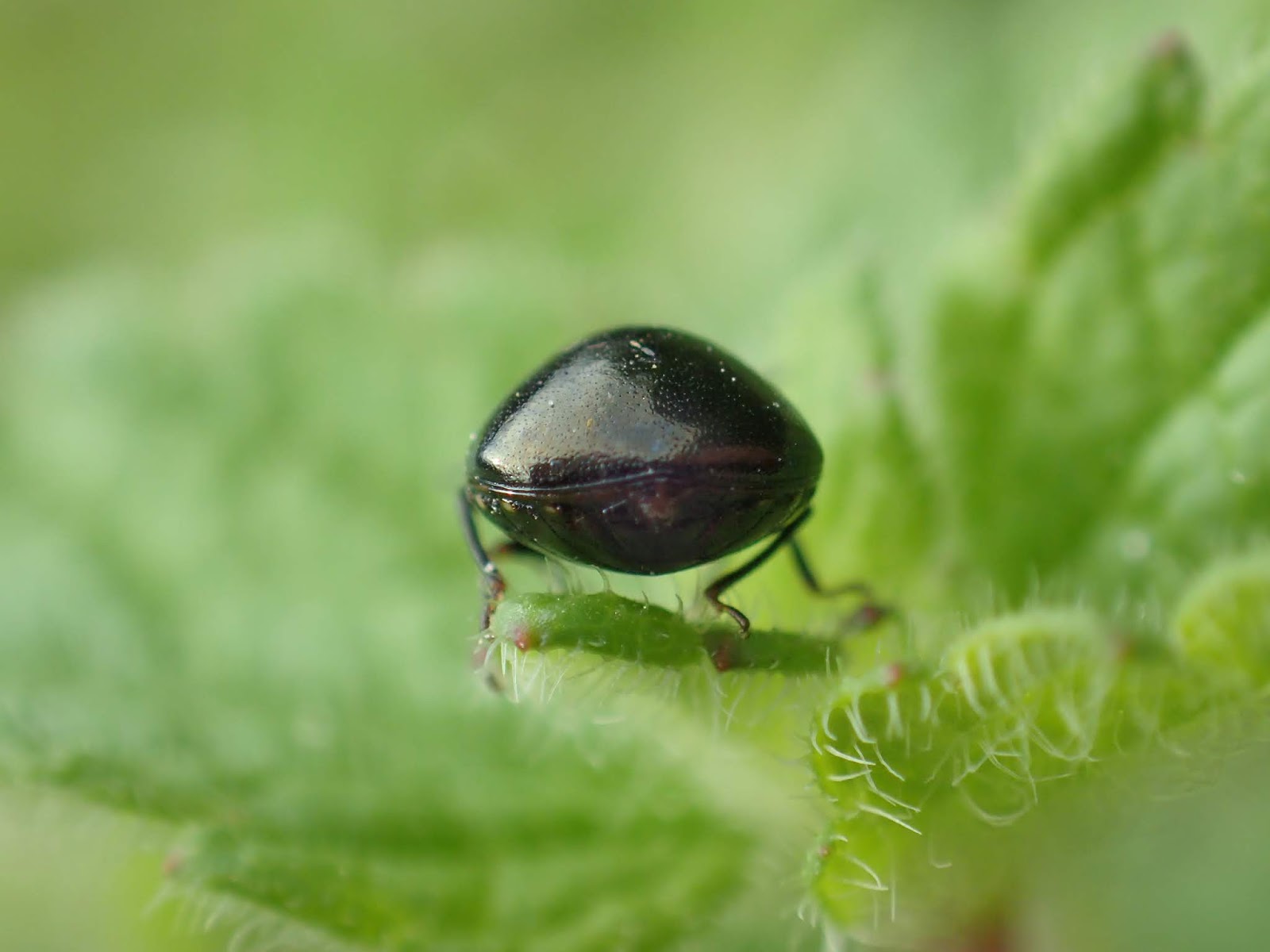
My first first for Britain and an entirely new family of shieldbug at that. This was from Marline in July 2019, Where DO the wings go?!
1). Calosoma sycophanta
Stumbling across this beauty in an arable field at Bishopstone in June 2016 is going to take some beating. It really was mind-blowingly lucky. Big, beautiful, rare. It ticks all the boxes.
So that's it. Ten years reduced into one post. What a decade. So now what for the Lyons Share? Is it time to call it a day?
Never before have I agonised over the order of my top ten natural history highlights but I do not exaggerate when I say 2019 was the best natural history year of my life. Anyway, spiders are here lumped as one and will get their own top ten at a later date. So here they are in reverse order.
10. Carabus intricatus (Blue Ground Beetle) with John Walters in Devon.
It was hard keeping John in eye sight on the side of the hill so I was glad that he was able to find us one of these astonishingly smart beetles. December was an exceptional month for me in nature.
9. Purple Emperor (Apatura iris) larva beaten from willow at Holmwood Common.
Not a really rare species but my first encounter with the larva in September produced some unforgettable photos.
8. Snow Fleas (Boreus hyemalis).
Both on purpose in the Wyre Forest, Shropshire in February and by accident on the Roaches in December.
7. Mega rare moths found in the field, who needs a moth trap?
I found a LOT of rare moths, probably the rarest was this Purple Marbled that I managed to capture even without a net at Seaford Head during a bioblitz. Others this year including sweeping a Dewick's Plusia in a park in London and netting a Hornet Moth in flight on a freelance job in Kent.
6. East Head sand dunes invertebrate survey.
A summer surveying these sand dunes with Lee Walther for the National Trust was a blast. Still I think the site with highest proportion of species with conservation status I have ever surveyed. Here I have picked the sea-lavender feeding weevil Pseudaplemonuslimonii as it's metallic purple!
5. Sea slugs at the Pound
My annual trip to the Pound at Eastbourne with Evan Jones was mid blowing last year and it's testament to how amazing a year this has been that this is way down at number five. Here is the one that blew me away the most and pretty much the only one I found myself, Polycera quadrilineata.
4. The baseline survey of Ken Hill Estate
My trips up to Norfolk this year were so enjoyable, so many great things to find but the day I recorded Breckland Leatherbug Arenocoris waltliimight be the most memorable.
3. A year of spiders
OK, here's the big shock. I have loved year listing spiders (and I will be giving them their own top ten very soon) but it doesn't make it to 1st or even 2nd place. Who will win the spider top ten? I suspect it might have to go toPhilodromus fallaxfor being the most unexpected find in early November that I had almost given up on and one of my most sought after species of all time.
2. Melodious Warbler and breeding Dartford Warblers at Butcherlands
The Butcherlands bird survey has delighted me for nearly a decade. So the breeding Dartford Warblers in bramble scrub were amazing but then picking up an odd warbler in the distance on the last visit, chasing it, realising it was a bird I didn't know was possibly the most exciting thing ever. Especially as at one point it was getting away from me. Then a great big yellow warbler jumped right out in front of me, a Melodious Warbler!. Definitely the fastest song of any bird and a great way to end a very enjoyable survey. When I first picked it up it was in the big willow on the left.
1. My first first for Britain!
Not only a new species but a new family for the UK. Finding this at Marline Valley was such an exciting experience. What a strange looking thing. It was closely followed by a second specimen swept by young Ted on his work experience! I tentatively identified it as Coptosoma scutellatum and Tristan Bantock soon confirmed the ID and I gave it the English name Trapezium Shieldbug. A really exciting way to end 12 years at Sussex Wildlife Trust but I have to end this on a downer. It probably turned up in the hot summer of 2018 and this in turn is almost certainly down to man made climate change.
We now have a government woefully inadequate in terms of its approach to climate change and emissions, so you have to do every little bit you can to prevent things from getting any worse. I don't think people realise just how important five years is in the crisis we are in now, I know I am preaching to the converted here but we just missed a huge chance to make serious change to our environment at this crucial tipping point in the climate crisis and influence others on the world stage.
But I know what you're thinking. "Where ARE its wings?!". Now lets see what 2020 has to offer...
I have had a bit more time to look at the bugs. Turns out that I picked up a male and a female (above). The male was photographed in the previous post. The female is so strange looking from behind and it really does make you wonder where the wings go. So I thought I would see if I could see the wings and the female just displayed them! Seth Gibson researched it and commented on the previous post. They do indeed fold up like a fan and then hide under the over-sized scutellum! Check it out!
The last one shows them folding up before disappearing under the scutellum! What an incredible little weirdo it is! I have always wanted to come up with an English name for a species and I have decided, after talking to Tristan Bantock, that Trapezium Shieldbug Coptosoma scutellatum is a useful name as it describes the unusual shape. What do you think?
So we started the July visit of this year's survey of the Marline Valley invertebrates. About 20 minutes in I got a really odd looking bug in the suction sampler. I first thought it was an immature shieldbug of some kind until I had a closer look when I realised it was an adult. It's pretty much ALL scutellum. I assumed it was some weird mirid. Later on a second animal was swept. Both were from areas with dense Dyer's Greenweed.
I just got home and realised it's not a mirid and after a bit of searching online found something that it remotely looks like. I think it's in the genus Coptosoma, possibly Coptosoma scutellatum. It's known to feed on legumes and Genista is mentioned as a food plant. It's in the family Plataspidae that as far as I can tell is not a UK family. Two suggests more than a random occurrence, it must have bred here. It must be able to fly but it looks completely flightless. A new shieldbug family for the UK!
Tristan Bantock has just told me that it's the only species of this genus in France and it must be this species! He says it's likely to have come in in last year's heat wave, which matches what I was thinking as we saw two adults there today.
This is the first species I have ever recorded new to Britain so I am delighted that it's also a family new to Britain! It's so strange looking. Like it's been stretched sideways. It's basically a butt with a head. Or a walking purse. I need to go and celebrate this. But first, big thanks to Mike Edwards (for lending me his suction sampler today after I broke mine - this has taught me that I can NEVER be without it again), Alice Parfitt for managing such amazing meadows for Sussex Wildlife Trust that they are the first port of call for new colonists, Ted for sweeping the second individual (it's took me 41 years to get a first for Britain and this lad gets one on his work experience) and Glenn Norris for his fantastic description of the beast that I will not repeat here!
Online I see that they are known as 'soot sprites' according to Wikipedia. Which is very cool as that is the name of the creatures in Spirited Away...
11/07/2019 EDIT: I took some more photos but this is the one that really illustrate just how big the scutellum is. Where ARE the wings?!
A couple of days ago, Alice and I headed to Marline Valley to assess the meadows and also look for a rare micro moth that feeds on Dyer's Greenweed. We didn't find the Greenweed Flat-body Agonopterix atomella. We did however, find a whole bunch of other quite interesting stuff. First up, we saw this aberrant Grizzled Skipper (I'm thinking taras but as I have seen very few aberrant butterflies I'm not sure).
It wasn't long before we saw another one. Clearly a different animal. These were the only two Grizzled Skippers we saw all day and it's not a common butterfly at Marline. They have almost certainly come in from a change in sward structure that favours the butterfly.
In fact, we recorded at least 20 species new to the reserve. Perhaps the most exciting was a male Long-horned BeeEucera longicornis on Bramble flowers. This isn't the exact Long-horn Bee but you get the idea. A brilliant thing to find on the site and hot on the heels of Alice's record of them at Pevensey Marshes last week!
The highlight for me though was this trio of big brown weevils. Tanymecus palliatus looks like a large Sitona and we picked two of these up in the suction sampler. It's a Nb species that's already known from the site and is not common in Sussex.
This is Attactagenus plumbeus. Another Nb species with a 'dot-dash' Morse code pattern on its back. It's a new record for our reserve network!
And this one is a bit of an oddity. It's also a new record for the reserve network but is not nationally scarce. It's on the Sussex Rare Species Inventory though. I was only thinking about this as I found one of these years ago soon after I started beetling in 2010 but for one reason or another it didn't get recorded. In the last eight years I have not seen another one. It's Graptus triguttatus. Strange how this happens.
Despite much searching, we didn't find any other Dyer's Greenweed specialist other than the mirid Heterocordylus genistae. This was present on every patch, even the single isolated patch in Lower Meadow. A great day in all. The meadows were looking great. Well managed as ever and with little Bramble and scrub due to the 'little and often' approach of cutting carried out by the volunteers.
Last week I was out again with the bryologists Sharon Pilkington and Tom Ottley. This time at Marline Valley, my first real opportunity to walk the length of the ghyll stream there and see some of the rarer mosses and liverworts along its length. Now this is tough going. The valley gets quite steep while fallen trees and 'course woody debris' make progress slow. A lot of recent rainfall made the waders a good decision but slippy clay makes climbing the valley sides very difficult which you have to do often to avoid fallen trees. You really have to want to go down here. However, the first things I have to say is just how stunningly beautiful this place is. What is also great is that it's so untouched. There are no signs of people or management except the inevitable odd bit of litter and in this case the bryophytes are ticking along just fine under natural processes. It's hard to see how this could ever have been different. A real wild oasis just on the edge of Hastings. Waterfalls, sandrocks, base-rich flushes, plunge pools, hard bottomed sections, iron ore seepages. This stretch of stream is really quite something, every turn seems to throw up something new. Wild Garlic is showing its head and the banks are sometimes covered in Greater Woodrush.
This is the nationally scarce Fissidens rivularis growing along rocks on the edge of the stream.
The rather strange looking moss Hookeria lucens grows all along the steep sides of the ghyll.
There really is no management we can do to enhance the bryophytes here. All we really need to do is monitor the species and keep an eye on any potential pollution events. I saw 12 bryophytes new to my list putting me on 4168 species!
Do you remember Nice 'N' Spicy Nik Naks? That's exactly what these little fungi reminded me of. I had a great day at Ebernoe with Jennie looking for fungi. Scarlet Caterpillar Club Cordyceps militaris was one of the target species and there were loads in the churchyard, I walked right past them! On the end of each of these, burried underground, will be a moth pupa (not larva like the different species of Cordyceps from Mill Hill). I'm not sure if this one is host specific or a generalist on moths that burry themselves underground when they pupate. I imagine Large Yellow Underwing would be a good host but many species of noctuid could be candidates. Some of the fungi go a bit wrong and develop some strange protuberances.
Considering the rain, numbers of fungi were very low and we didn't see much else beyond the usual Saffron-drop Bonnets and Garlic Parachutes. I saw this Lapidary Snail on the Brick Kiln, only the second time I have seen this strongly-keeled snail and we also stumbled across the BIGGEST Wild Service Tree I have seen (measurements to follow). I can also recommend the venison at the Stag Inn at Balls Cross. Back to Ebernoe today for work. It's a hard life!
I was just having an afternoon kip when the following text conversation occurred:
Everitt: Siberian Stonechat at Birling Gap Lyons: Have they split it? Everitt: Yup Lyons: s*#@!
Being in a bit of a rush, I didn't have much time to take photos. Instead, I realised it was easier to take a photo of someone else's photo. You'll realise why when you see my 'best' photo below. This was a ridiculously easy bird to see. Only 25 miles from home, about 50 metres outside of the car park and, as you would expect for a chat, very easy to see. It was also landing so close that I couldn't focus my scope on it at times. Siberian Stonechat is my 6th new bird (and 5th new passerine) this year, must have been years since I saw that many. Thirteen Corn Buntings provided a fly by but I didn't see the Merlin that Oli saw minutes after I had gone! It's been a good week for me for birds as I flushed a Ring Ousel from a hawthorn bush at Marline earlier in the week. Anyway, thanks to Andrew Whitcomb, birdwatcher and hand model, for allowing me to use the above photo. It's so refreshing to turn up to a twitch and NOT have the craziest hair.
Now, shall I enter this into wildlife photographer of the year?


 Posts