As of today I am on 1,255 species (20.9%) in the first six weeks of the year (665 of which are inverts). The latest addition being a tiny Pseudeuophrys lanigera that was actually sitting on the edge of the key hole on my front door when I got back from training! Yesterday, we had a look around Swanbourne Lake, part of the Norfolk Estate. I was mainly looking inside old tussocks of Greater Tussock-sedge. They were insanely productive, the highlight being this adult female Donacochara speciosa which was new to West Sussex!
Before that though, I pulled over by a flooded field along the Arun just south of Arundel WWT. There were hundreds of Black-headed Gulls and I was hoping to get Med Gull, which I soon did. I wasn't then expecting to get 80 Cattle Egrets!!! Followed by Gadwall and finally...Greylag (?). That's Little, Great White and Cattle Egrets before I got Greylag Goose. I am out of touch with looking for birds though, here I am trying to get on to some distant swans. My top target on the PSL website for the year is now Pochard.
Other spiders NFY included Rugathodes instabilis, Panamomops sulcifrons, Antistea elegans, Hahnia nava and Gongylidiellum vivum. That's 190 arachnids and 176 spiders for the year. I just love these tussocks. Water-measuers, Drinkers, Glow-worms - they contain multitudes!
I found a couple of these odd looking dung beetles in the tussocks, it's the non-native saproxylic species called Saprosites mendax. I though this was a lifer but remembered catching one by hand in the park by my house a couple of years ago. Turns out Arundel Park is well known for it. Saw-sedge was a surprise too, apparently it has been introduced there for over 150 years.
I did get a couple of lifers in the tussocks though. The NR carabid Badister peltatus and the centipede Strigamia crassipes. I think this is the first time I have seen Rosy Woodlouse in a tussock.
I swear these tussocks move when you're not looking. I always imagine Jim Henson lives on in them.
I beat some Box and immediately got a rather nice moth tick, which I was really not expecting. The big micro Ypsolopha mucronella. But even better than that, Anthocoris butleri new for me and all of Sussex. This species only feeds on Box and as I rarely see it in any abundance, I have never seen the bug before. Four invert lifers, one species new to Sussex and another new to West Sussex was not what I was expecting! It pays to go to sites you don't normally visit. I think I only ever visited here once 12 years ago but remembered the Box and tussocks.
In other news. the garden actinic has been super quiet since a Dark Chestnut in January but earlier this week I had a Southern Green Shieldbug.
And I went bryologising again with the local group in what was at first awful weather (I greeted Brad with "I've gone bryologising by mistake"). It turned out to be a top day, and I got a few lifers. Ben also spotted one of my favourite mosses on the side of a ghyll. Hookeria lucens. I couldn't get any closer with my camera though. Wild Garlic, Opposite-leaved Golden-sax and a Dolichovespula media queen were also NFY.
And that's my first target reached! I was aiming for 100 bryophytes for the year and with a little help, I have got to 107 species. So anything I can gain here I can take off my ridiculously high moth target of 850 species. Here's the totals so far...
Many thank to everyone who has sponsored me so far, please do consider sponsoring me if you can, I am fund raising for Sussex Wildlife Trust's reserves
here.
You can sign up to the pan-species listing website
here, it's totally free (although donations to the team are welcome).
And finally, my book is due to be released on the 26th Feb, two weeks today!!! You can order it
here, directly from Pelagic. Getting some great feedback.
On Sunday, I breached the 1,000 species mark on a fantastic and rather unplanned trip out with the local British Bryological Society to Sullington Manor Farm, all down to bumping into Ben Benatt at Pulborough Brooks RSPB Reserve the day before. So let's call the 1,000th species I have seen this year Golden-eye Lichen Teloschistes chrysophthalmus. I am actually on 1,025 species as of Sunday, that's 17.1% of the challenge completed.
Saturday saw my attempt to go bird watching on a bird reserve with a telescope for like, the first time in about 15 years. So, Pulborough is a huge lake at the moment but boy did I find it hard work. The restrictive nature of being in a hide, scanning back and forth along a single plain used to be something I loved 20 to 30 years ago. Now, I just couldn't concentrate! I really think its PSL that's changed this for me, the chances of me finding something new or rare here were really low, while out on the heath sieving moss or vaccuming heather would have the potential to generate something really exciting. I did tick off most of the common wintering ducks, as well as finally seeing a Greenfinch (I saw a fifth of the UK's spiders before I saw one this year - bonkers). A distant Marsh Harrier was welcome. I still haven't seen Greylag though, and I proper dipped on the White-fronted Goose and Little Gull by not being able to figure out what end of my 'scope to look down, whilst day dreaming about sieving moss for tiny rare money spiders.

The RSPB staff were really really helpful, and let me do a bit of pond dipping at the centre. This got me a few nice species in return for the records. The Nationally Scarce Peltodytes caesus was a nice water beetle record, and it was good to tick off some common aquatic snails like this Giant Ramshorn. Why do I look so sinister here? I was actually trying to smile (that's a Giant Ramshorn and not an Oreo by the way). Also, that's the same telescope I have had since I was 11. And there were two Great White Egrets about 1.5 mile behind me that I ticked, thanks to the RSPB!
I then spent a few hours on Wiggonholt Common with Karen looking for spiders and other inverts. Seeing three Jack Snipe, five Snipe and two Woodock was much more like my kind of birding. I beat this Rhopalus rufus off some Gorse, this is a Nationally Rare bug that seems to be doing well on the West Sussex heaths but I don't think I have had it this far east yet.
And I sieved this Heather Shieldbug from some moss.
We headed to some very old pine stumps and Karen spotted this odd resupinate fungi under a few logs. I am pretty sure this is quite a rare fungus - Orange Netcrust Pseudomerulius aureus. The literature states it is rarely recorded on very old pine timber in the south east, almost always on heaths. Might it be a county first? There are no records on the NBN, or in the SxBRC. I am waiting for confirmation from the county recorder. Exciting!
EDIT: Not that exciting, it's not that species. Thanks to Stewart Wright, I believe this is likely to be Serpula himantioides. Still a lifer though.
Well done to Karen for finding this and thanks for remembering to take some action shots! And thanks to the RSPB for allowing access in exchange for the records, as this is not a publicly accessible heathland.

Then, I took a gamble on Sunday and it payed off. The forecast was no way near as bad as predicted and I ended up with some lifers! Three lichens and three mosses, thanks to Ben Benatt, Sue Rubenstein, Brad Scott and Sim Elliot. Yet the rarest thing I found was a spider. When we got to the chalk, I spotted a sub adult male Eratigena picta. An entirely new site for this Nationally Rare and Vulnerable spider (but also it would seem, very close to where I have found them on the Norfolk Estate in the last two years). Here's my map with the new record being the most north easterly one, still in TQ01 but very close to TQ11 now. I bet it's already there. Here are my records for the species now, with the western-most record the known site of Amberley Chalk Pit. I reckon I might have doubled the number of people who have seen this spider on Sunday!

The team found some Neckera smithii (was Leptodon) in Sullington Church Yard. I am on 85 species of bryophyte for the year now, that's 85% of my bryophyte target reached - I don't think I will fail to achieve this one now. Good to see, as it appears to have gone from Woods Mill now.
And this Nationally Scarce pink dust (now called Ingaderia vandenboomii because, why not?! - Llimonaea sorediata just wasn't exotic enough sounding for it), that grows on the north faces of old churches was one I have wanted to see for some time, as the late Simon Davey used to often talk about this species. If you imagine you had some pink wafers in a biscuit tin, but when you went to eat one, they'd all been snaffled by your greedy relatives, bar some crumbs in the bottom of the barrel - this is what this lichen looks like. Here it is responding strongly and rapidly to C+. Thanks to Ben and Sim for this one.

A lovely old track with old Ash and Field Maple was a real treat, I added Yellowhammer on call finally. I finally caught up with Ocypus olens under a stone and Nanogona polydesmoides under a log. The ludicrously small moss Seligeria calycina is always nice to 'see'. Here it is fruiting well on a lump of chalk.
Once we got to the chalk grassland, I had a fly over Corn Bunting new for the year. It was here I found the Eratigena picta.
There's plenty of Juniper here, this produced the Juniper Shiedlbug on demand for those that had never seen one. The diminutive Microbryum rectum made one very immature member of the group make some childish jokes, something I would never do. Anyways, after Brad bent down to show me his diminutive rectum, we headed on up the hill just as the rain started.
Ben found a significant patch of the Nationally Scarce Tortella squarrosa, a nice plant! Time to head back before we got proper soaked. I absolutely loved this day, lots of different complementary skill sets, with all of us learning from, and teaching, each other. A perfect day of natural history.
So, I ended the weekend on 1,025 species. Here's the exciting thing, of these 1,025 species, 519 (more than half) are invertebrates. I am very keen to use this challenge to show people that invertebrates do not disappear over the winter, there is lots to be found (and not just spiders). But also, this is a reminder that cutting everything all at once, or grazing really hard everywhere over the winter is bad for invertebrates, you need to leave some overwintering habitat. Otherwise, where are they going to go? Invertebrates don't just disappear in the winter, many overwinter as adults too.
Many thank to everyone who has sponsored me so far, please do consider sponsoring me if you can, I am fund raising for Sussex Wildlife Trust's reserves
here.
You can sign up to the pan-species listing website
here, it's totally free (although donations to the team are welcome).
And finally, my book is due to be released on the 26th Feb, less than a month to go!!! You can pre-order it
here, directly from Pelagic.
Next up, I will be heading to East Sussex for some vegetated shingle...

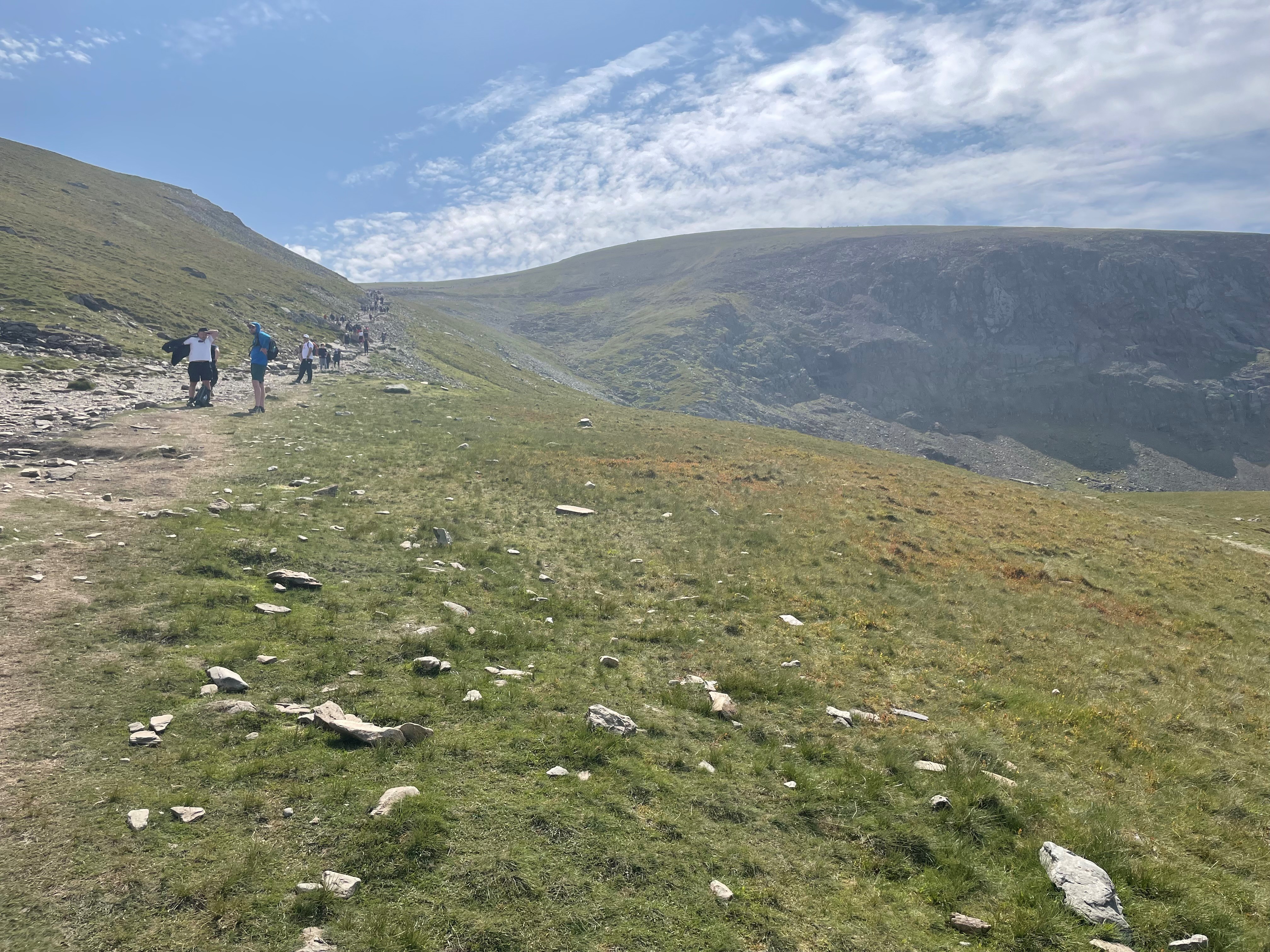
What do you do, when you are walking 50 miles a week for work and buy yourself a long weekend off at the end of May? Climb two mountains back to back looking for rare spiders and walk nearly 35 miles in three days of course! But before we get to Snowdon (photo) and Cadair Idris though, I'll start with my first ever visit to the Great Orme...
Apologies, I seemed to have some water on my lens for a few photos here. It's amazing how dry everything is after such a wet spring. And the grassland here on the south side of the Orme is distinctly arid and Mediterranean-like. A huge thanks to Richard Gallon for being my guide and putting up with me for three days! The sward here is dominated by Hoary Rock-rose. I have only seen this once before in the Burren. We had three target spiders here and we got two of them. There were large patches of Nottingham Catchfly and Bloody Crane's-bill here too.


We found several Drassyllus praeficus (spider no. 519) under rocks in this area but it was incredibly dry here. It also did not take long to find the weevil known only from this area that feeds on rock-rose, Helianthemapion aciculare. Liocranum rupicola (520) took some more finding though, and it was pretty much under the last rock I could handle lifting. In fact, it was just the thought of having to come out at night after being up since 4.00 am to find this spider that was keeping me going and then, there it was! It was only a small immature but under the same rock was also an Atypus affinis web, and another Drassyllus praeficus! What a rock.
And these freshly emerged Silver-studded Blues were quite something. And endemic subspecies too! We had also seen the endemic subspecies of Grayling earlier.
But the Thin White Duke had spotted a big spider in the mountains, so the next day we headed off to Cadair Idris.
Day 2. Richard and his colleague Thom Dallimore were working under contract surveying the inverts on the mountain, I was tagging along to see Pardosa trailli. A big old alpine wolfy.
I was worried by knee would play up, the last time I climbed a mountain in 2016, it really did on the way down but it held. The best thing I learned from Richard was that the good stuff happens over 750 m. And it did just that!
I spotted my first Pardosa trailli (521) myself, a smart looking male. But this dust covered male was the only decent shot I got of one. This means there is only one Pardosa I am yet to see in the UK.
Here is the female, quite a striking and well-marked spider with very long, tapering legs. I only had my phone for this one though.
We didn't get a huge number of other invertebrates, but I was pleased to see my first Carabus arvensis in 10 years! We did see some odd things up high though, most likely blown there. I found a female Tanyptera atrata, Rhagium bifasciatum and Thanatophilus rugosus all over 700 m!
Oh and Ctenicera cuprea were everywhere, something I have not seen for about 20 years as I do so little up north!
Alpine plants were limited on Cadair but this Stiff Sedge stuck out. Look at those glumes! That was about 12.4 miles to ascend to 880 m and we didn't get back until nearly 10.00 pm. What a day.
Day 3. Just me and Richard today. And about a 1000 other people. Who climbs Snowdon on a Bank Holiday Weekend?! We were heading to that dome on the horizon, about 1000 m, just shy of the top (which we proudly didn't go to). It's 13 years since I last went up here, and coincidentally my first ever blog was from here. How things have changed in that time. Lots more idiots with portable speakers and drones for a start.
Such an amazing landscape.
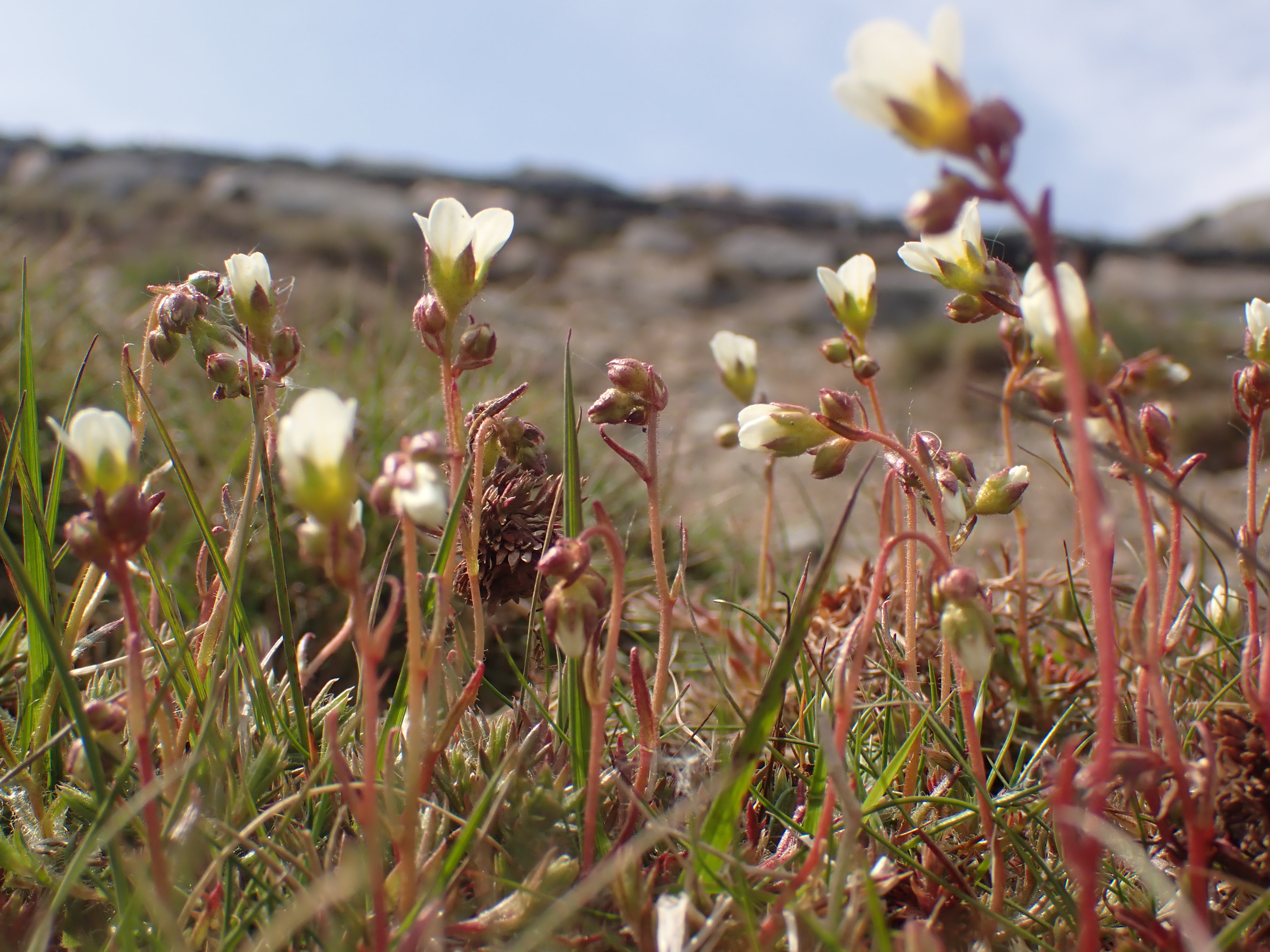
And plants that I have not seen for some 15 years were very welcome. Such as Mossy Saxifrage.
We fought our way past the hordes to the frost-shattered rocky landscape of the near summit and began flippin'. I got three alpine spiders, all being lifers. The first and probably my favourite of them all was this Oreonetides vaginatus. In this area we also found Agyneta gulosa and Piniphantes pincola. A massive thanks to Richard for getting me to 524 species of spider. Wheatears, Choughs and a male Ring Ouzel provided the soundtrack.
And now, we headed to see Snowdon Lilly, a species I have wanted to see for years. But before that. Some mountain plant madness. Dwarf Willow near the top.
Starry Saxifrage.
Mossy Campion.
Roseroot. Phwoar!!!
Green Spleenwort. A lifer for me.
No idea what this stuff is.
Meadow Saxifrage. Think this is my favourite of the three saxifrages featured here.
And a real surprise, as I don't remember clocking it at the time. There are a lot of similar white plants on mountains. This looks good for Spring Sandwort. Another one I have seen but not for decades.
Two for one here with Common Butterwort and Alpine Meadow-rue. I have not seen many of these plants since I went up Glenn Feshie in 2004! Half a life time ago.
Beech Fern.
Two very odd looking bryophytes.
And a lichen very like a Cladonia but I think it must be something else.
It's been a while. I think this must be Dioecious Sedge.
Closer now. Only the second time I have seen Northern Rock-cress.
Then, there it was! The enigmatic Snowdon Lilly! What a beaty!
What an amazing trip, and a massive thanks to Breeze B&B in Llandudno for being such great hosts and a HUGE thanks to Richard for being such a great guide. We walked 15.6 miles that day, the most I have walked in years. And the day after another mountain, I was surprised how quickly I recovered (apart from some awful lurgy I picked up). Anyways, that leaves me one last spider on the way home...
Day 4. A quick nip in to a site to spot Rugathodes bellicosa. My 525th UK spider. I think that means, for the time being at least, I have seen more spiders than anyone else in the UK. But I would love to be proven wrong!


 Posts
Posts