An Alternative Natural History of Sussex.
This blog shows the highlights of my day to day findings as a naturalist and ecologist living and working in Sussex. Delivered with a pinch of nihilism, a dash of sarcasm and absolutely no tweeness, here is my attempt to show natural history as it really is: Brutal, beautiful, uncompromising and fascinating...and occasionally ridiculous.
I have been studying natural history for some thirty years, nineteen in a professional capacity. I currently work in Sussex as a freelance entomologist, ecologist and botanist and specialise in nature reserve and rewilding management advice based on the interpretation of the surveys I carry out. I also run a number of identification courses. An advocate of the pan-species listing approach. My main areas of interest are birds, plants and invertebrates and a lot of my spare time is spent in the field. I am the county recorder for spiders and bugs.
Less than four weeks into the field season already and I have completed my work for April. I am over 20% into the year's field work, which just seems weird! I have lost over 4 kg, some 5% of my body weight. Walked over 120 miles carrying around 15 kg of gear. But most importantly, I have made shed loads of records and found some really awesome stuff. 6279 records to be precise. Of 1016 species, including 612 invertebrates, 203 of these are spiders! I do tend to skim through the specimen jars to look at the spiders early on, meaning that most of the other stuff will wait until the winter (so most of the invertebrate orders below are just field dets at this stage). Here is what I have recorded and where, so far.
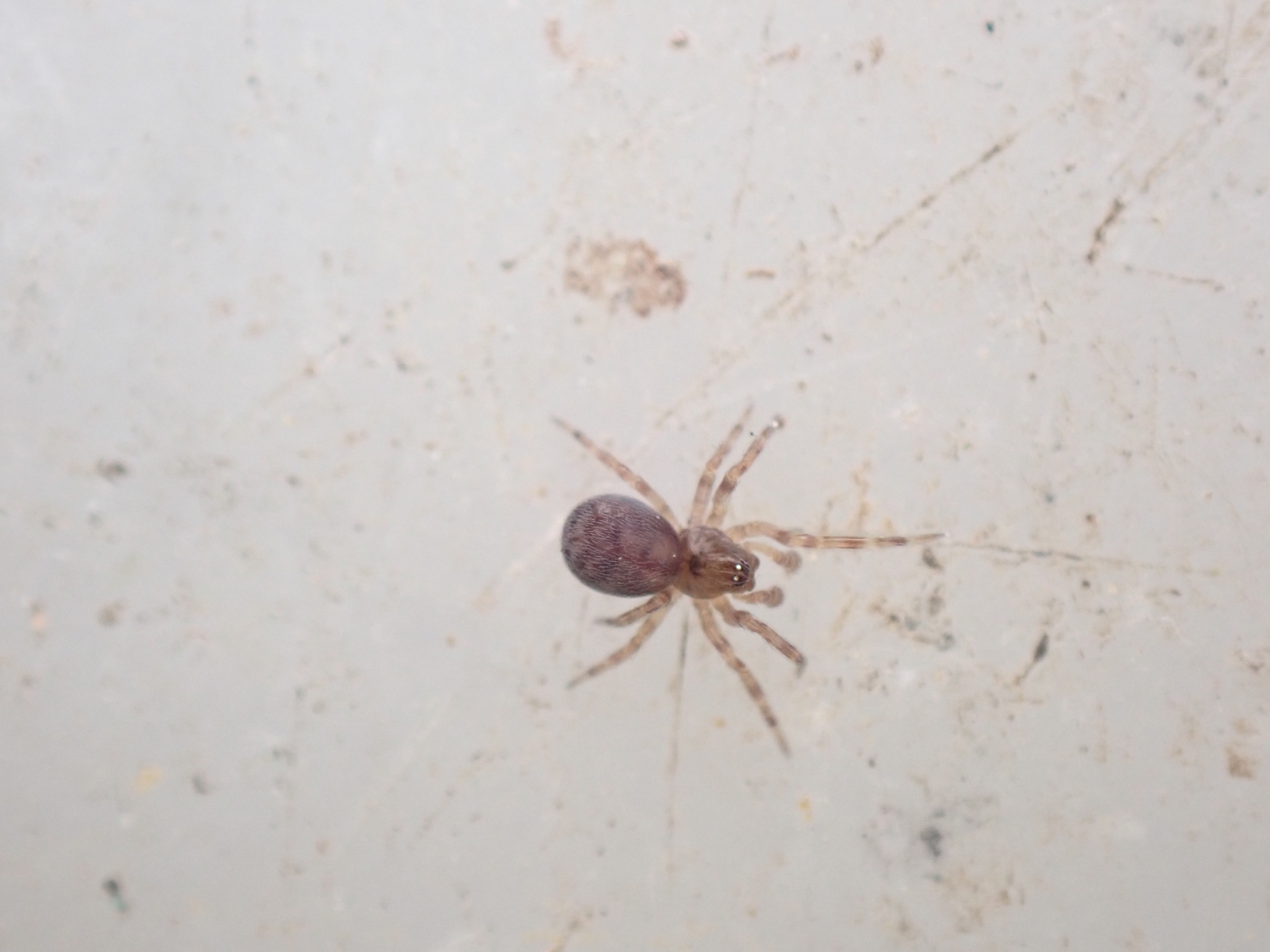
And now for some highlights. On my first day out at Iping Common, I found two Nationally Rare spiders new to the site, new hectads for them too and the first time I have seen either in Sussex, I was pretty stoked with that! At the top of this blog is Zora silvestris, Identifiable by the spines on the leg even as an immature. This Critically Rare spider is only known from six post-1992 hectads, now it's seven! Nearby was a healthy population of Lathys heterophthalma (below), a Vulnerable species known only from four hectads post-1992, now five!
Over to Old Lodge in East Sussex. Only the 2nd ever record in Sussex for Theonoe minutissima. A midget among the spiders. A much commoner species in the north and west. I sieved it from Sphagnum where it has surely been here for years, undetected. Amazingly it's new to Ashdown Forest.
I had a new hectad for Hypomma fulva in East Sussex and had it new to West Sussex near Amberley.
I bumped into some Golden-eye Lichen on a farm survey in Brighton.
Only the second time I have seen the ground bug Emblethis denticollis. This was down on the shingle restoration at Black Rock in Brighton.
To Bedfordshire and a voluntary job for BBOWT at Strawberry Hill. Only the 2nd time I have seen Liocranoeca striata and it was also new to Bedfordshire, it was quite common there.
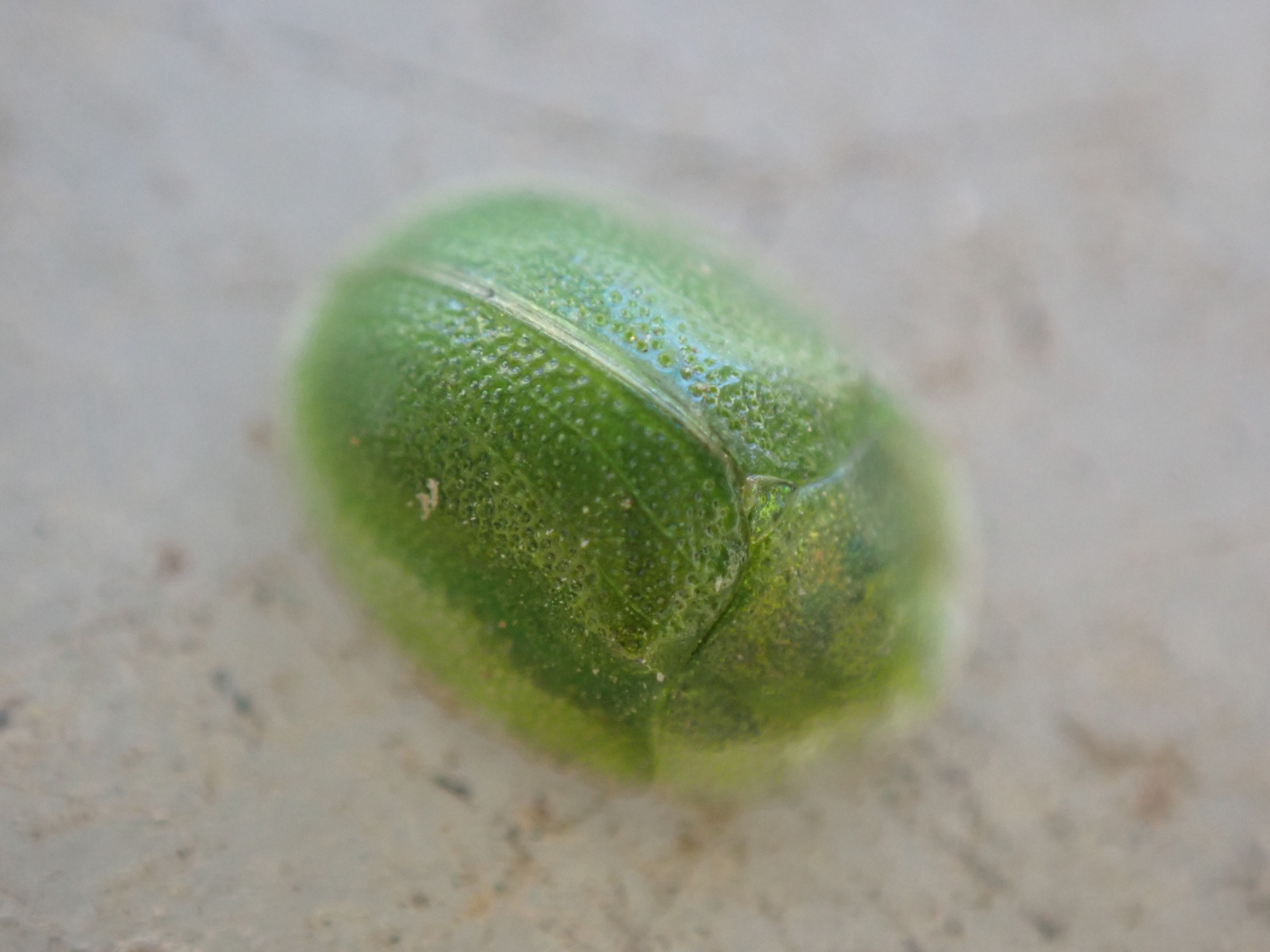
To Franchises Lodge in Wiltshire, although it still very much feels like the New Forest. Some nice records like only the 3rd time I have seen Cassida hemisphaerica.
And a new hectad for Crustulina sticta.
I have been enjoying the Sussex woodland this spring, with lots of AWIs in flower, such as this Goldilocks Buttercup. Photo-bombed by a Wood Anemone!
Finding a new site for Mossy Stonecrop in West Sussex on a lovely sandy farm was a real highlight. This is my first Sussex record of this species.
And that good old rule, if you find one good thing, you'll probably find more stood up yet again. My first Sussex records of Hoary Cinquefoil.
Over to a farm and woodland in East Sussex. The world's worst photo of an Ash-black Slug.
Found a flush in an unassuming field and it's full of Bog Pondweed and Lesser Spearwort. I will be back here.
And in the woods, only the 2nd time I have seen the scarce (Na) weevil, Tropiphorus elevatus.
And then down to Devon where I have never seen so many Violet Oil-beetles.
I was amazed when I checked the one bee I had collected in a separate tube to the others to see that it had a triangulin attached to it! It was a male Nomada goodeniana, a parasite on a parasite.
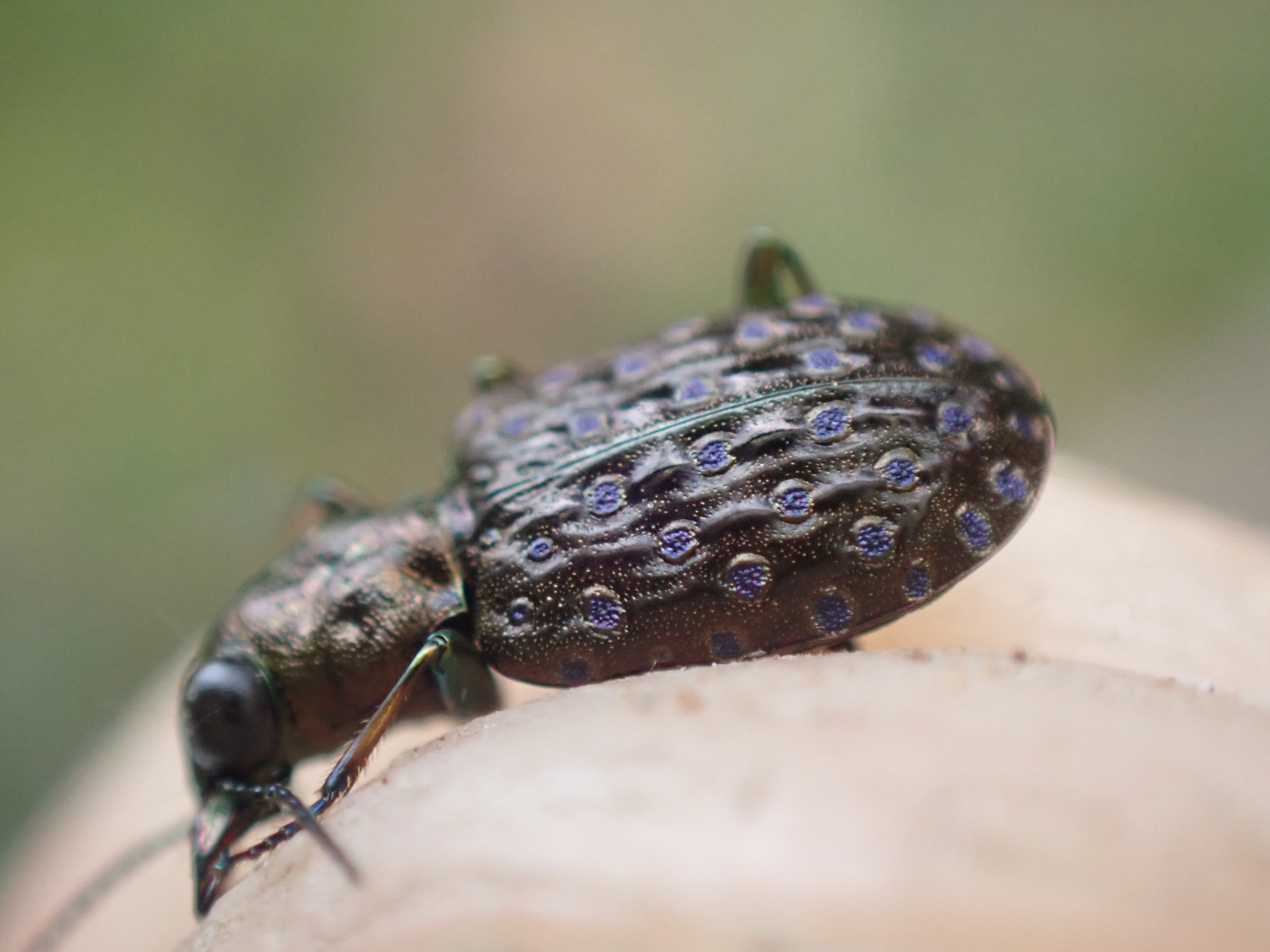
And it's been a while since I've seen Elaphrus cupreus, what a beetle up close!
It's been a great four weeks. I really wanted to write this blog to show people just how important a month April is, even if it's not that sunny. I always like to get a round of monitoring in before leaf-burst, chiefly armed with the suction sampler (and three batteries) as this often picks up species that are being missed if you don't start until May. I love April, it's by far my favourite month for surveying. No hay fever, no rank vegetation, very little heat and loads of good records! Now, it's City Nature Challenge time and I have big plans this year...I am aiming for 4000 records in four days. Gulp.
I've just got back from another trip to Ken Hill. Along with the structured surveys I am doing there, building a site list is also a key task. That means that casual records of species made when you are doing different jobs, or moving between plots, are extremely important. Such as this emerging Humming-bird Hawk-moth recorded on a large area of acid-grassland with some heath known as the Plain. Now these are not all that scarce as a migrant but I have never seen this before, an adult that had clearly still not taken its maiden flight. Last summer I saw an adult ovipositing on Lady's Bedstraw at Heyshott Down but this was a first for me. Annoyingly, my memory card broke so I only had my phone camera for much of this trip. However I took this shot and posted it on Twitter not thinking that much of it, three days later it reached 1000 likes and over 150 retweets. I think even the Calosoma sycophanta event only got about 300. Anyway, not bad for a phone shot!
I've now recorded over 700 invertebrates there this year and the list is rising all the time. Highlights included a new location on the site for Breckland and Fallen's Leatherbugs, the impressive wasp Podalonia affinis (also on the Plain), the Scarab Shieldbug, the unpronounceableSphragisticus nebulosus(a new species for me). Also on the Plain (and cathartic as I caught one last month but it flew off before I could pot it) were my first stiltflies. They turned out to be the notable Micropeza lateralis. Also on the Plain, quite a few Hedychrum nobile. A not very impressive camera photo of a very impressive jewel wasp.
To the north of the site this very late Agapanthia villosoviridescens. It's usually a late May to June species.
We ran a moth trap on the Plain which would have been more successful if the generator hadn't kept cutting out. We did add a few species to the list such as this Vestal.
Always a pleasure to see Antler Moths (below) and True Lover's Knots too.
However it was the by-catch that proved most interesting. There were lots of aquatic bugs and beetles that were all new to the site, hundreds of Water Veneer moths too. Quite a few carabids came to light but the best was Harpalus froelichii which I have only seen in the Brecks so far. Talking to Steve Gale I was expecting to see this at Ken Hill but as yet I had not knowingly picked it up. It's Nationally Rare, Near Threatened and S41 and adds to the Breck-like nature of the site's flora and fauna.
The vegetation structure and composition plots are now complete. I added a couple more arable plants to the list including another good one which was also a lifer and a 7 point scorer. This is my new favourite grass, Rye Brome which was confirmed by vice county recorder Richard Carter when we met up in the field. It's Vulnerable and nationally scarce. Along with Corn Mint (scores 1) that gets the site index for arable plants up to a whopping 113!!!
A couple of veteran trees were really impressive. This 6.5 m+ (that doesn't even include the 2.3 m branch on the right) girth Pedunculate Oak is one of the biggest I have ever seen.
And this Common Lime Tilia x europea was 4.31 m girth!
And a few fungi were about too, such as this Dyer's Mazegill on pine. I've started the NVC map now, so I will be doing some series footfall (this last trip was 42 miles) for the last two visits. Whatever will we find next month?! A huge thanks to the Padwick's, Richard Carter and everyone else at the Estate for their support and time and making it such a fun project.
Meet Sitticus saltator. He's only 2.5 mm long. He's just had his hair cut by his Mum for his first day of school.
"The other kids sure are bigger than me".
"I better start taking some notes with my shiny new pencil".
There are not many spiders with a cephalothorax bigger than their abdomen, it looks like a head on legs. And boy can they jump. Actually it's more like a bounce. Such little characters.
OK enough mucking about, this spider though. Could it be any cuter?! I have only seen it twice before, back in 2014. In Sussex, it's known only from Camber Sands and Climping Dunes. It's nationally scarce and a dune specialist (mainly) and hasn't been seen at East Head since 1971 as far as I can tell. We saw three yesterday, all found by suction sampler. If you think the above photos are cute, you might just lose it when you watch this video of it cleaning its face. You have been warned!
Yesterday I started a survey for the National Trust at East Head with Lee Walther and a team of trainee volunteers. I said we should look out for Phlegra fasciata as I know Chris Bentley found it on a bioblitz a few years back. We found five! Having only seen one before at Rye Harbour, I was very pleased by this. This females of this nationally rare dune specialist are like a furry little humbug.
And another one that Chris had there a few years back, Crustulina sticta. We had one of these in the dune slack. Another nationally scarce species.
I actually had nine new spiders for the year and two were lifers! I didn't identify these until I got home. They were another coastal specialist which we recorded on the saltmarsh by sieving tidal litter, Zelotes electus(nationally scarce) which was recorded on the site back in 2007.
And also known from the site was Ceratinopsis romana, a nationally rare coastal species. This sieved from Marram litter on the mobile dunes.
I ended the day on 151 spiders in all. Others new for the year were: Pardosa proxima (NS), Stemonyphantes lineatus, Walckenaeria vigilax and Cheiracanthium erraticum.
But there's a lot more than spiders there! The commonest bee by far was Colletes cunicularius which Mike Edwards tells me is likely to be a first for West Sussex! Here is a male, they were feeding on gorse and willow.
And what I'm pretty sure were their burrows. There were lots of females buzzing around here, a long way from where we saw the males.
My third lifer for the day though was a real surprise. We sieved this huge Broscus cephalotes from a pile of tidal debris, it's more of a surprise that I could see 1300+ species of beetle without seeing one of these to be fair. We do have very little of this habitat in Sussex though. What a beast though!
Later on in the mobile dunes, I sieved another one from Marram litter. I was convinced that it was dead but it wasn't! It's front two pairs of legs were clamped together, holding tightly to a Marram grass stem, while its back pair of legs were held backwards at 45 degrees. The head was back and jaws were wide open. It was utterly motionless as we took photos. Then it dropped off and ran away, an amazing experience!
And a new 10 km square for the awesome Rhombic Leatherbug! What a day! I can't wait until the next visit.
I did the lookering yesterday at Butcherlands and had a quick look for spiders as I went. I was keen to check up on the Pardosa paludicola that we found there back in 2017. It took about 30 seconds to spot one. They are HUGE compared to the wealth of commoner Pardosa that are everywhere. I saw two females and a male (all adult). They are very leggy and spiny compared to other members of the genus and have another skill up their eight sleeves; they're surprisingly good jumpers and unlike the other species, can jump clean out of the tray!
And a male.
Other species new for the year included a few young female Sibianor aurocinctus (I took this photo of a female last year).
Pardosa pullata
Walckenaeria antica
Pelecopsis parallela
Dictyna arundinacea
I found the cows. All good.
Then I had to service some of the dataloggers in Ebernoe and thought about what Matt said about searching Amaurobius webs for Oonops. On one very dark and shady oak in deep Holly shade there was a huge web (which in hindsight was probably a Tegenaria's). I shook this into the tray and found an amazing five specimens of the nationally scarce BAP Dipoena inornata (Silky Gallows-spider). Now this is only the second time I have encountered this spider (the other was as new to East Sussex from Eridge Rocks in a very different habitat - shaken from fern litter growing on sandrock) and was really surprised to see it in this habitat. New to Ebernoe and the 10 km square. They are meant to eat ants, I would imagine that this would just about be suitable for Brown Tree AntLasius brunneus but why were they in this web and in such numbers?!
And the male under the microscope showing the novelty front end. So funny.
Then today the weather wasn't any good for a lunch time jaunt until I saw Matt Prince was on 132 species too. So as I was leaving work I beat the soggy Box bush outside the office window and got THREE species new for the year in ten minutes, putting me on 135 species for 2019.


 Posts